Welcome to Geotech!
-1.png)

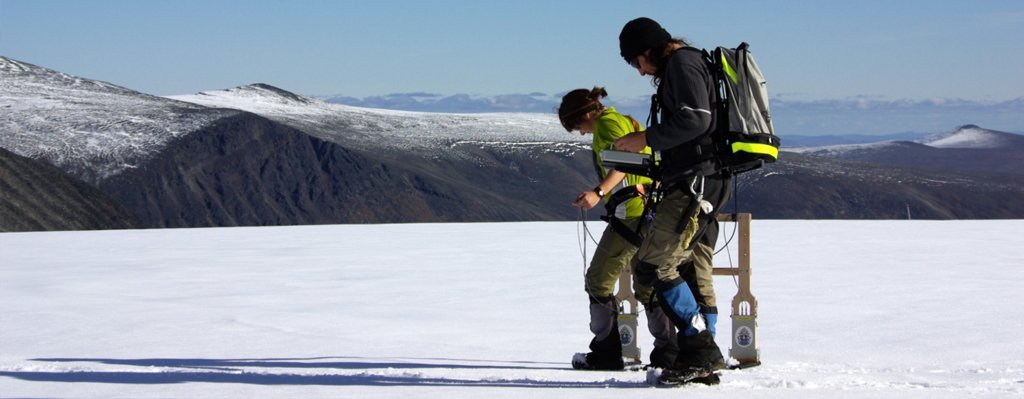
Archaeomagnetic Surveying: Unveiling the Secrets of Magnetometry Archeology
TIPS:Magnetometry archeology is a revolutionary tool for modern archaeologists, enabling the detection of archaeological sites without disturbance. This technique relies on sensitive magnetometers to map subtle magnetic anomalies in the soil, which reveal the outlines of buried structures like walls, hearths, and pits. This guide explores the principles and benefits of this non-invasive archaeological exploration method, showcasing how it preserves cultural heritage while unlocking secrets of the past.
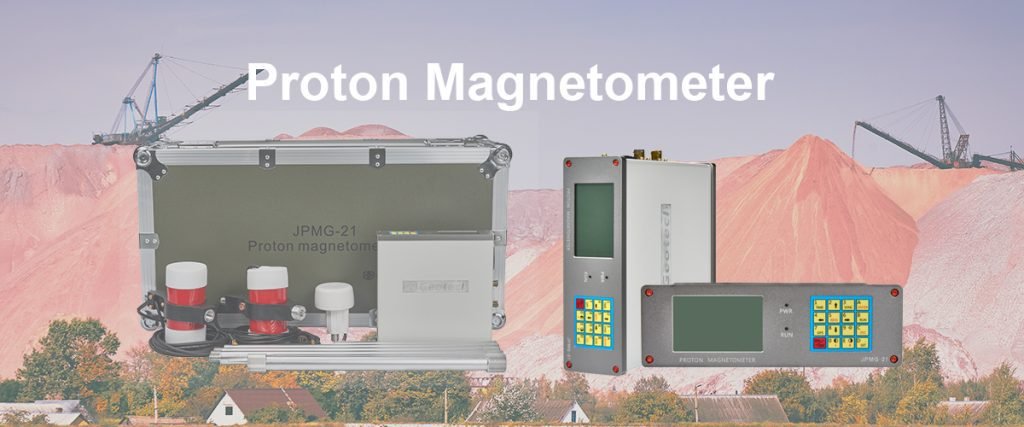
I. Introduction: Seeing the Unseen in History
Archaeology has evolved from a discipline of careful excavation to one of precise, non-destructive investigation. The key to this transformation is geophysics, and at its forefront lies magnetometry archeology. This powerful technique allows us to map and understand buried archaeological sites without ever breaking ground. This article uncovers the secrets behind magnetic exploration in archaeology. We will explore how this method achieves remarkable archaeological site detection and enables detailed buried structure mapping. By harnessing the Earth’s magnetism, non-invasive archaeological exploration is preserving our cultural heritage while revealing its hidden stories.
II. The Science Behind the Magic: How It Works
The principle behind magnetometry archeology is both elegant and scientific. It relies on detecting tiny disturbances in the Earth’s magnetic field caused by human activity.
- Thermoremanent Magnetism: When materials containing iron oxides (like clay in hearths, kilns, or bricks) are heated to high temperatures and then cool down, they record the Earth’s magnetic field at that moment. This “fossilized” magnetism makes these features significantly more magnetic than the surrounding soil.
- Topsoil Disturbance: Human activities like digging ditches, building walls, or even tilling soil change the magnetic properties of the ground. Pits filled with organic refuse become more magnetic, while stone foundations may be less magnetic. A high-sensitivity magnetometer in archaeology measures these minute variations, creating a map of magnetic contrasts.
This process of magnetic exploration in archaeology transforms invisible magnetic patterns into a visible plan of subsurface features.
III. The Ultimate Goal: Archaeological Site Detection
The first step in managing and studying a cultural heritage site is knowing its full extent. This is where archaeological site detection plays a crucial role.
Traditional methods often relied on surface finds or historical records. Magnetometry archeology provides a systematic, scientific approach to detection of archaeological sites. By surveying large fields or areas, archaeologists can quickly determine:
- The presence of a previously unknown site.
- The boundaries and overall size of a known site.
- The density and arrangement of features within the site.
This proactive approach to locating ancient ruins allows for better preservation planning and more focused, effective excavation campaigns.
IV. Mapping the Past: The Power of Buried Structure Mapping
Once a site is detected, the next step is understanding its layout. This is the domain of buried structure mapping. A high-resolution gradiometer survey can produce stunningly detailed images that look like an aerial photograph of a buried city.
- Visualizing Underground Remains: The data from a survey is processed to create a grayscale or color map. On this map, dark and light anomalies correspond to magnetic highs and lows.
- Interpreting the Map: Archaeologists learn to “read” these maps. A strong, positive linear anomaly might indicate a fired brick wall or a kiln. A negative linear anomaly could be a stone foundation or a ditch. Clusters of dipolar anomalies often signify pits or hearths.
This mapping of buried structures provides an invaluable blueprint. It reveals the complete layout of ancient settlements, from individual houses and streets to grand public buildings, enabling a level of understanding that was previously impossible without extensive excavation.
V. A Ethical Advantage: Non-Invasive Archaeological Exploration
Perhaps the greatest benefit of magnetometry archeology is its non-destructive nature. Non-invasive archaeological exploration is a cornerstone of modern cultural resource management.
- Preservation: By mapping sites without disturbance, we preserve them intact for future generations. Excavation is, by its nature, destructive. Magnetometry allows us to learn exponentially more while doing exponentially less damage.
- Strategic Excavation: Survey results act as a guide. Archaeologists can use the magnetic map to place excavation trenches in the most informative locations, maximizing knowledge gained while minimizing the area physically dug.
- Wide-Area Assessment: This non-invasive site investigation allows for the rapid assessment of very large areas, such as entire landscapes, revealing how sites relate to each other and their environment.
This approach represents a paradigm shift towards a more respectful and sustainable practice of archaeology.
VI. Conclusion: The Indispensable Tool for Modern Archaeology
Magnetometry archeology has fundamentally changed the field of archaeology. It has transitioned from a speculative endeavor to a targeted, scientific process of discovery. By enabling precise archaeological site detection and detailed buried structure mapping, it provides a window into the past that was previously unimaginable.
As a form of non-invasive archaeological exploration, it aligns with the ethical imperative to preserve our shared cultural heritage. For any archaeological project, from research academia to cultural resource management, the magnetometer in the toolkit is no longer a luxury—it is an indispensable necessity for uncovering the secrets of our history.
References
- E. M. Purcell, H. C. Torrey, and R. V. Pound: Phys. Rev. 69 (1946) 37. https://journals.aps.org/pr/abstract/10.1103/PhysRev.69.37
- F. Bloch: Physica 17 (1950) 460. https://journals.aps.org/pr/abstract/10.1103/PhysRev.70.460
- H. Dong, H. Liu, J. Ge, Z. Yuan, and Z. Zhao: IEEE Trans. Instrum. Meas. 65 (2016) 898. https://ieeexplore.ieee.org/document/7393816
- G. S. Waters: Nature 176 (1955) 691. https://www.nature.com/articles/176691a0
- G. S. Waters and G. Phillips: Geophys. Prospect. 4 (1956) 1. https://onlinelibrary.wiley.com/doi/10.1111/j.1365-2478.1956.tb01392.x
- A W. Overhauser: J. Phys. Rev. 92 (1953) 411. https://journals.aps.org/pr/abstract/10.1103/PhysRev.92.411
- A. Abragam: J. Phys. Rev. 98 (1955) 1729. https://journals.aps.org/pr/abstract/10.1103/PhysRev.98.1729
- G. Breit and I. I. Rabi: J. Special Studies Papers 38 (1931) 2082. https://journals.aps.org/pr/abstract/10.1103/PhysRev.38.2082.2
- I. Solomon: J. Phys. Rev. 99 (1955) 559. https://journals.aps.org/pr/abstract/10.1103/PhysRev.99.559
- J. Lenz and S. Edelstein: IEEE Sens. J. 6 (2006) 631. https://ieeexplore.ieee.org/document/1634415
- N. Kernevez and H. Glenat: IEEE Trans. Magn. 27 (2002) 5402. https://ieeexplore.ieee.org/document/278852
- D. Duret, J. Bonzom, M. Brochier, M. Frances, J. M. Leger, R. Odru, C. Salvi, T. Thomas, and A. Perret: IEEE
Trans. Magn. 31 (1995) 3197. https://ieeexplore.ieee.org/document/490326
