Welcome to Geotech!
-1.png)


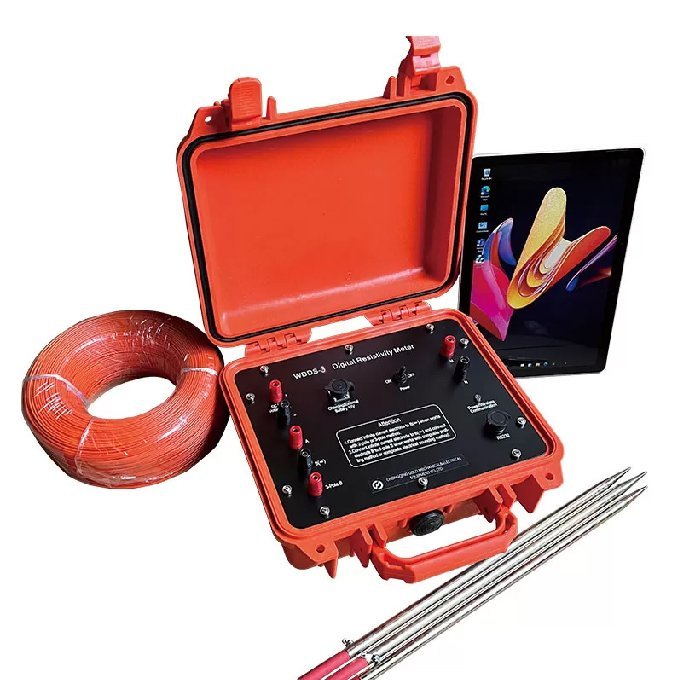
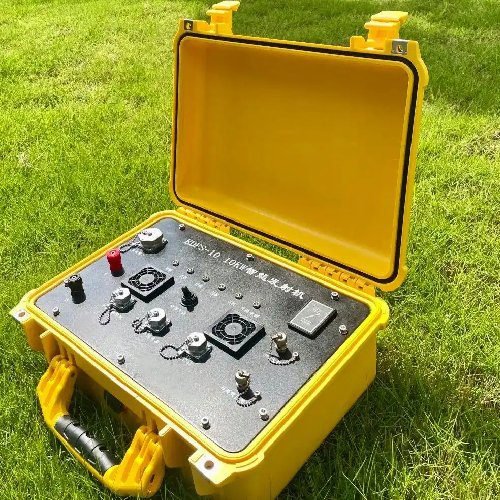
DJF Series 5KW Induced Polarization System
PRODUCT PARAMETERS
Description
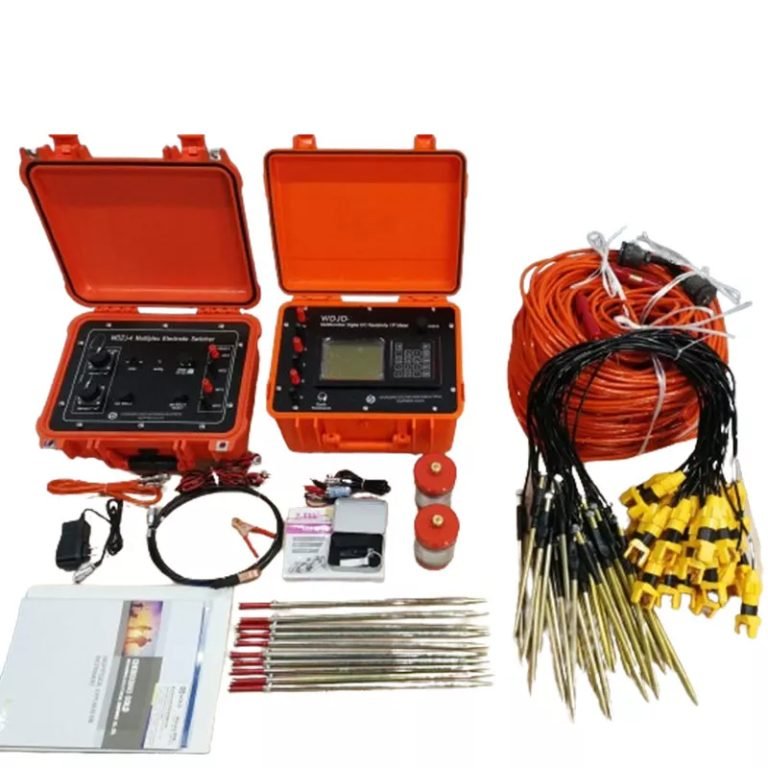
DJF Series 5KW High-Power Digital DC Induced Polarization Measurement System
 Article Title
 Article Title
DJF Series 5kW High-Power DC Induced Polarization (IP) Measurement System: Advanced Solution for Deep Mineral Exploration and Engineering Geophysics
(Note: Related terms:High-power induced polarization (IP) technology, High-current IP methods, Digital DC IP measurement system, IP surveying instruments, Chargeability measurement, IP parameter acquisition)
Principles of High-Power Induced Polarization (IP) Technology
High-power induced polarization technology is a geophysical exploration method widely used in mineral resource surveys. It utilizes high-frequency electrical currents to generate an electromagnetic field underground. By analyzing variations in the electromagnetic field, mineral deposits can be detected. During exploration, parameters such as current frequency, amplitude, duration, and electrode configuration are controlled to capture distinct electromagnetic field characteristics, enabling the estimation of underground mineral reserves.
Technical Advantages
Compared to traditional geophysical exploration methods, high-power IP technology offers the following advantages:
- High Sensitivity: Detects subtle electromagnetic field variations in mineral deposits, enabling effective identification of weak metallic ores.
- Non-Invasive: Conducts surface surveys without excavation, overcoming challenges faced by conventional geological methods.
- High Efficiency: Delivers rapid, accurate, and large-scale exploration, particularly effective for extensive mineral deposit surveys.

Product Overview
The DJF Series High-Power DC Induced Polarization Measurement System is a next-generation solution designed for deep multi-metal mineral exploration. Featuring stable performance and high precision, it leads the domestic market. Key attributes include:
- Lightweight design, high supply voltage, and large power output.
- Massive data storage capacity with real-time data acquisition and display of resistivity and polarizability.
- Applications span multi-metal mineral exploration, engineering geophysics, groundwater detection, geothermal reservoir identification, and hydrogeological surveys.
Applications
- Detection of underground cavities, coal mine goafs, dam piping leaks, and engineering geophysical surveys.
- Exploration of metal/non-metal deposits, geothermal resources, and groundwater.
- Environmental surveys, landfill leakage detection, and geological hazard assessments.
Key Features
- Multifunctional: Field measurements of apparent resistivity, polarizability, and half-life time; records full charge/discharge cycles and IP decay for multi-parameter analysis.
- Multi-Parameter Analysis: Computes polarizability across time intervals and decay indices to distinguish ore anomalies.
- Deep Exploration: Depth ranges from 500–800 m, adjustable via electrode spacing.
Core Advantages
Intelligent Synchronization
- Triple synchronization modes: Software/Quartz Clock/GPS (optional).
- Compatibility: Integrates with traditional IP receivers for full-scenario systems.
Precision Data Management
- Military-grade real-time clock: Millisecond timestamping with automated current-data linkage.
- Industrial flash memory: Stores 100,000+ current-time datasets with power-loss protection.
Safety Protection
- Triple-circuit protection: Over/under-voltage (220V), overcurrent, and open-circuit safeguards.
- Dual-state monitoring: LED status indicators for operation/faults.
High-Accuracy Measurement
- Ground impedance detection: Real-time AB electrode resistance monitoring.
- Quartz timebase: 0.1ppm precision clock for timing accuracy.
Full-Waveform Sampling
- Full-wave potential recording: Enables secondary IP calculations and self-potential interference monitoring.
- Self-calibration: Step-response calibration ensures <0.5% IP measurement error.
Intelligent Noise Suppression
- Adaptive filtering: Eliminates 50/60 Hz industrial noise.
- Dynamic gain control: 128-level AGC for optimal signal clarity.
Multi-Mode Synchronization
- Global compatibility: Supports mainstream time-domain IP transmitters worldwide.
- Weak-signal enhancement: Quartz/GPS synchronization boosts SNR by 40% vs. traditional methods.
Robust Engineering Design
- IP67 rating: Dustproof, waterproof, and operable in -20℃ to 60℃ extremes.
- Expandable storage: Up to 64GB TF card support for permanent data retention.
Specifications
| Transmitter | |
|---|---|
| Max. Output Power | 5 kW |
| Max. Output Current | 6 A |
| Max. Output Voltage | 1200 V DC |
| Current Accuracy | ±1% |
| Duty Cycle | 4S, 8S, 16S, 32S, 64S, 128S, 256S |
| Waveform | bipolar square wave for IP surveys (1:1 duty ratio, 1–60s pulse width) |
| Data Storage | ≥8000 datasets, programmable intervals (min. 1 min) |
| Synchronization | GPS, high-precision quartz clock, software |
| Operating Temperature | -20℃ to +60℃, 95% RH |
| Dimensions | 80 × 450 × 360 mm |
| Weight | 22 kg |
| Receiver | |
|---|---|
| Synchronization | Software, GPS, quartz clock |
| Voltage Range | ±40 V (32-bit A/D) |
| Voltage Resolution | 5 nV |
| Recording Mode | Full-waveform current/potential |
| Voltage Accuracy | ≤0.1% (>1 mV), ±1 µV (≤1 mV) |
| Polarizability Accuracy | ±0.2% (relative error) |
| Input Impedance | ≥50 MΩ; 50 Hz rejection >120 dB |
| SP Compensation | ±40 V auto-tracking digital compensation |
| Display | 5″ 24-bit color LCD (1000 cd/m² sunlight-readable) |
| Storage | 16 GB (expandable to 64 GB), USB 2.0 |
| Battery | 16.8 V, 7.8 Ah (23-hour runtime) |
| Waterproof Rating | IP67 |
| Operating Temperature | -20℃ to +60℃, 95% RH |
| Dimensions | 240 × 95 × 240 mm |
| Weight | 1.5 kg |
| Power Supply | |
|---|---|
| Max. Output Power | 5 kW |
| Max. Output Voltage | 1200 V |
| Max. Output Current | 6 A |
| Voltage/Current Accuracy | ±1% |
| Input Power | 220 V/50 Hz (±10% fluctuation) |
| Operating Temperature | 10℃ to +50℃, 95% RH |
| Dimensions | 600 × 370 × 340 mm |
| Weight | 57 kg |
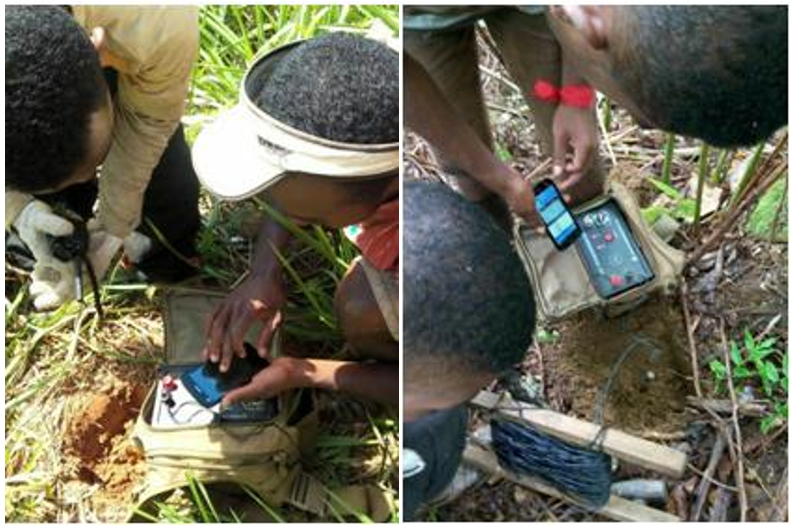
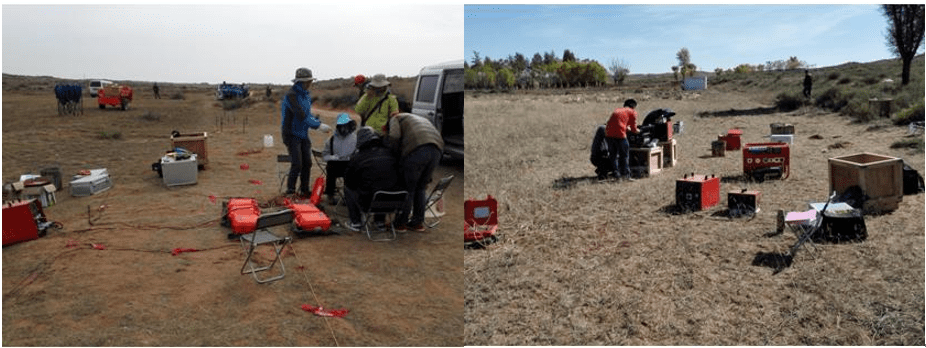
Case Study
FAQ
In gravity exploration (SI), what is the unit of gravity? How to convert gravity units between SI and CGS?
What are gravitational field and gravitational potential?
What is the normal gravity field of the earth? What are the rules for the change of the normal gravity field with latitude and altitude?
What is the relationship between gravitational field strength and gravitational acceleration?
What is gravity exploration?