Welcome to Geotech!
-1.png)


A Technical Deep Dive into the Proton Precession Magnetometer
TIPS:Dive into the proton precession magnetometer! This guide dissects its core tech: from proton polarization to magnetic moment measurement. Learn how to boost measurement accuracy and master calibration methods, unlocking precision in geophysics, archaeology, and scientific research.

I. Introduction: The Benchmark of Absolute Accuracy
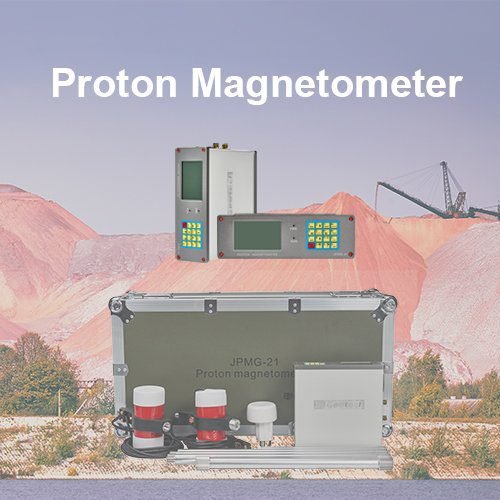
In the realm of geophysical instrumentation, few devices can claim the foundational role of the Proton Precession Magnetometer. Renowned for its absolute accuracy and inherent stability, this instrument is a cornerstone of precision magnetic surveying. This article provides a comprehensive technical dissection of the proton precession magnetometer. We will delve into the quantum mechanical phenomena of proton polarization that underpin its operation. Our exploration will extend to the precise magnetic moment measurement it enables. Furthermore, we will examine the critical engineering pursuits of measurement accuracy improvement and robust magnetometer calibration protocols. This analysis is intended for professionals who seek to understand the core principles behind this trusted technology.
II. Fundamental Physics: The Principle of Nuclear Precession
The operation of a proton precession magnetometer is a direct application of quantum mechanics. It hinges on a fundamental property of atomic nuclei: the magnetic moment.
- Atomic Nuclei and Spin: Protons and neutrons within a nucleus possess a quantum property called “spin.” This spin generates a tiny magnetic moment, causing the nucleus to behave like a microscopic bar magnet.
- The Gyromagnetic Ratio: The relationship between the spin of a proton and its generated magnetic moment is defined by a constant known as the gyromagnetic ratio (γp). This constant is unique to each type of nucleus and is the key to the magnetometer’s absolute accuracy.
- Precession: When a proton with a magnetic moment is placed in a static magnetic field (B₀), it does not simply align with the field. Instead, it undergoes “precession.” Much like a spinning top wobbles around the gravitational field vector, the magnetic moment vector wobbles, or precesses, around the direction of B₀. This is nuclear precession.
The frequency of this precession is given by the Larmor equation: ƒ = (γp / 2π) * B₀
This equation is the heart of the technology. It shows that the precession frequency (ƒ) is directly proportional to the magnitude of the external magnetic field (B₀). Since γp is a known physical constant for the proton, measuring ƒ allows for a direct and absolute calculation of B₀.
III. The Operational Sequence: From Polarization to Measurement
A practical proton precession magnetometer executes a precise cycle to make a measurement.
- Proton Polarization (Alignment): The sensor is filled with a proton-rich fluid (e.g., water, kerosene). A strong electric current is passed through a coil surrounding the fluid, generating a powerful magnetic field (B_pol) that is typically much stronger than the Earth’s field. This field forces the randomly oriented proton magnetic moments to align, or become polarized, with it. This state is known as proton orientation or nuclear polarization.
- Free Precession (Measurement): The polarizing current is abruptly switched off. The aligned protons are suddenly subject only to the ambient magnetic field (B₀), usually the Earth’s field. They immediately begin to precess around the direction of B₀ at a frequency defined by the Larmor equation.
- Signal Detection: As the protons precess, their collective, coherent motion induces a weak alternating voltage in the same coil used for polarization. The frequency of this AC signal is identical to the precession frequency.
- Frequency Measurement and Calculation: The instrument’s electronics precisely measure this frequency. Using the known value of γp, the system directly computes the absolute strength of the magnetic field B₀. This entire process constitutes a single measurement of magnetic moment on a macroscopic scale.
IV. The Pursuit of Precision: Measurement Accuracy Improvement
The inherent accuracy of the proton precession magnetometer is superb. However, several factors can limit precision in practice. Enhancement of measurement accuracy focuses on mitigating these factors:
- Signal-to-Noise Ratio (SNR): The induced precession signal is very weak. Improving SNR is paramount. This is achieved through:
- High-Quality Sensor Design: Optimizing the fluid and coil design to maximize the signal strength.
- Advanced Signal Processing: Using digital signal processing (DSP) techniques like Fast Fourier Transforms (FFT) to accurately extract the frequency from noisy data.
- Averaging: Taking multiple measurements and averaging the results to reduce random noise.
- Dead Time: The brief period after the polarizing field is cut off and before the precession signal becomes measurable. During this time, the protons dephase, causing a slight error. Modern designs minimize dead time through rapid electronic switching.
- External Noise: Cultural noise from power lines, vehicles, and other equipment can interfere. Precision improvement in measurement often involves operating in quiet areas or using gradiometer configurations to cancel out noise.
V. Ensuring Reliability: The Critical Role of Magnetometer Calibration
A key advantage of the proton precession magnetometer is that it is an absolute instrument. Its accuracy is derived from a physical constant (γp), meaning it does not drift and requires no calibration in the traditional sense of scaling factors. However, the term magnetometer calibration in this context refers to:
- System Verification: Ensuring the entire electronic system—the frequency counter, the timer, the processor—is functioning correctly and without error. This is often done by testing the instrument in a known magnetic field.
- Noise Floor Assessment: Measuring the instrument’s inherent noise to understand its minimum detectable signal.
- Sensor Health Checks: Verifying that the sensor fluid has not degraded and that the coils are operating properly.
This rigorous validation ensures that the instrument delivers on its promise of absolute determination of magnetic moment.
VI. Conclusion: The Unwavering Standard
The proton precession magnetometer remains an unwavering standard in geophysics. Its elegant reliance on fundamental physics provides a level of accuracy and reliability that is unmatched by many other technologies. Through a deep understanding of proton polarization, precise magnetic moment measurement, continuous measurement accuracy improvement, and diligent magnetometer calibration, this instrument continues to be the trusted choice for base station measurements, geological mapping, and any application where absolute magnetic field values are non-negotiable.
References
- E. M. Purcell, H. C. Torrey, and R. V. Pound: Phys. Rev. 69 (1946) 37. https://journals.aps.org/pr/abstract/10.1103/PhysRev.69.37
- F. Bloch: Physica 17 (1950) 460. https://journals.aps.org/pr/abstract/10.1103/PhysRev.70.460
- H. Dong, H. Liu, J. Ge, Z. Yuan, and Z. Zhao: IEEE Trans. Instrum. Meas. 65 (2016) 898. https://ieeexplore.ieee.org/document/7393816
- G. S. Waters: Nature 176 (1955) 691. https://www.nature.com/articles/176691a0
- G. S. Waters and G. Phillips: Geophys. Prospect. 4 (1956) 1. https://onlinelibrary.wiley.com/doi/10.1111/j.1365-2478.1956.tb01392.x
- A W. Overhauser: J. Phys. Rev. 92 (1953) 411. https://journals.aps.org/pr/abstract/10.1103/PhysRev.92.411
- A. Abragam: J. Phys. Rev. 98 (1955) 1729. https://journals.aps.org/pr/abstract/10.1103/PhysRev.98.1729
- G. Breit and I. I. Rabi: J. Special Studies Papers 38 (1931) 2082. https://journals.aps.org/pr/abstract/10.1103/PhysRev.38.2082.2
- I. Solomon: J. Phys. Rev. 99 (1955) 559. https://journals.aps.org/pr/abstract/10.1103/PhysRev.99.559
- J. Lenz and S. Edelstein: IEEE Sens. J. 6 (2006) 631. https://ieeexplore.ieee.org/document/1634415
- N. Kernevez and H. Glenat: IEEE Trans. Magn. 27 (2002) 5402. https://ieeexplore.ieee.org/document/278852
- D. Duret, J. Bonzom, M. Brochier, M. Frances, J. M. Leger, R. Odru, C. Salvi, T. Thomas, and A. Perret: IEEE
Trans. Magn. 31 (1995) 3197. https://ieeexplore.ieee.org/document/490326