Welcome to Geotech!
-1.png)

Proton Precession Magnetometer: Single or Dual Sensor?
TIPS:Proton Precession Magnetometer systems deliver ±0.1nT precision for geophysical surveys. This guide compares High-Sensitivity Magnetometer single and dual sensor configurations for mineral exploration. Learn how Proton Precession Magnetometer technology with OCXO stabilization enables 0.05nT anomaly detection, and why High-Sensitivity Magnetometer gradient measurements eliminate diurnal interference in challenging field conditions.
Ⅰ. Introduction: Choosing the Right Proton Precession Magnetometer Configuration
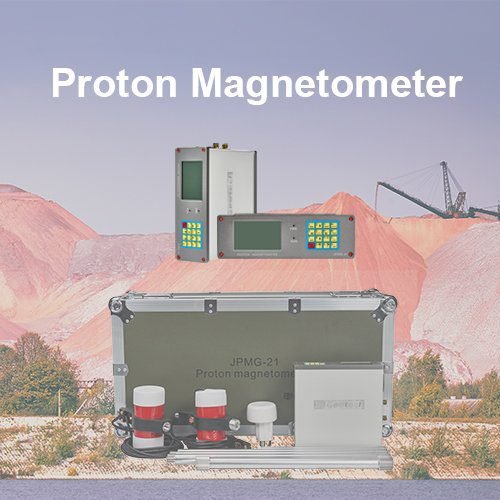
Geotech’s JPMG Series proton precession magnetometer offers two distinct configurations for geophysical professionals. The single sensor version delivers absolute magnetic field measurements with 0.05nT sensitivity. The dual sensor version functions as a complete portable magnetic gradiometer system, enabling gradient measurements that eliminate environmental interference.
This guide examines both configurations to help you select the optimal high-sensitivity magnetometer for your specific survey requirements. Whether you conduct regional geological mapping or detailed anomaly detection, understanding these options ensures efficient data acquisition.
Ⅱ. JPMG Single Sensor: Absolute Field Measurements
- Core Capabilities
The single sensor proton precession magnetometer measures total magnetic field intensity at discrete points. This configuration suits applications requiring absolute geomagnetic values referenced to international standards.
Key specifications:
- Measurement range: 20,000–120,000 nT
- Absolute accuracy: ±0.1 nT
- Resolution: 0.01 nT
- Noise level: <0.05 nT
- Sampling rate: 3–60 seconds selectable
The OCXO magnetometer stabilization maintains precision across -40°C to +55°C operational temperatures. This thermal stability proves critical for extended surveys in variable climates.
- Operating Modes
The single sensor system supports three distinct field modes:
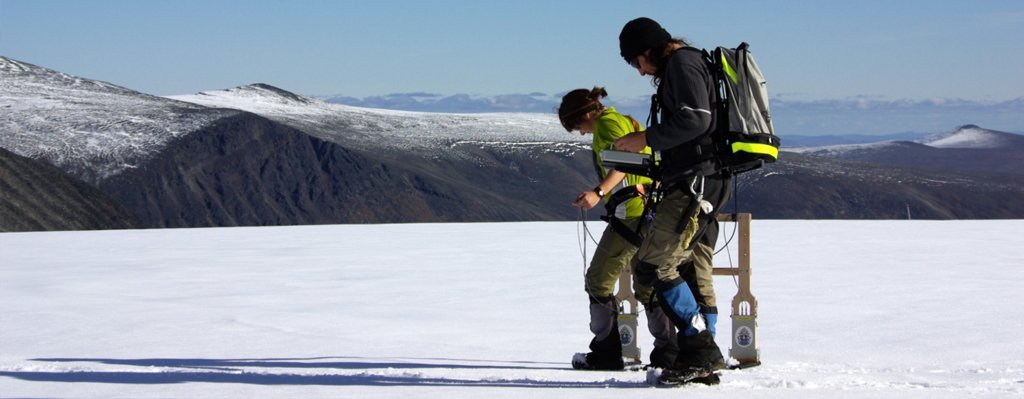
Mobile Mode: Rapid point measurements while traversing survey grids. Operators collect data at predetermined stations, with GPS coordinates automatically logged for each reading.
Walking Mode: Continuous measurements at 0.5–3 second intervals. The operator maintains steady walking pace while the instrument records magnetic variations along profiles. This mode achieves 5× faster coverage than stationary measurements.
Base Station Mode: Continuous monitoring at fixed locations for diurnal variation recording. The instrument samples at 3–3600 second intervals, establishing reference data for mobile survey corrections.
- Ideal Applications
The single sensor configuration excels in:
- Regional geological mapping: Establishing baseline magnetic field variations across large areas
- Diurnal monitoring: Tracking temporal field changes for correction of mobile survey data
- Calibration surveys: Providing absolute reference points for other magnetometer systems
- Long-term observatories: Continuous field recording at geomagnetic monitoring stations
Ⅲ. JPMG Dual Sensor: Portable Magnetic Gradiometer System
- Gradient Measurement Technology
The dual sensor portable magnetic gradiometer configuration transforms the JPMG into a differential measurement system. Two sensors separated by fixed 0.4-meter spacing simultaneously sample the magnetic field.
The gradient calculation follows:
Gradient (nT/m) = (B_upper – B_lower) / 0.4m
This differential approach provides decisive advantages over absolute measurements:
- Diurnal cancellation: Both sensors experience identical temporal variations, which subtract out in the gradient calculation
- Regional field removal: Large-scale geological trends cancel, isolating local anomalies
- Cultural noise suppression: Distant interference affects both sensors equally
- No base station required: Self-correcting measurements reduce logistical complexity
- Sensor Configurations
The dual sensor system supports flexible deployment:
Vertical Gradient: Sensors mounted on rigid 0.4m staff, upper sensor at 2.0m height, lower at 1.6m. Configuration detects near-surface anomalies with high resolution.
Horizontal Gradient: Sensors positioned 0.4m apart perpendicular to survey direction. Optimal for mapping linear features like faults or pipeline corridors.
- Enhanced Performance Specifications
The high-sensitivity magnetometer gradient system delivers:
- Gradient tolerance: >5,000 nT/m (handles steep anomalies near ore bodies)
- Absolute accuracy: ±0.1 nT per sensor
- Effective resolution: 0.025 nT/m gradient resolution
- Sampling modes: Mobile, Walking, and Base Station modes available
- Field Efficiency Gains
Case study: Australian iron ore province
- Challenge: 50m transported cover masking bedrock geology, strong diurnal variations (40 nT daily range)
- Solution: JPMG dual sensor vertical gradient, 10m line spacing
- Results: Detected 12 mineralized zones without base station dependency, survey completed 22% faster than single-sensor with diurnal correction
- Key advantage: Real-time gradient data eliminated post-processing delays
Ⅳ. Technical Deep Dive: OCXO Stabilization in Both Configurations
Both JPMG configurations incorporate OCXO magnetometer technology for temperature-independent precision.
- Why Temperature Stability Matters
Standard crystal oscillators exhibit ±25 ppm frequency drift across temperature ranges. For proton precession magnetometer measurements, this translates to ±1.25 nT error—sufficient to mask subtle anomalies.
- OCXO Performance Specifications
| Parameter | Standard Crystal | JPMG OCXO | Improvement |
|---|---|---|---|
| Temperature stability | ±25 ppm | ±0.01 ppm | 2500× |
| Frequency drift | ±1.25 nT | ±0.0005 nT | Negligible |
| Warm-up time | Instant | 3–5 minutes | Acceptable trade-off |
| Power consumption | Low | Moderate | 24–30 hour battery life maintained |
- Field Validation
In extreme environment testing (-40°C to +55°C), both single and dual sensor configurations maintained ±0.1 nT absolute accuracy. This stability ensures consistent magnetic anomaly detection regardless of climate conditions.
Ⅴ. Application-Specific Configuration Selection
- Mineral Exploration Tools
Single sensor preference: Regional reconnaissance mapping, baseline establishment for subsequent detailed surveys.
Dual sensor preference: Detailed anomaly delineation, areas with strong diurnal variations, locations distant from base station infrastructure.
- Archaeological Survey Equipment
Single sensor: Large-area site reconnaissance where absolute field values aid regional geological context.
Dual sensor: High-resolution gradiometer surveys for feature delineation. The 0.4m vertical gradient detects fired clay structures, pits, and foundations with 0.05 nT sensitivity.
Case study: Brazilian colonial settlement
- Target: 12th-century indigenous village with subtle magnetic signatures
- Method: Dual sensor walking mode, 0.5m station spacing
- Discovery: 23 anomalies corresponding to pit houses and hearths at 2.3m depth
- Advantage: Gradient data eliminated surface interference from modern fences and power lines
- Underground Pipeline Detector
Single sensor: Long-range pipeline corridor mapping with absolute field reference.
Dual sensor: Precision location in urban environments with high cultural noise. Gradient measurements distinguish pipeline signatures from background interference.
- Geological Prospecting Instruments
Single sensor: Tectonic studies requiring absolute field values for geomagnetic reference models.
Dual sensor: Fault zone mapping, igneous intrusion delineation, and metamorphic boundary identification where local gradient anomalies indicate structural features.
Ⅵ. Data Management and Software Integration
Both JPMG configurations share integrated data capabilities:
- Storage: 32MB internal memory (209,715 manual mode or 699,050 base mode readings)
- Transfer: USB and RS-232 interfaces
- Positioning: 30μs GNSS synchronization (GPS/BeiDou/GLONASS)
- Visualization: Real-time magnetic curve display on host screen
- Processing: Professional software generates contour maps and 3D magnetic profiles
The dual sensor portable magnetic gradiometer additionally provides:
- Real-time gradient calculation and display
- Automatic anomaly highlighting when gradient thresholds exceeded
- 3D profile generation for subsurface structure interpretation
Ⅶ. Specification Comparison
| Feature | JPMG Single Sensor | JPMG Dual Sensor |
|---|---|---|
| Measurement type | Absolute total field | Field gradient + absolute |
| Sensor configuration | 1 probe | 2 probes (0.4m spacing) |
| Primary output | B_total (nT) | Gradient (nT/m) + B_total |
| Diurnal correction | Requires base station | Self-correcting |
| Regional field removal | Post-processing required | Real-time cancellation |
| Cultural noise immunity | Moderate | High |
| Survey speed | Standard | 22% faster (no base station dependency) |
| Weight (console + sensors) | 1.8 kg | 2.2 kg |
| Battery life | 30 hours | 24 hours |
| Best for | Regional mapping, observatories | Detailed surveys, noisy environments |
Ⅷ. Operational Best Practices
- Single Sensor Optimization
- Establish base station for diurnal correction when survey duration exceeds 2 hours
- Maintain sensor orientation within 15° of horizontal for optimal signal strength
- Use walking mode for profile lines, mobile mode for grid intersections
- Dual Sensor Gradiometer Techniques
- Maintain rigid 0.4m sensor spacing ±2cm for gradient accuracy
- Vertical gradient preferred for near-surface anomaly detection
- Horizontal gradient optimal for linear feature mapping
- Walking mode at 1-second intervals achieves highest spatial resolution
- Environmental Considerations
Both configurations:
- Operate effectively in -40°C to +55°C
- Require 3–5 minute OCXO warm-up for optimal precision
- Achieve IP67 protection against dust and moisture
Avoid surveying during magnetic storms (K-index >4). Maintain >30m clearance from power lines and vehicles.
Ⅸ. Investment Decision Framework
Choose JPMG Single Sensor when:
- Budget constraints prioritize lower cost
- Survey areas have established base station infrastructure
- Absolute field values required for geomagnetic reference
- Long battery life critical for remote operations
Choose JPMG Dual Sensor when:
- Survey areas lack base station access
- High cultural noise environments (urban, industrial)
- Rapid survey turnaround required
- Subtle near-surface anomalies targeted
- Post-processing time reduction prioritized
Both configurations deliver Geotech’s commitment to high-sensitivity magnetometer precision. The OCXO magnetometer stabilization ensures ±0.1 nT accuracy regardless of configuration selection.
Ⅹ. Conclusion: Precision Geomagnetism for Every Application
Geotech’s JPMG Series proton precession magnetometer provides flexible solutions for diverse geophysical challenges. The single sensor configuration offers cost-effective absolute field measurements. The dual sensor portable magnetic gradiometer delivers self-correcting gradient surveys with superior environmental immunity.
Both systems leverage OCXO magnetometer technology for temperature-stable, 0.05 nT sensitivity performance. Whether mapping mineral deposits, protecting archaeological heritage, or safeguarding underground infrastructure, JPMG instruments transform magnetic data into actionable discoveries.
Contact Geotech Instrument Co., Ltd. to configure your proton precession magnetometer system for specific survey requirements.
References
- E. M. Purcell, H. C. Torrey, and R. V. Pound: Phys. Rev. 69 (1946) 37. https://journals.aps.org/pr/abstract/10.1103/PhysRev.69.37
- F. Bloch: Physica 17 (1950) 460. https://journals.aps.org/pr/abstract/10.1103/PhysRev.70.460
- H. Dong, H. Liu, J. Ge, Z. Yuan, and Z. Zhao: IEEE Trans. Instrum. Meas. 65 (2016) 898. https://ieeexplore.ieee.org/document/7393816
- G. S. Waters: Nature 176 (1955) 691. https://www.nature.com/articles/176691a0
- G. S. Waters and G. Phillips: Geophys. Prospect. 4 (1956) 1. https://onlinelibrary.wiley.com/doi/10.1111/j.1365-2478.1956.tb01392.x
- A W. Overhauser: J. Phys. Rev. 92 (1953) 411. https://journals.aps.org/pr/abstract/10.1103/PhysRev.92.411
- A. Abragam: J. Phys. Rev. 98 (1955) 1729. https://journals.aps.org/pr/abstract/10.1103/PhysRev.98.1729
- G. Breit and I. I. Rabi: J. Special Studies Papers 38 (1931) 2082. https://journals.aps.org/pr/abstract/10.1103/PhysRev.38.2082.2
- I. Solomon: J. Phys. Rev. 99 (1955) 559. https://journals.aps.org/pr/abstract/10.1103/PhysRev.99.559
- J. Lenz and S. Edelstein: IEEE Sens. J. 6 (2006) 631. https://ieeexplore.ieee.org/document/1634415
- N. Kernevez and H. Glenat: IEEE Trans. Magn. 27 (2002) 5402. https://ieeexplore.ieee.org/document/278852
- D. Duret, J. Bonzom, M. Brochier, M. Frances, J. M. Leger, R. Odru, C. Salvi, T. Thomas, and A. Perret: IEEE
Trans. Magn. 31 (1995) 3197. https://ieeexplore.ieee.org/document/490326