Welcome to Geotech!
-1.png)

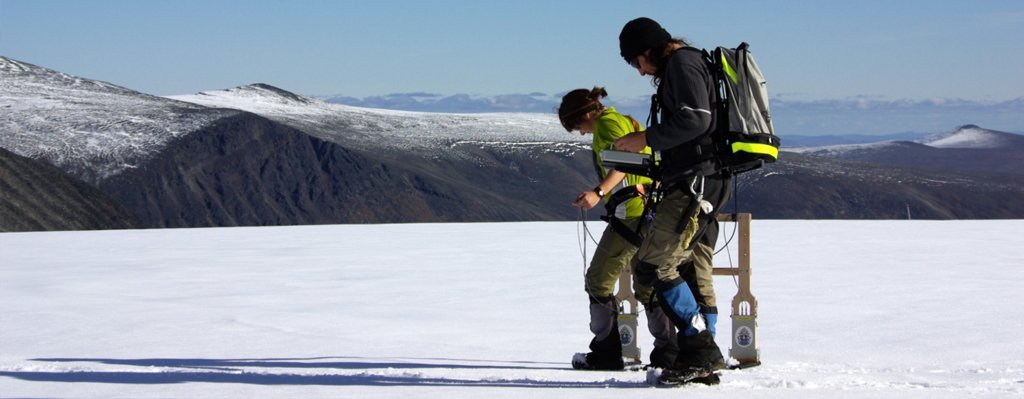
The Frontier of Electromagnetic Measurement: New Applications of Magnetometers
TIPS:Step into the frontiers of electromagnetic surveys! Discover how magnetometers are revolutionizing new fields—from mining exploration to environmental monitoring and archaeology. Uncover their innovative applications that drive industry progress in EM measurement.
I. Introduction: Beyond Traditional Exploration
The magnetometer has long been the workhorse of geological prospecting and oil & gas exploration. However, the frontier of technology is constantly expanding. Today, we are witnessing a remarkable evolution in the new applications of magnetometer technology. These emerging uses of magnetometer systems are solving complex problems across a diverse range of industries. This article explores these cutting-edge novel applications of magnetic sensor technology. We will delve into its transformative role in electromagnetic survey in mining, its critical function in electromagnetic survey for environmental monitoring, and its revealing power in electromagnetic survey in archaeology. This shift underscores the magnetometer’s growing value beyond its traditional scope.
II. Revolutionizing Resource Extraction: EM Survey in Mining
The mining industry is under constant pressure to increase efficiency, reduce costs, and minimize environmental impact. Advanced electromagnetic survey in mining is key to achieving these goals. Modern mineral exploration using EM techniques has moved beyond simple mapping.
- Brownfield Exploration: Instead of exploring new greenfield sites, mining companies are increasingly using high-resolution EM and magnetic surveys to re-examine existing mining concessions. This helps identify overlooked ore bodies and extend the life of mines.
- Targeted Drilling: By providing detailed 3D models of subsurface conductivity and magnetism, EM applications in mining allow for incredibly precise drill targeting. This drastically reduces the number of “dry” holes drilled, saving millions in operational costs.
- Volume Estimation: EM data can help estimate the volume of mineral deposits more accurately before excavation begins, improving resource planning and financial forecasting.
These new applications of magnetometer and EM systems are making mining operations smarter, safer, and more sustainable.
III. Guardians of the Planet: EM Survey for Environmental Monitoring
Perhaps one of the most impactful emerging uses of magnetometer technology is in the field of environmental protection. Electromagnetic survey for environmental monitoring provides a non-invasive way to assess and protect our ecosystem.
- Mapping Contaminant Plumes: EM surveys can detect and map the subsurface spread of contaminants from industrial spills or landfills. By identifying variations in ground conductivity, they can trace plumes of salty, metallic, or chemical pollutants, guiding effective remediation efforts.
- Water Resource Management: Environmental EM exploration is vital for mapping groundwater resources, understanding aquifer structures, and identifying saltwater intrusion into freshwater coastal aquifers—a growing concern due to climate change and rising sea levels.
- Waste Management: EM and magnetic tools are used to characterize landfill sites, locate buried waste, and monitor the integrity of containment barriers over time.
This application transforms the magnetometer and EM system from a tool of extraction into a tool of preservation and protection.
IV. Uncovering History Without a Shovel: EM Survey in Archaeology
The field of archaeology has been revolutionized by geophysical techniques. Electromagnetic survey in archaeology allows researchers to peer into the past without disturbing a single grain of soil. This non-destructive method is a form of archaeological EM exploration that reveals hidden histories.
- Site Mapping: High-sensitivity magnetometers can detect subtle magnetic anomalies caused by past human activity. This includes buried walls, ditches, hearths, kilns, and even ancient agricultural patterns. This allows archaeologists to create detailed maps of entire settlements before any excavation begins.
- Preservation: By understanding a site’s layout in advance, archaeologists can plan targeted, minimal-excavation campaigns. This preserves the majority of the site intact for future generations and more advanced technologies.
- Discovery: These tools have led to spectacular discoveries, from unplundered tombs to lost cities, simply by measuring the faint magnetic fingerprints left by our ancestors.
This novel application of magnetic sensor technology is protecting our cultural heritage while unlocking its secrets.
V. Emerging Frontiers: From Medicine to Space
The reach of new applications of magnetometer technology continues to grow:
- Medical Imaging: Superconducting (SQUID) magnetometers are used in Magnetoencephalography (MEG) to map brain activity by measuring the magnetic fields produced by neural currents. This provides crucial information for neurosurgery and neurological research.
- Infrastructure and Utility Detection: EM applications are standard for locating buried utilities (pipes, cables) before construction begins, preventing costly damages and accidents.
- Space Exploration: Magnetometers are fundamental instruments on satellites and planetary rovers. They measure the magnetic fields of Earth and other celestial bodies, providing insights into their core dynamics and history.
VI. Conclusion: A Tool for the Future
The magnetometer is no longer confined to the geologist’s toolkit. Its new applications are driving innovation in mining, safeguarding our environment, preserving our history, and even exploring the human brain and the cosmos. As electromagnetic survey technology continues to advance in sensitivity, portability, and data processing power, we can expect this trend to accelerate. The future will undoubtedly reveal even more emerging uses of magnetometer technology, solidifying its role as one of the most versatile and valuable scientific instruments of our time.
Reference
- WIKI:https://en.wikipedia.org/wiki/Electrical_resistivity_tomography
- Society of Exploration Geophysicists (SEG) https://seg.org/
- Society of Environmental and Engineering Geophysicists (EEGS) https://www.eegs.org/
- Geology and Equipment Branch of China Mining Association http://www.chinamining.org.cn/
- International Union of Geological Sciences (IUGS) http://www.iugs.org/
- European Geological Survey Union (Eurogeosurveys) https://www.eurogeosurveys.org/
