Welcome to Geotech!

Seismic Solutions:Airport Site survey solutions
- Solutions, Seismic Solutions
- 49 views
Description
Ⅰ. Overview
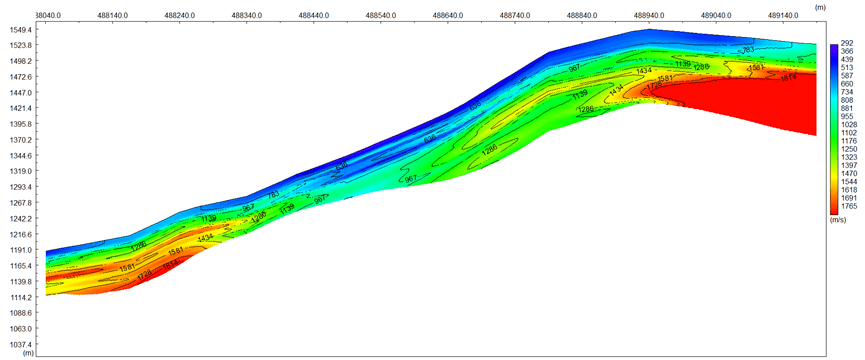
The owner needs to select a location to build an airport and needs to survey the underground soil layers at the planned location. Airport Site on the top of mountain, North of site was klint. South of site was deep valley.
Ⅱ. Project objectives
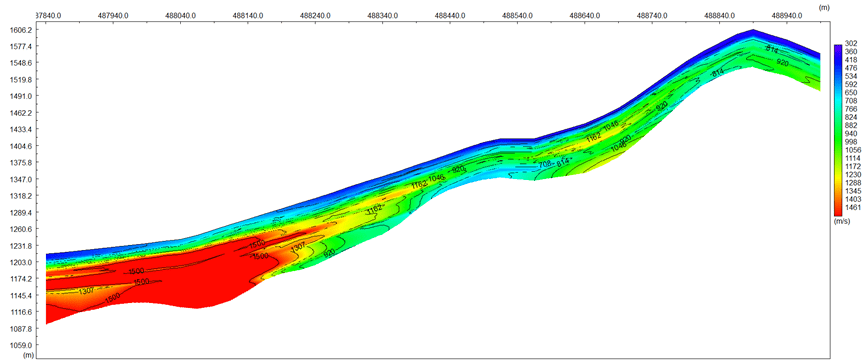
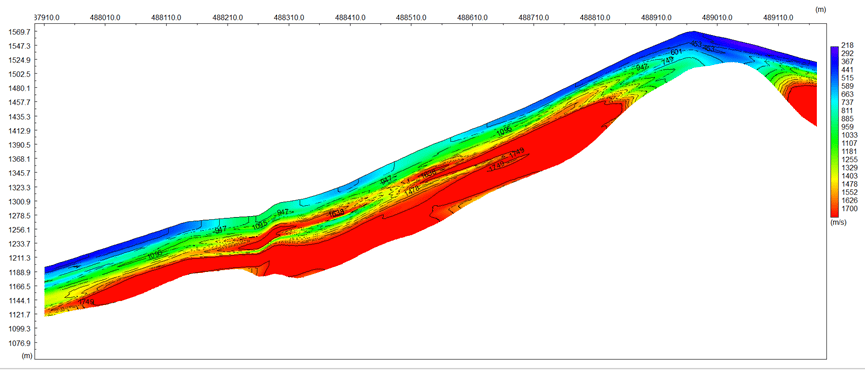
Detect the depth of landslide surface at south and thickness of weak/intense weathering layer at north
Ⅲ. Survey methods
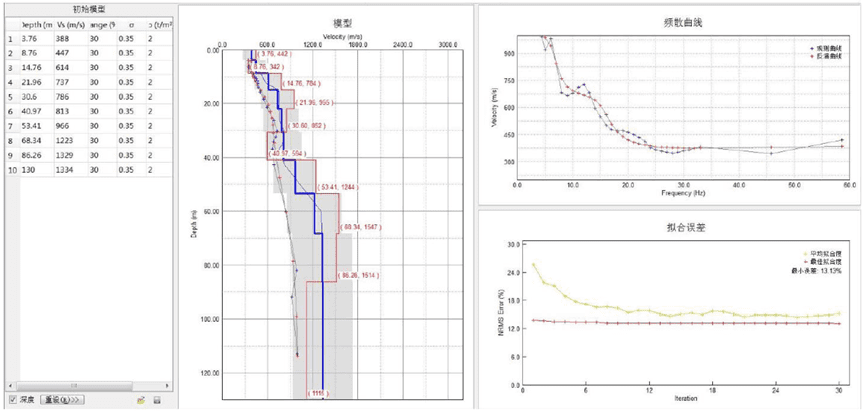
The industry name is Passive Surface Wave(PSW).It is a method of seismic exploration that does not need source excitation, by laying a geophone on the surface in a certain way, receiving natural seismic waves and background noise continuously for a period of time, using the surface wave dispersion characteristic to invert the depth-velocity curve and shear wave velocity profile.
Advantage:
- High precision
- Low cost
- Wide detection depth
Ⅳ.Survey design
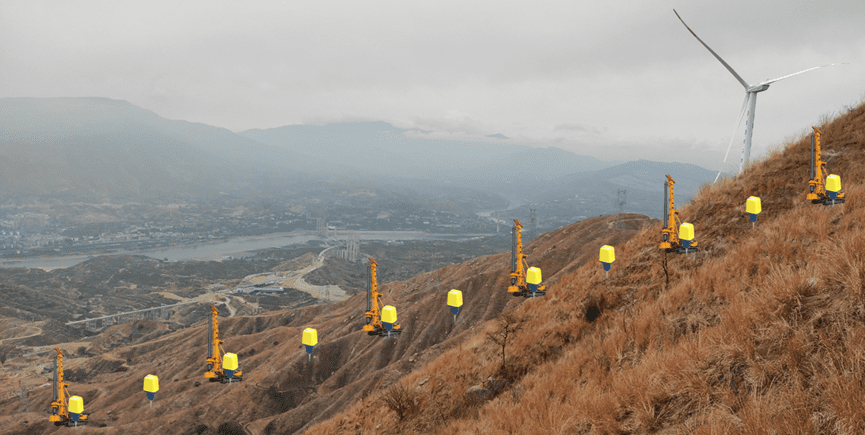
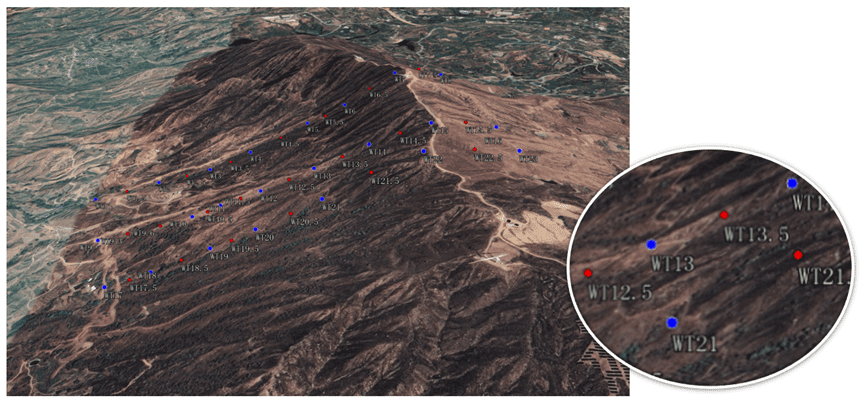
This survey used Geotech’s GE-ANT-1C Seismic nodal instrument[Survey method:Passive Surface Wave(PSW)]. 3 PSW Line, each Point use 7 Node seismic as triangular array observation system,Maximum radius 9m.
Ⅳ. Survey process
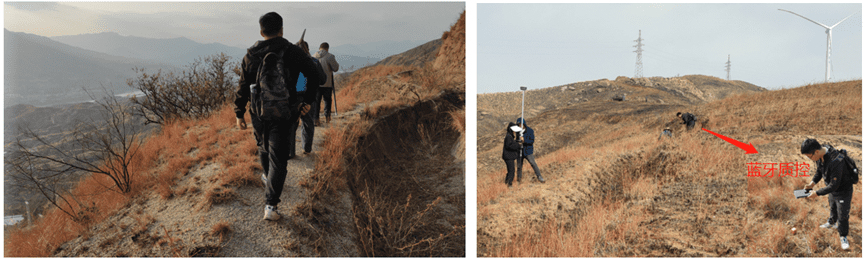
1. Survey Time: 48 hours ( 24 hour for layout and recycle; 24 hours for measurement )
2. Staff: 3~4 people ( Topo staff:1; Tech staff: 1; Labor:1~2 )
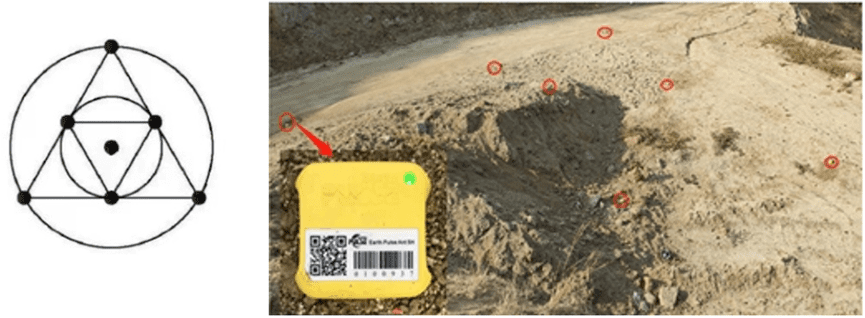
Ⅴ. Data analysis
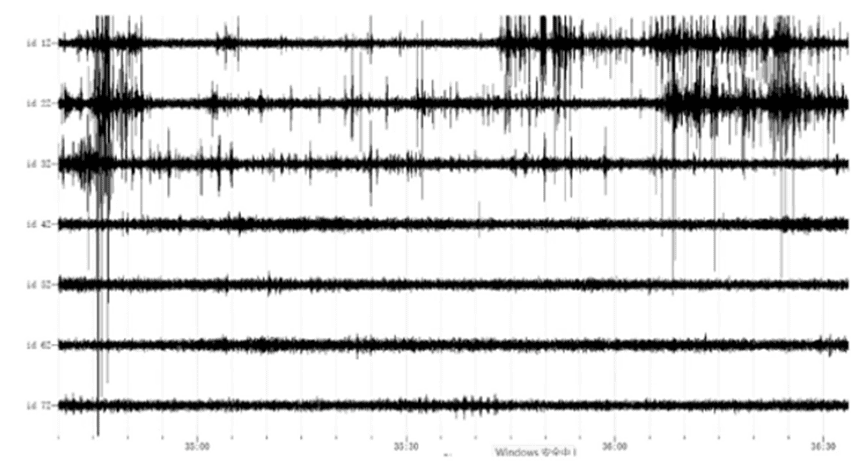
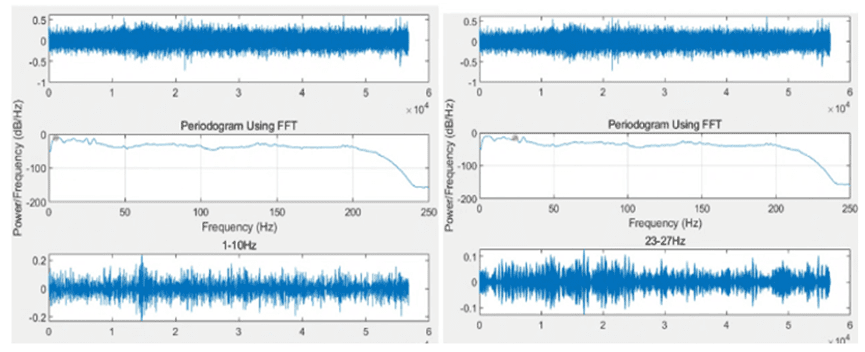
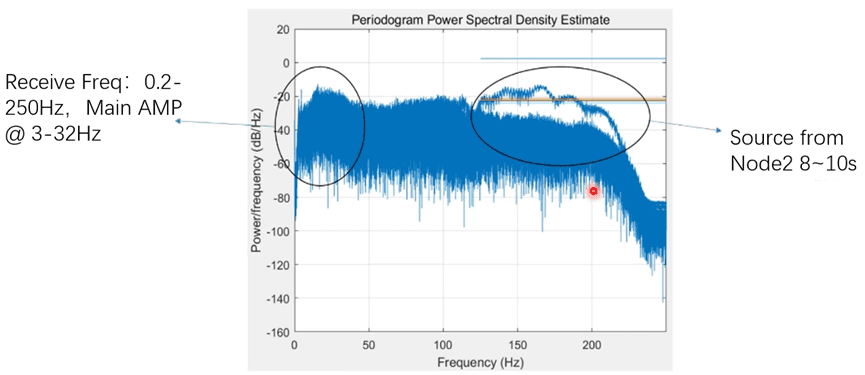
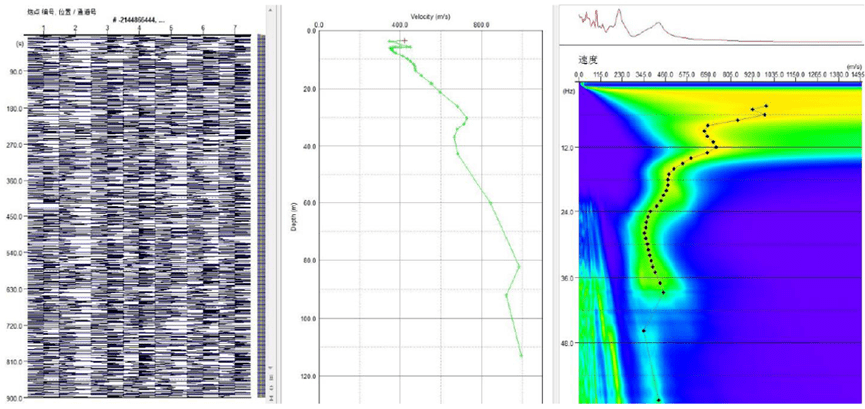
Analysis of micro-motion acquisition data:
- The seismometer at each node is in good condition.
- The whole data has broadband characteristics, ranging from 0.2-250 Hz;
- The noise source is mainly high frequency anthropogenic noise, with a frequency of 120-220 Hz.
FAQ
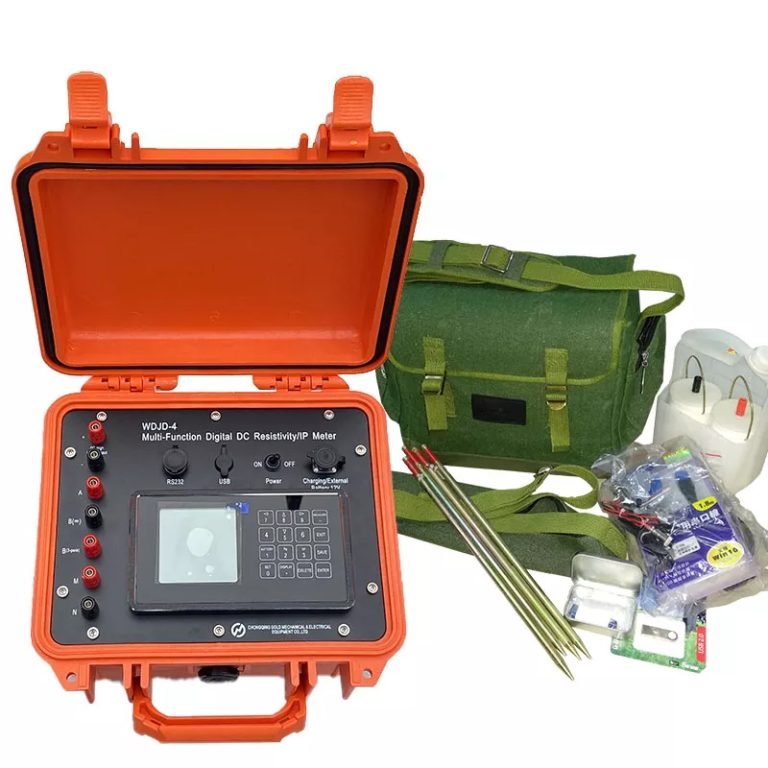
The double tap has a large current and can be used for IP testing to get more accurate data.
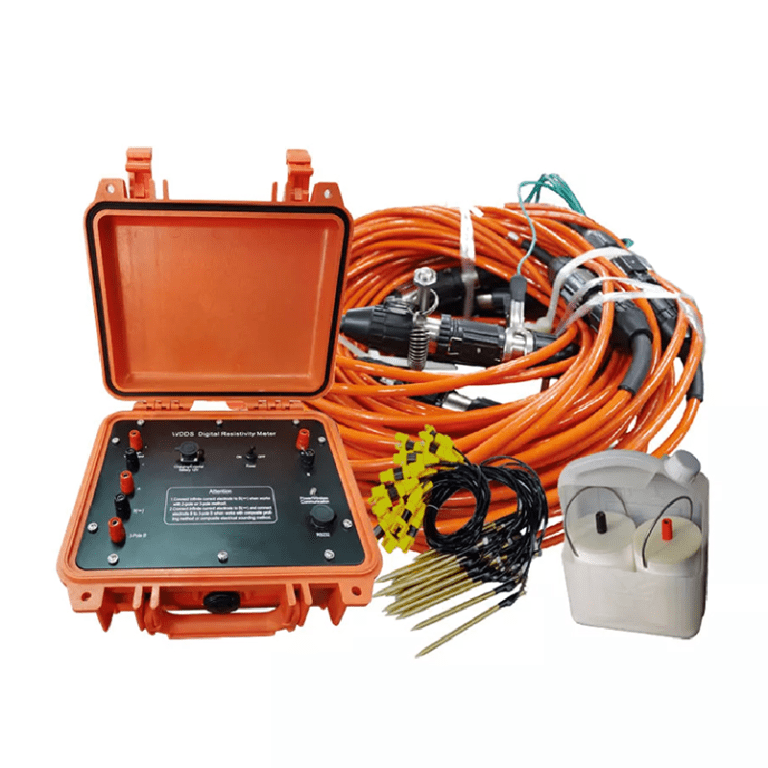
High-density apparent resistivity method is an array prospecting method, also known as automatic apparent resistivity system, which is developed from direct current method. Its function is equivalent to the combination of quadrupole sounding and electrical profiling method. The artificial electric field is formed by supplying electricity to the underground through electrodes. The distribution of the electric field is closely related to the distribution of the resistivity of the underground rock and soil medium. By measuring the artificial electric field at different parts of the surface, the distribution of the apparent resistivity of the underground medium is understood, and the underground geological structure is inferred and interpreted based on the distribution of the apparent resistivity of the rock and soil medium.
The principle of high-density electrical method is the same as that of traditional resistivity method. It is a combination method of multiple devices and multiple pole distances that integrates electrical depth sounding and electrical profiling method, which can obtain the conductivity characteristics of two-dimensional underground media. It has the characteristics of multi-device data acquisition in one pole arrangement, and highlighting abnormal information by obtaining ratio parameters, which greatly increases the amount of collected data, improves work efficiency, and ensures the accuracy and reliability of the pole running process.
This method is particularly sensitive to the water content of the surrounding rock. If the surrounding rock is broken and contains water, its apparent resistivity is significantly reduced. The apparent resistivity of intact and hard rock and soil is significantly higher than that of the surrounding rock in the fault zone or broken zone and water-rich zone. This method has a clear principle and intuitive images. It is a geophysical method with high resolution. In recent years, with the improvement of computer data acquisition technology, the exploration efficiency has been greatly improved, the coverage area and detection depth of the profile have been increased, reliable data can be obtained in a strong interference environment, the signal-to-noise ratio has been greatly improved, and the geological body can be accurately detected. This method has been widely and successfully applied in engineering and hydrogeological exploration and exploration of mineral and water resources.
(1) Application in coalfield and mine goaf detection
(2) Non-destructive detection of termite nests in dam foundations
(3) Karst and foundation surveys of railways, roads and tunnels
(4) Delineation of stratum lithology boundaries
(5) Survey of the leakage range of landfills
(6) Ancient tomb surveys
(7) Detection of sewage pipes
(8) Non-destructive testing of leakage in reservoirs and river dams
(9) Detection of bedrock fracture zones
(10) Soil salinity and water quality surveys
(11) Detection of ancient tunnels, air-raid shelters, metal burial sites, etc.
(1)The high-density resistivity method is based on the resistivity method, so it is suitable for all underground explorations with obvious conductivity differences;
(2)Any medium underground will have a weak polarization potential at the moment of power on and off, which will affect our measurement of the true potential difference. When the electrode distance is small, the loop current is large, which has little effect on the measurement results; when the electrode distance is too large, the interference potential is close to the effective potential, which has a greater impact on the measurement results. Therefore, due to the influence of the power supply electrode distance, the exploration depth cannot be too large, generally within 100m. When the conductivity of the soil medium is good, it can be appropriately increased, and the exploration depth in the soil medium with poor conductivity is appropriately smaller;
(3)It is generally less used in cities, near large transmission lines, etc. due to site restrictions and industrial stray current interference; 4. In areas such as concrete pavements and exposed bedrock surfaces, it is also less used due to the difficulty of electrode layout.
-1.png)