Welcome to Geotech!
-1.png)

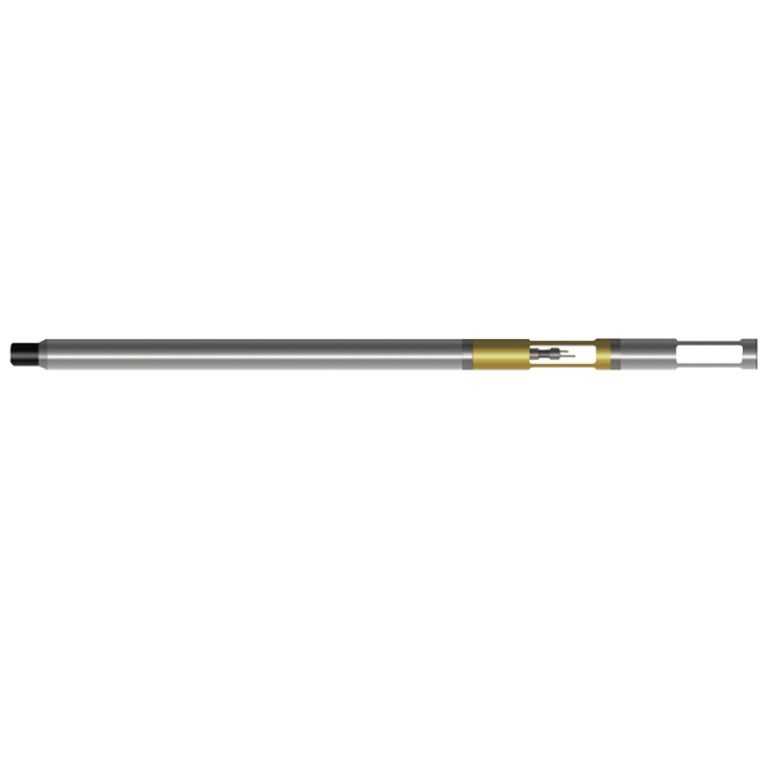
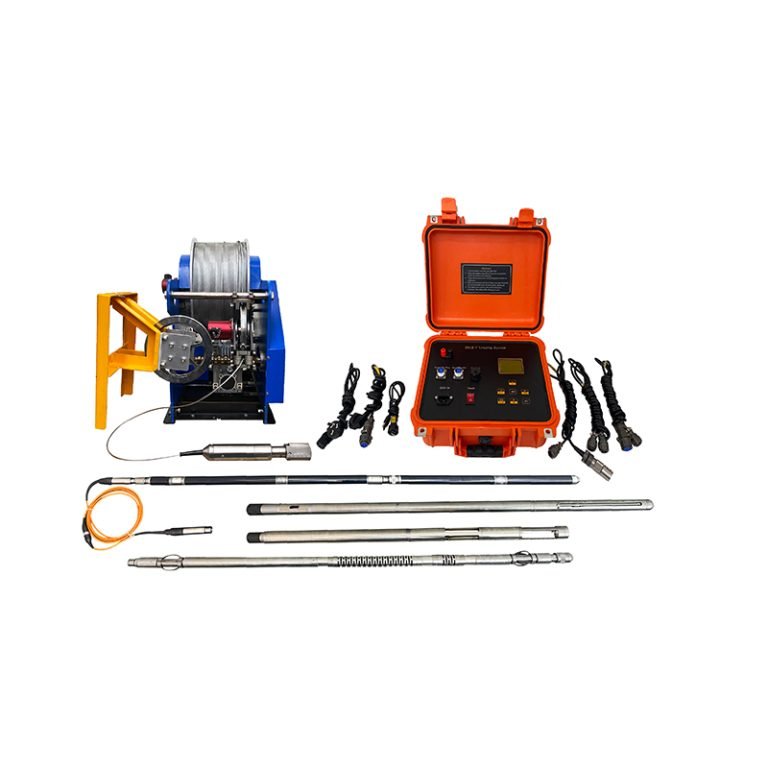
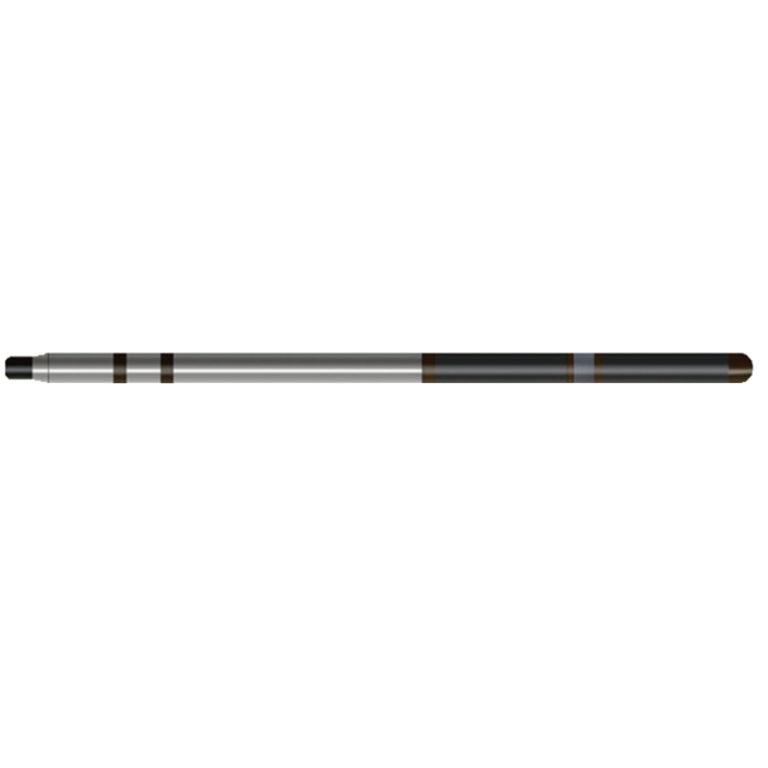
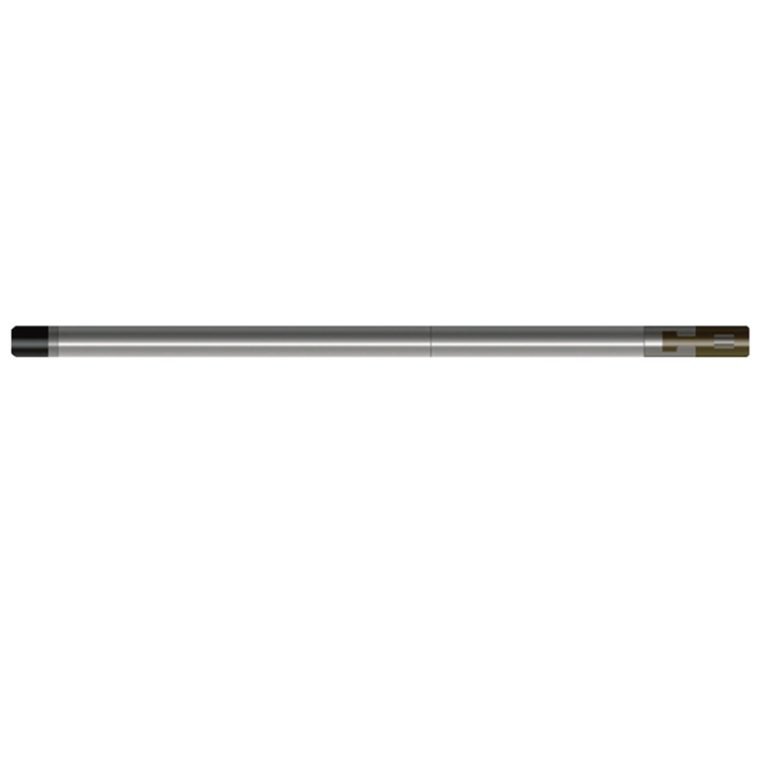
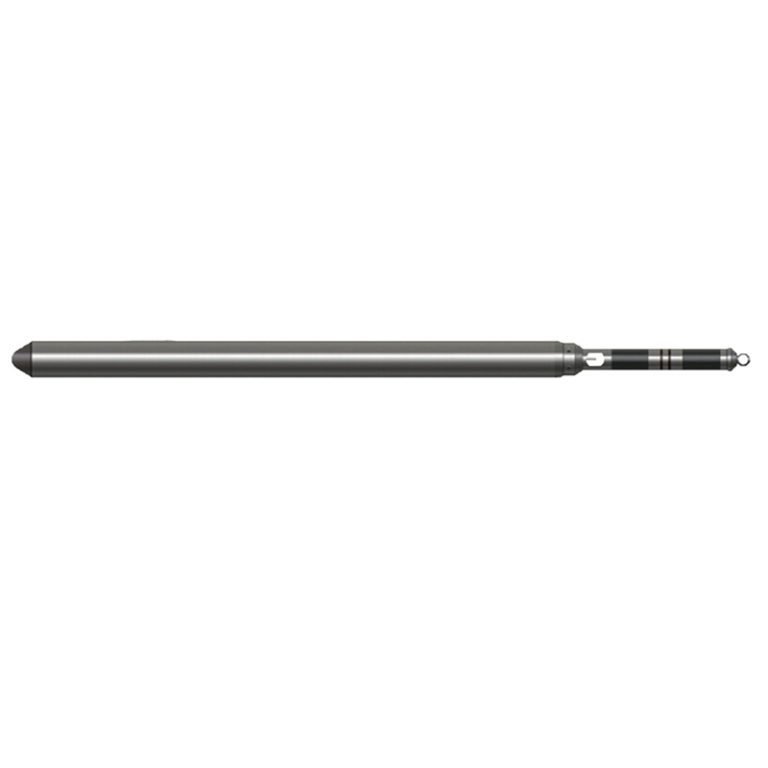
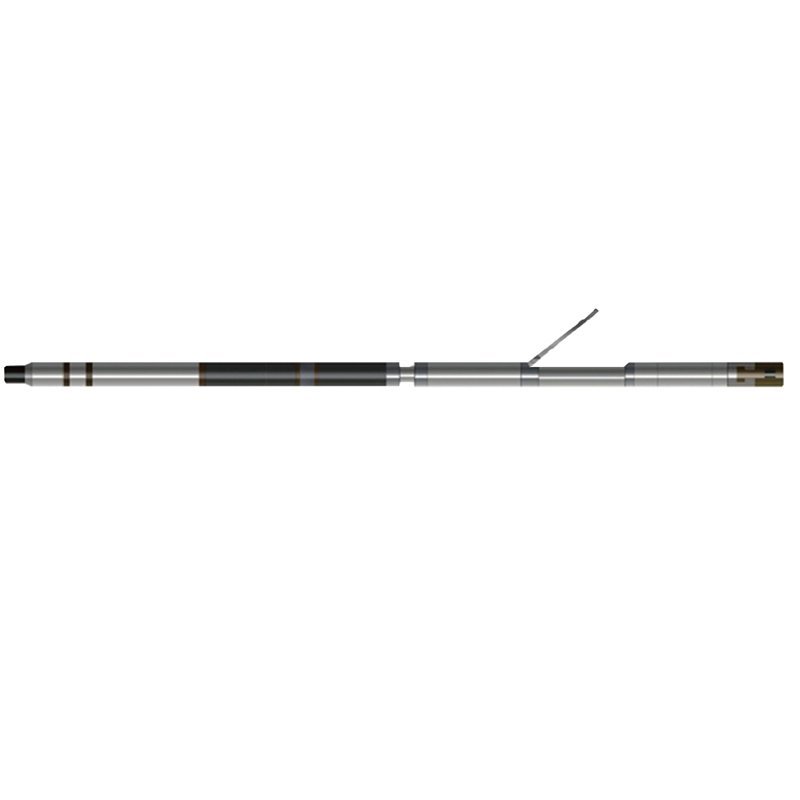
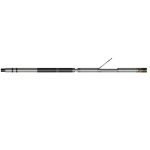
JMZD-2D Sidewall Density Probe
PRODUCT PARAMETERS
Description
 Abstract
 Abstract
JMZD-2D Sidewall Density Probe combines the measurement of focused resistivity parameters (three lateral directions), natural potential parameters, parallel diameter parameters and natural gamma parameters. This instrument can be used in the exploration of oil, coal, gas and other mineral deposits to determine lithology, measure formation porosity, and can also be used to detect the quality of cement cementing outside the casing of production wells.

Applicable Conditions
● Cased
● Bare hole fill with water or mud
Applications
● Quantitative calculation of in-situ formation density
● Exploration and quality evaluation of oil, coal, gas and other mineral deposits
● Determine lithology
● Measuring formation porosity
● Testing the cement cementing quality outside the production well casing
● Borehole diameter measurement and correction calculation in conjunction with other well logs
Features
● The motor retracts and extends the borehole arm and monitors the entire retraction and extension process, which is safe and reliable.
● The method of simultaneous measurement of long and short source distance detectors can compensate for unfavorable factors such as mud cakes.
● Multi-parameter simultaneous measurement greatly improves work efficiency
Specifications
| Three lateral electrodes | Stainless steel electrode, Focusing electrode length: 2L=2×0.6m; Focusing main electrode length:L0=0.06m |
| Natural potential electrode | Lead electrode |
| Natural gamma detector | Nal crystal, Scattering detector: Nal crystal |
| Measurement parameters and range | Well diameter: 60~200mm,5%; Natural potential: -1200~+1200 mV, 5%; Focus resistivity: 1.2~1.2×10⁵Ωm, 5%; Natural gamma: 0~32768cps Long source distance: 0~32768cps; Short source distance: 0~32768cps; Density: 1~3 g/ cm³, 3% |
| Pushing force against wall | >10kg |
| Signal output | Bipolar encoding |
FAQ
In gravity exploration (SI), what is the unit of gravity? How to convert gravity units between SI and CGS?
① In SI, it is m·s-2, and one percent of it is the international unit abbreviation g.u.;
② Conversion between SI and CGS: 1g.u.=10-1 mGal
What are gravitational field and gravitational potential?
Gravitational field: The space around the earth with gravity is called the gravitational field.
Gravitational potential: The gravitational potential W in the gravitational field is equal to the work done by a particle of unit mass moving from infinity to that point.
What is the normal gravity field of the earth? What are the rules for the change of the normal gravity field with latitude and altitude?
① The normal gravity field of the earth: Assuming that the earth is a rotating ellipsoid (reference plane), the surface is glossy, the internal density is uniform, or it is distributed in concentric layers, the density of each layer is uniform, and the deviation of the shape of the ellipsoid from the geoid is very small, then the gravity field generated by the earth is the normal gravity field.
② The normal gravity value is only related to the latitude, the smallest at the equator and the largest at the poles, with a difference of about 50,000 g.u.; the rate of change of the normal gravity value with latitude is the largest at 45° latitude, and zero at the equator and the poles; the normal gravity value decreases with increasing altitude, and its rate of change is -3.086 g.u.. The main feature of the long-term change is the "westward drift" of the geomagnetic elements, both the dipole field and the non-dipole field drift westward, and have a global nature.
What is the relationship between gravitational field strength and gravitational acceleration?
The gravitational field strength is equal to the gravitational acceleration in both numerical and dimensional terms, and the two are in the same direction. In gravity exploration, all references to gravity refer to gravitational acceleration. The gravitational field strength at a point in space is equal to the gravitational acceleration at that point.
What is gravity exploration?
Gravity exploration is an exploration method that is based on the density difference of rocks and ores. Since density difference will cause local changes in the normal gravity field of the earth (i.e. gravity anomaly), it is used to solve geological problems by observing and studying gravity anomalies.