Welcome to Geotech!
-1.png)

Magnetometer Applications in Geophysics: Case Studies from Real Research Projects
TIPS:Magnetometer applications in geophysics are demonstrated through powerful case studies of magnetometer use in mineral exploration, archaeology, and UXO detection. This article explores how magnetic field modeling and subsurface structure exploration within these geophysical research projects deliver tangible, real-world results and deepen our understanding of the Earth.
I. Introduction: Bridging Theory and Practice in Earth Physics
The theoretical principles of magnetometry are well-established, but their true value is revealed in practical application. Across the globe, magnetometer applications in geophysics are driving discoveries and providing solutions to complex challenges. These instruments have evolved from mere data collection tools to indispensable assets in geophysical research projects. This article presents a series of detailed case studies that showcase the transformative role of magnetic sensing. We will explore how magnetic field modeling interprets subsurface conditions, demonstrate the process of subsurface structure exploration, and analyze compelling case studies of magnetometer use that highlight the tangible impact of this technology on real-world earth physics studies.
II. Case Study 1: Mapping Mineral-Rich Volcanic Pipes
Project Overview: A mining exploration company commissioned a detailed geophysical investigation to identify and map kimberlite pipes, a primary source of diamonds, in a remote region of Canada.
- Challenge: The target structures were buried under dozens of meters of overburden, with no surface expression. Traditional methods were proving costly and ineffective.
- Solution: A high-resolution airborne magnetic survey was deployed. The magnetometer application involved precise magnetic field modeling to isolate the distinct magnetic signature of kimberlite from the surrounding bedrock.
- Outcome: The survey successfully identified three previously unknown kimberlite pipes. The magnetic data provided a clear map of their size and shape, allowing for precise drill targeting. This case study of magnetometer use directly led to the discovery of a new mineral resource, saving millions of dollars in exploratory drilling costs and significantly accelerating the project timeline.
This example underscores the critical role of magnetic sensor uses in earth physics research for resource discovery.
III. Case Study 2: Uncovering Ancient History Without a Shovel
Project Overview: An archaeological team in Europe utilized magnetometry to map the layout of a Roman-era villa complex without disturbing the site.
- Challenge: The site was a protected cultural heritage area where excavation was limited. A non-invasive method was required to understand the full extent of the buried structures.
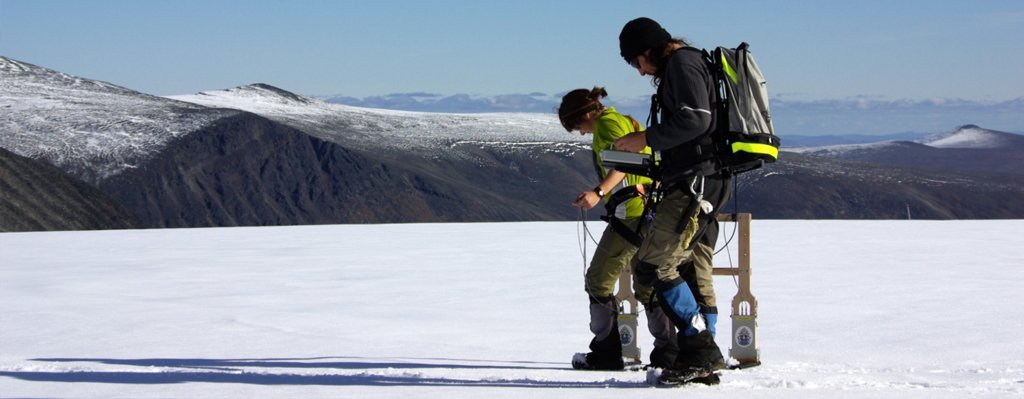
- Solution: A team used a high-sensitivity handheld magnetometer for subsurface structure exploration. They conducted a detailed ground survey, measuring minute magnetic variations caused buried walls, hearths, and refuse pits.
- Outcome: The resulting magnetic map revealed the complete floor plan of the villa, including rooms, corridors, and an previously unknown bathhouse. This example of magnetometer applications allowed archaeologists to plan a minimal, targeted excavation, maximizing information gain while preserving the vast majority of the site intact.
This project highlights the power of geophysical applications of magnetometers in preserving and understanding our cultural heritage.
IV. Case Study 3: Ensuring Safety Through Unexploded Ordnance Detection
Project Overview: Prior to a major construction project in a coastal area, a survey was required to ensure the site was clear of unexploded ordnance (UXO) from historical military training.
- Challenge: The need for a 100% survey coverage with an extremely high detection confidence level to ensure worker safety. The targets were small, deep, and often contained low metal content.
- Solution: A specialized magnetometer for geophysical investigations was used in a tight grid pattern. Advanced signal processing and magnetic field modeling techniques were employed to distinguish small, weak UXO signatures from natural geological noise.
- Outcome: The survey identified and precisely located several UXO items. Each was safely excavated and disposed of by bomb disposal experts. This real-world magnetometer case was critical for de-risking the construction project and ensuring the safety of all personnel, preventing potential tragedy.
This demonstrates a vital application of magnetic sensors in environmental and engineering safety.
V. The Technology Behind the Cases: Magnetic Field Modeling and Subsurface Exploration
The success of these case studies hinges on the sophisticated process of magnetic field modeling. This is not simply collecting data; it is the interpretive science that transforms magnetic anomalies into geological understanding.
- Data to Model: Raw magnetic data is processed to remove noise and correct for diurnal variations. Modeling of magnetic fields involves using inversion algorithms to create a 3D representation of the subsurface’s magnetic properties.
- Interpretation: Geophysicists interpret these models to distinguish between different rock types, map geological structures like faults and folds, and identify man-made objects. This process is the cornerstone of subsurface structure exploration.
Whether exploring underground structures for geothermal energy or investigating subsurface features for tectonic studies, this modeling is the key to unlocking the secrets hidden beneath our feet.
VI. Conclusion: The Proven Value of Magnetometry in Action
These case studies of magnetometer use provide irrefutable evidence of the technology’s value. From multi-billion dollar mining projects to vital safety missions and cultural preservation, magnetometer applications in geophysics are delivering real-world results.
The ability to conduct precise magnetic field modeling and detailed subsurface structure exploration makes the magnetometer one of the most versatile and powerful tools in the geophysicist’s arsenal. These real-world magnetometer cases prove that investing in this technology is an investment in discovery, safety, and a deeper understanding of our world.
References
- E. M. Purcell, H. C. Torrey, and R. V. Pound: Phys. Rev. 69 (1946) 37. https://journals.aps.org/pr/abstract/10.1103/PhysRev.69.37
- F. Bloch: Physica 17 (1950) 460. https://journals.aps.org/pr/abstract/10.1103/PhysRev.70.460
- H. Dong, H. Liu, J. Ge, Z. Yuan, and Z. Zhao: IEEE Trans. Instrum. Meas. 65 (2016) 898. https://ieeexplore.ieee.org/document/7393816
- G. S. Waters: Nature 176 (1955) 691. https://www.nature.com/articles/176691a0
- G. S. Waters and G. Phillips: Geophys. Prospect. 4 (1956) 1. https://onlinelibrary.wiley.com/doi/10.1111/j.1365-2478.1956.tb01392.x
- A W. Overhauser: J. Phys. Rev. 92 (1953) 411. https://journals.aps.org/pr/abstract/10.1103/PhysRev.92.411
- A. Abragam: J. Phys. Rev. 98 (1955) 1729. https://journals.aps.org/pr/abstract/10.1103/PhysRev.98.1729
- G. Breit and I. I. Rabi: J. Special Studies Papers 38 (1931) 2082. https://journals.aps.org/pr/abstract/10.1103/PhysRev.38.2082.2
- I. Solomon: J. Phys. Rev. 99 (1955) 559. https://journals.aps.org/pr/abstract/10.1103/PhysRev.99.559
- J. Lenz and S. Edelstein: IEEE Sens. J. 6 (2006) 631. https://ieeexplore.ieee.org/document/1634415
- N. Kernevez and H. Glenat: IEEE Trans. Magn. 27 (2002) 5402. https://ieeexplore.ieee.org/document/278852
- D. Duret, J. Bonzom, M. Brochier, M. Frances, J. M. Leger, R. Odru, C. Salvi, T. Thomas, and A. Perret: IEEE
Trans. Magn. 31 (1995) 3197. https://ieeexplore.ieee.org/document/490326