Welcome to Geotech!
-1.png)

Geomagnetic Variation Monitoring: The Long-Term Mission of Magnetometers
TIPS:The long-term mission of geomagnetic variation monitoring relies on the stable, continuous operation of specialized magnetometers for long-term monitoring. This article explores how this sustained data gathering enables crucial magnetic field trends analysis, helping scientists understand the Earth’s core dynamics and the various environmental impacts on geomagnetism, from solar storms to oceanic currents.
I. Introduction: The Dynamic Earth and Our Need to Understand It
The Earth’s magnetic field is not a static, unchanging shield. It is a dynamic, living system that fluctuates over time, from moments to millennia. Understanding these changes is critical for both scientific discovery and modern technological infrastructure. This is where the long-term mission of geomagnetic variation monitoring begins. This article delves into the essential role of magnetometers in this enduring task. We will explore the meticulous process of long-term geomagnetic data collection and how this data fuels the vital magnetic field trends analysis. Furthermore, we will examine the various environmental impacts on geomagnetism, highlighting why continuous, precise monitoring is not just beneficial, but necessary for navigating our world.
II. The Sentinel Instruments: Magnetometers for Long-Term Monitoring
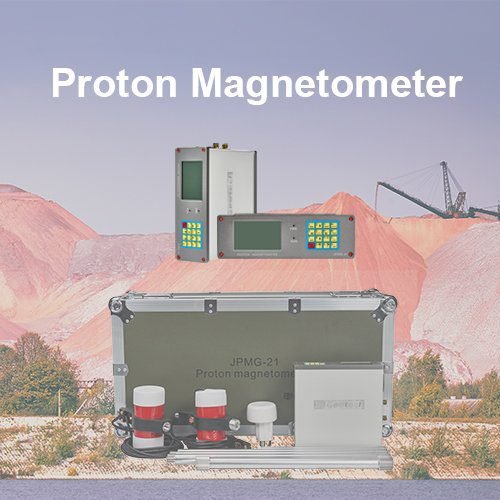
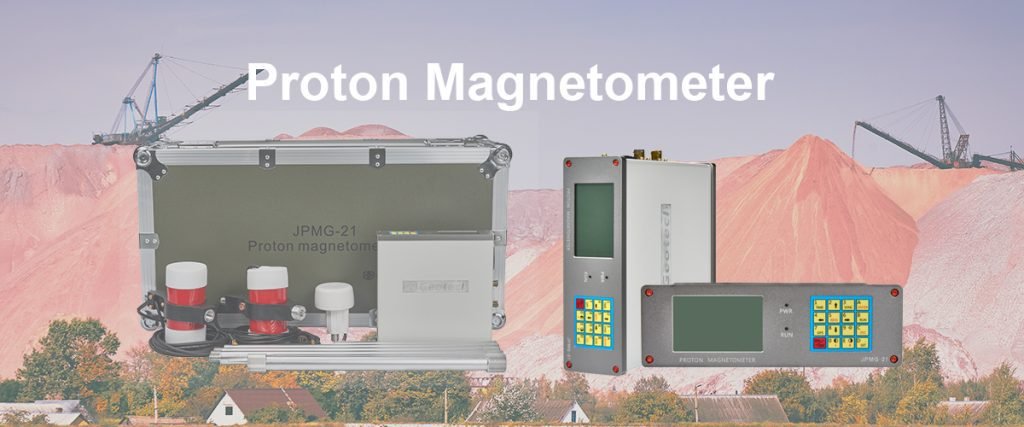
The cornerstone of any monitoring program is a reliable sensor. For geomagnetic variation monitoring, the magnetometer for long-term monitoring must be exceptionally stable, accurate, and robust. Instruments like proton precession magnetometers and Overhauser magnetometers are ideally suited for this role.
Their advantages for sustained data gathering include:
- Absolute Accuracy: As scalar instruments, they measure the total field strength without drift, ensuring data consistency over years and decades.
- Low Maintenance: They require minimal calibration and are designed for continuous operation with high reliability.
- Environmental Resilience: Modern designs are built to withstand temperature variations, humidity, and other environmental factors, making them perfect for remote, unattended installations.
These magnetic sensors for extended-period surveillance form a global network, silently and constantly recording the pulse of our planet.
III. Building a Legacy: The Process of Long-Term Geomagnetic Data Collection
The power of long-term geomagnetic data collection lies in the creation of a continuous, high-fidelity time series. This is not merely about taking readings; it is about building a historical record of immense value.
The process involves:
- Establishing Base Stations: Fixed observatories are set up in magnetically quiet locations around the world. These stations are equipped with primary and backup sensors to ensure an unbroken data stream.
- Standardized Protocols: All stations adhere to strict international standards for data acquisition, formatting, and timekeeping. This ensures that data from different sources can be meaningfully compared and combined.
- Continuous Operation: These observatories operate 24/7, 365 days a year, through all conditions, amassing decades of data that form the backbone of our understanding of the core field’s behavior.
This relentless collecting long-term earth magnetic data is a testament to scientific dedication, providing the raw material for groundbreaking analysis.
IV. Deciphering the Patterns: The Critical Role of Magnetic Field Trends Analysis
Raw data alone is not insight. The true value of long-term geomagnetic data collection is unlocked through rigorous magnetic field trends analysis. Scientists and researchers use sophisticated statistical and mathematical models to:
- Map Secular Variation: This is the slow, gradual change in the direction and strength of the Earth’s magnetic field over decades. Analyzing these shifts helps us understand the dynamics of the Earth’s molten outer core, where the magnetic field is generated.
- Detect Geomagnetic Jerks: These are sudden, abrupt changes in the slope of the secular variation. Their discovery and study rely entirely on high-quality, long-term datasets.
- Model the Core Field: By analyzing trends, scientists can create models that describe the current state and predict the future evolution of the Earth’s magnetic field, which is crucial for navigation systems.
This analyzing magnetic field trends transforms raw numbers into a profound understanding of our planet’s inner workings.
V. External Influences: Accounting for Environmental Impacts on Geomagnetism
While the core field changes slowly, other factors cause rapid fluctuations. A key part of geomagnetic variation monitoring is identifying and understanding these environmental impacts on geomagnetism.
- Solar Activity: The solar wind and coronal mass ejections (CMEs) cause geomagnetic storms, which can induce large, rapid fluctuations in the magnetic field. Monitoring these is critical for protecting satellites and power grids.
- Oceanic and Tidal Forces: The motion of saltwater through the Earth’s magnetic field induces weak electrical currents, which in turn generate measurable magnetic signals.
- Lithospheric Magnetism: The magnetic properties of rocks in the Earth’s crust contribute to long-wavelength anomalies that are studied using long-term data.
Understanding these effects of environment on earth’s magnetic field allows scientists to filter out “noise” to better see the core field’s signal and to study these fascinating phenomena in their own right.
VI. Conclusion: An Ongoing Mission of Global Importance
The long-term mission of geomagnetic variation monitoring is a cornerstone of modern geophysics. Through the dedicated use of a magnetometer for long-term monitoring, we engage in the essential practice of long-term geomagnetic data collection. This data empowers the magnetic field trends analysis that reveals the secrets of our planet’s core and helps us mitigate space weather hazards.
By accounting for environmental impacts on geomagnetism, we refine our understanding further. This ongoing global effort is more than a scientific curiosity; it is a critical infrastructure project that safeguards our technology and deepens our understanding of the dynamic planet we call home.
References
- E. M. Purcell, H. C. Torrey, and R. V. Pound: Phys. Rev. 69 (1946) 37. https://journals.aps.org/pr/abstract/10.1103/PhysRev.69.37
- F. Bloch: Physica 17 (1950) 460. https://journals.aps.org/pr/abstract/10.1103/PhysRev.70.460
- H. Dong, H. Liu, J. Ge, Z. Yuan, and Z. Zhao: IEEE Trans. Instrum. Meas. 65 (2016) 898. https://ieeexplore.ieee.org/document/7393816
- G. S. Waters: Nature 176 (1955) 691. https://www.nature.com/articles/176691a0
- G. S. Waters and G. Phillips: Geophys. Prospect. 4 (1956) 1. https://onlinelibrary.wiley.com/doi/10.1111/j.1365-2478.1956.tb01392.x
- A W. Overhauser: J. Phys. Rev. 92 (1953) 411. https://journals.aps.org/pr/abstract/10.1103/PhysRev.92.411
- A. Abragam: J. Phys. Rev. 98 (1955) 1729. https://journals.aps.org/pr/abstract/10.1103/PhysRev.98.1729
- G. Breit and I. I. Rabi: J. Special Studies Papers 38 (1931) 2082. https://journals.aps.org/pr/abstract/10.1103/PhysRev.38.2082.2
- I. Solomon: J. Phys. Rev. 99 (1955) 559. https://journals.aps.org/pr/abstract/10.1103/PhysRev.99.559
- J. Lenz and S. Edelstein: IEEE Sens. J. 6 (2006) 631. https://ieeexplore.ieee.org/document/1634415
- N. Kernevez and H. Glenat: IEEE Trans. Magn. 27 (2002) 5402. https://ieeexplore.ieee.org/document/278852
- D. Duret, J. Bonzom, M. Brochier, M. Frances, J. M. Leger, R. Odru, C. Salvi, T. Thomas, and A. Perret: IEEE
Trans. Magn. 31 (1995) 3197. https://ieeexplore.ieee.org/document/490326