Welcome to Geotech!
-1.png)

Geomagnetic Survey Equipment: A Comprehensive Overview of Types and Selection
TIPS:Selecting the right geomagnetic survey equipment is fundamental to the success of any geophysical project. This guide provides a comprehensive overview of the different types of geomagnetic survey devices available, from robust proton precession magnetometers to highly sensitive optically pumped sensors. Understanding the strengths and applications of each magnetometer for geomagnetic survey will empower you to make an informed choice, ensuring you have the optimal earth magnetic exploration device for your specific needs, whether for mineral exploration, archaeological mapping, or environmental studies.
I. Introduction: Mapping the Earth’s Magnetic Fabric
The Earth is enveloped in a dynamic, invisible force field: its magnetic field. Understanding variations in this field is crucial for a multitude of scientific and industrial applications. This understanding is made possible through geomagnetic survey equipment. This specialized toolkit allows us to map and interpret magnetic anomalies, revealing secrets hidden beneath the surface. This article provides a complete overview of this vital technology. We will explore the different types of geomagnetic survey devices available. We will focus on the core component of this toolkit: the magnetometer for geomagnetic survey. Finally, we will guide you through the key factors to consider when selecting the right earth magnetic exploration device for your specific project needs.
II. The Toolbox: Categories of Geomagnetic Survey Equipment
A successful geomagnetic survey requires more than just a sensor. It involves a integrated system of components, each playing a critical role. The main categories of earth magnetic equipment include:
- The Sensor (Magnetometer): The heart of the system. This is the device that actually measures the magnetic field. There are many varieties of geomagnetic sensors, which we will detail in the next section.
- Data Logger: A ruggedized computer that records the measurements from the magnetometer, often with very high precision.
- Positioning System: Typically a high-accuracy GPS receiver. Precise location data is essential for correlating magnetic measurements with their exact geographic coordinates.
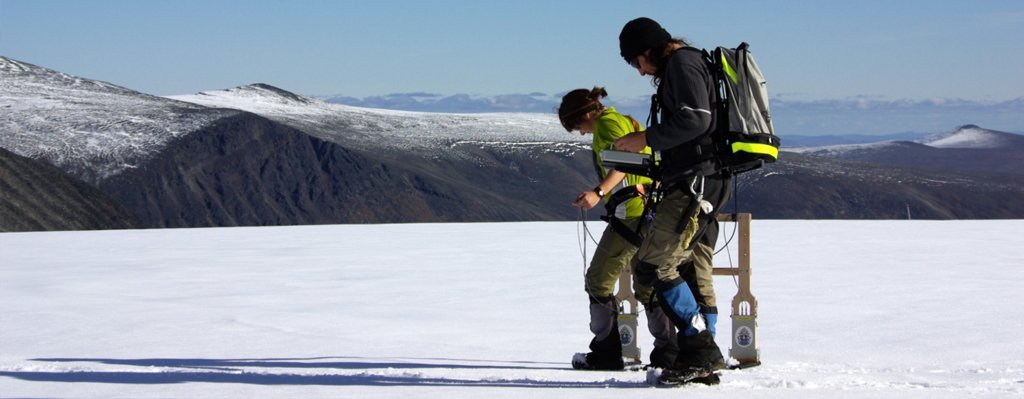
- Carry System: This can range from a simple hand-held pole for walking surveys to sophisticated mounts for airborne (aircraft or drone) or marine surveys.
- Software: Specialized software is used for data processing, filtering, visualization, and interpretation, transforming raw numbers into actionable geological maps.
Together, these components form a complete geomagnetic measuring instrument system.
III. The Heart of the System: The Magnetometer for Geomagnetic Survey
The magnetometer for geomagnetic survey is the primary data acquisition tool. Choosing the right type is the most important decision. The main types of geomagnetic survey devices based on sensor technology include:
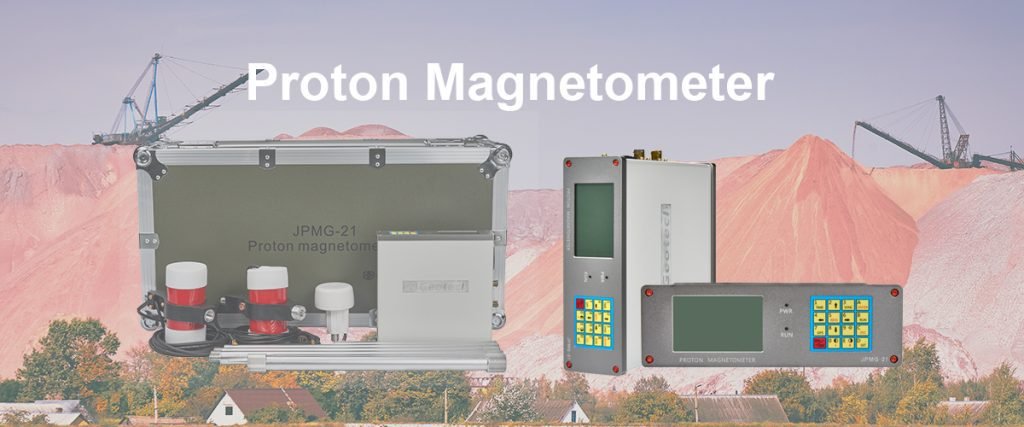
- Proton Precession Magnetometer: Known for its absolute accuracy and reliability. It measures the total field strength (scalar) and requires no calibration. It is a workhorse for base stations and general-purpose surveys.
- Overhauser Magnetometer: An enhanced version of the proton precession magnetometer. It offers faster reading rates and higher sensitivity, making it excellent for detailed and high-resolution surveys.
- Fluxgate Magnetometer: Measures the vector components of the magnetic field. It is capable of very high-resolution data acquisition but requires orientation and regular calibration. Often used in archaeological mapping and UXO detection.
- Optically Pumped Magnetometer (OPM): Represents the cutting edge in sensitivity. These geomagnetic sensors use light to manipulate atoms in a vapor cell, providing extremely high-resolution data. Ideal for detailed ground surveys and airborne geophysics.
- Cesium Vapor Magnetometer: A specific, common type of OPM known for its very high sensitivity and fast sampling rate, making it the standard for airborne magnetic surveys.
Each type serves a specific purpose within the broader family of geophysical exploration equipment.
IV. Choosing the Right Tool: A Selection Guide
Selecting the appropriate earth magnetic exploration device is not a one-size-fits-all process. It depends on several critical factors:
- Survey Objective: What are you trying to find? Large mineral deposits, small archaeological features, or buried utilities? The target size and depth dictate the required sensitivity and resolution.
- Resolution and Sensitivity Needed: Higher sensitivity sensors (like OPMs) can detect smaller and deeper anomalies but come at a higher cost.
- Survey Method: Will the survey be conducted on foot, by vehicle, by drone, or from an aircraft? Airborne systems require specific, fast-sampling sensors like cesium vapor magnetometers.
- Environment: Consider the terrain and any potential cultural noise (from power lines, buildings, etc.). Gradiometer configurations can help cancel out this noise.
- Budget: Equipment cost varies significantly. Proton magnetometers are more affordable, while high-sensitivity OPM systems are a major investment.
Matching the magnetometer for geomagnetic survey to your project’s specific parameters is key to success.
V. Conclusion: Empowering Discovery with the Right Equipment
Geomagnetic survey equipment is a powerful gateway to understanding the subsurface. From the foundational proton precession magnetometer to the advanced optically pumped magnetometer, the varieties of geomagnetic sensors available today offer solutions for every challenge. By understanding the different types of geomagnetic survey devices and carefully considering your project’s requirements, you can select the optimal earth magnetic exploration device. This ensures you acquire the highest quality data, enabling you to make confident decisions, whether you’re exploring for resources, preserving cultural heritage, or ensuring construction safety. The right tools truly empower discovery.
References
- E. M. Purcell, H. C. Torrey, and R. V. Pound: Phys. Rev. 69 (1946) 37. https://journals.aps.org/pr/abstract/10.1103/PhysRev.69.37
- F. Bloch: Physica 17 (1950) 460. https://journals.aps.org/pr/abstract/10.1103/PhysRev.70.460
- H. Dong, H. Liu, J. Ge, Z. Yuan, and Z. Zhao: IEEE Trans. Instrum. Meas. 65 (2016) 898. https://ieeexplore.ieee.org/document/7393816
- G. S. Waters: Nature 176 (1955) 691. https://www.nature.com/articles/176691a0
- G. S. Waters and G. Phillips: Geophys. Prospect. 4 (1956) 1. https://onlinelibrary.wiley.com/doi/10.1111/j.1365-2478.1956.tb01392.x
- A W. Overhauser: J. Phys. Rev. 92 (1953) 411. https://journals.aps.org/pr/abstract/10.1103/PhysRev.92.411
- A. Abragam: J. Phys. Rev. 98 (1955) 1729. https://journals.aps.org/pr/abstract/10.1103/PhysRev.98.1729
- G. Breit and I. I. Rabi: J. Special Studies Papers 38 (1931) 2082. https://journals.aps.org/pr/abstract/10.1103/PhysRev.38.2082.2
- I. Solomon: J. Phys. Rev. 99 (1955) 559. https://journals.aps.org/pr/abstract/10.1103/PhysRev.99.559
- J. Lenz and S. Edelstein: IEEE Sens. J. 6 (2006) 631. https://ieeexplore.ieee.org/document/1634415
- N. Kernevez and H. Glenat: IEEE Trans. Magn. 27 (2002) 5402. https://ieeexplore.ieee.org/document/278852
- D. Duret, J. Bonzom, M. Brochier, M. Frances, J. M. Leger, R. Odru, C. Salvi, T. Thomas, and A. Perret: IEEE
Trans. Magn. 31 (1995) 3197. https://ieeexplore.ieee.org/document/490326