Welcome to Geotech!
-1.png)

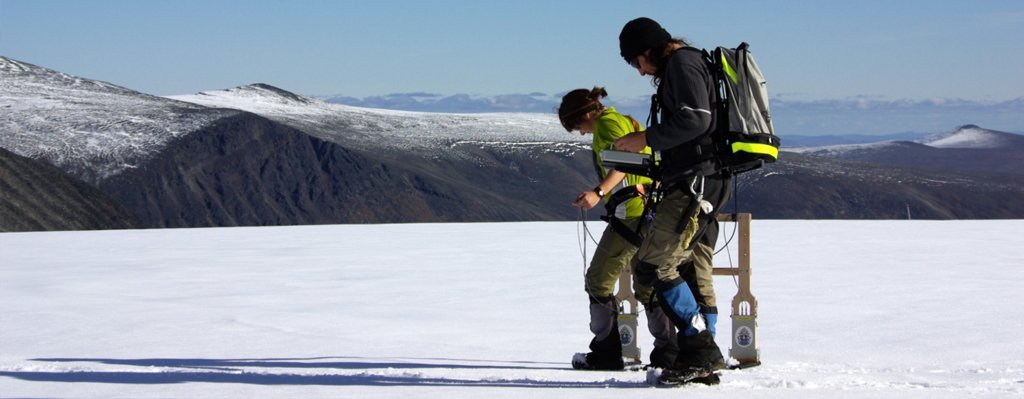
Cross-Hole ERT vs TEM: Integrated Geophysical Case Study for Hydrogeological Surveys
TIPS:Cross-hole Electrical Resistivity Tomography (ERT) and Transient Electromagnetic Method (TEM) are two complementary geophysical techniques for hydrogeological and geotechnical site investigations. This technical case study demonstrates their integrated application—from high-density resistivity measurements between dual boreholes to TEM validation of deep conductive anomalies—revealing how Geotechcn equipment delivers multi-scale subsurface characterization for water-bearing zone detection and structural mapping.

Ⅰ. Introduction to Subsurface Imaging Techniques
The high-density resistivity method operates on identical principles to conventional DC resistivity methods. It utilizes artificial current-induced electric field variations to detect geological anomalies through resistivity contrasts in underground media. Key factors affecting resistivity measurements include rock composition, porosity, hydraulic connectivity, and metallic content.
This study demonstrates the integrated application of Cross-Hole Electrical Resistivity Tomography (ERT) and Transient Electromagnetic Method (TEM) for advanced geotechnical investigation. The combination leverages ERT’s high-resolution inter-borehole imaging with TEM’s deep-penetration validation capabilities.
Ⅱ. Project Overview: Cross-Hole ERT & TEM for Geotechnical Site Investigation
This geophysical survey employed an integrated multi-method approach:
2.1 Survey Configuration
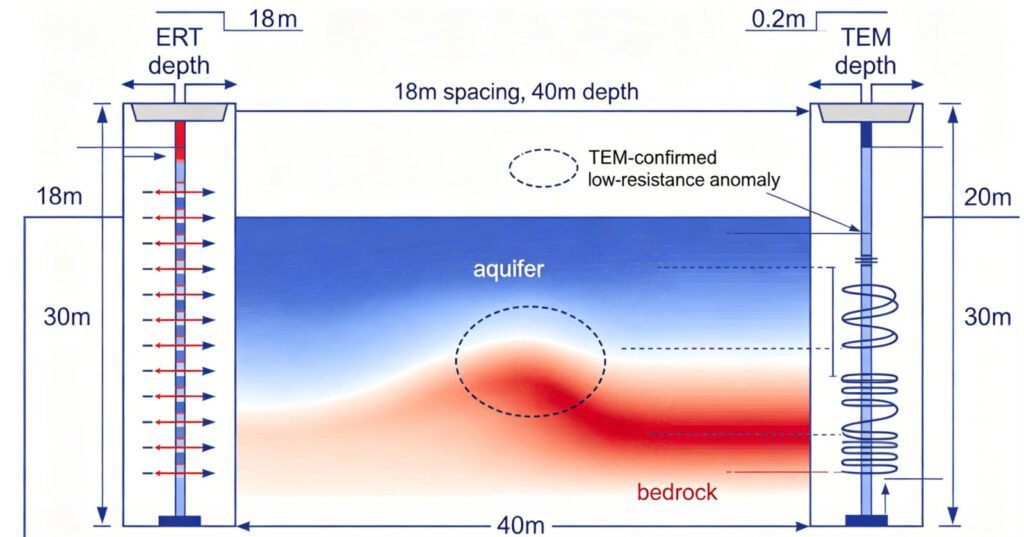
- Dual-borehole configuration: 40 m depth, 18 m spacing
- Water-bearing zone detection: Verified through cross-hole ERT measurements
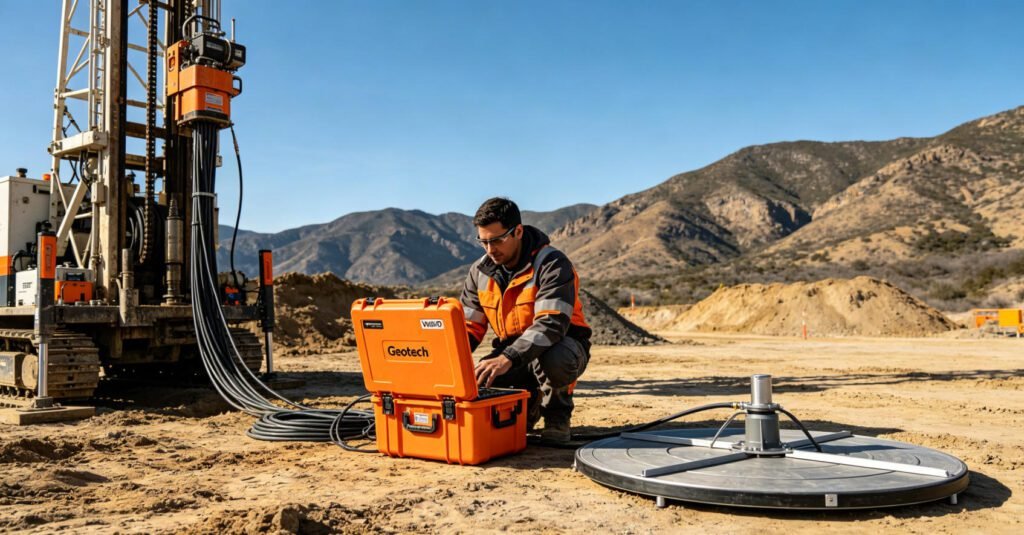
- TEM validation: Geotech high-power TEM system for deep anomaly confirmation
2.2 ERT Equipment
- Waterproof cables with 1 m electrode spacing
- 30 electrodes per borehole
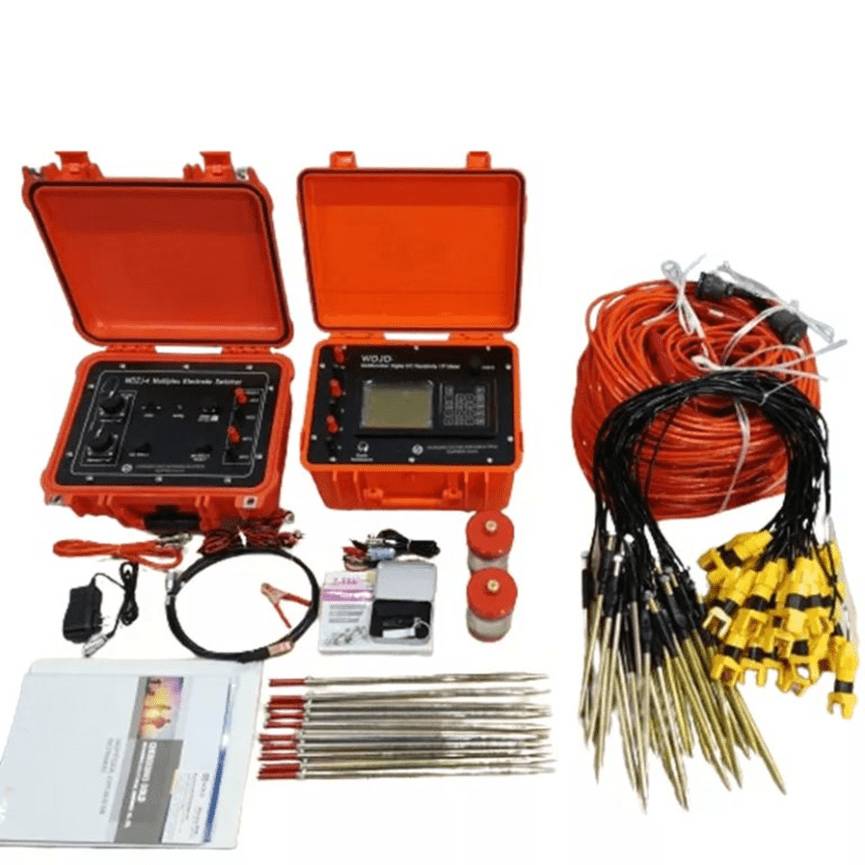
- Geotech WGMD high-density electrical system
2.3 TEM Equipment
- Transmitter: 1 m diameter, 30-turn coil
- Receiver: 0.2 m diameter, 30-turn coil
- Maximum current: 30 A
- Station spacing: 2 m along 24 m survey line
Ⅲ. Geophysical Equipment Specifications
3.1 Geotech WGMD High-Density Electrical System
Key Features:
- Subsurface resistivity profiling with 4D imaging capability
- Bluetooth-enabled data transmission
- 4G remote monitoring & real-time acquisition
Technical Specifications:
- Automatic SP/drift compensation
- Expandable to 500 measurement channels
3.2 Cross-Hole ERT Workflow Optimization
- Software initialization & Bluetooth pairing
- Project creation: Select “Cross-Hole CT” + “Centralized Cable”
- Parameter input:
- Electrodes per side
- Inter-electrode spacing
- Borehole separation
- Top electrode depth
- Data conversion to .txt format post-survey
3.3 TEM System
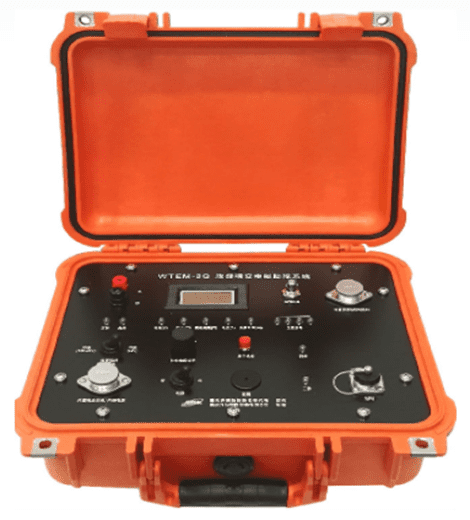
Performance Advantages:
- High-power transmission capabilities
- Fast current shutdown (μs-range)
- Enhanced noise immunity
- Field-portable design
Ⅳ. ERT Methodology Deep Dive
4.1 High-Density Resistivity Fundamentals
The technique analyzes spatial electric field variations under controlled current injection, resolving geological structures through resistivity contrasts. Critical parameters include:
- Lithology variations
- Porosity distribution
- Pore network connectivity
- Metallic mineralization
4.2 Basic Principles of Resistivity Measurement
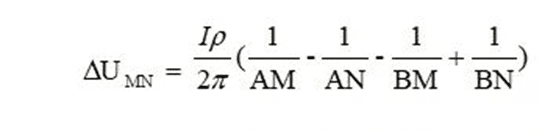
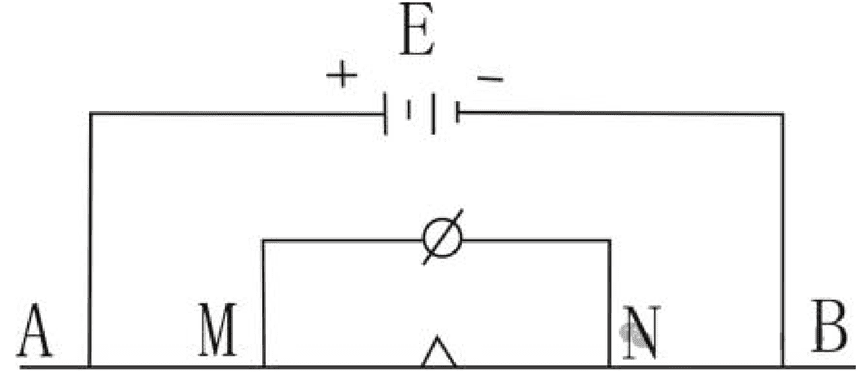
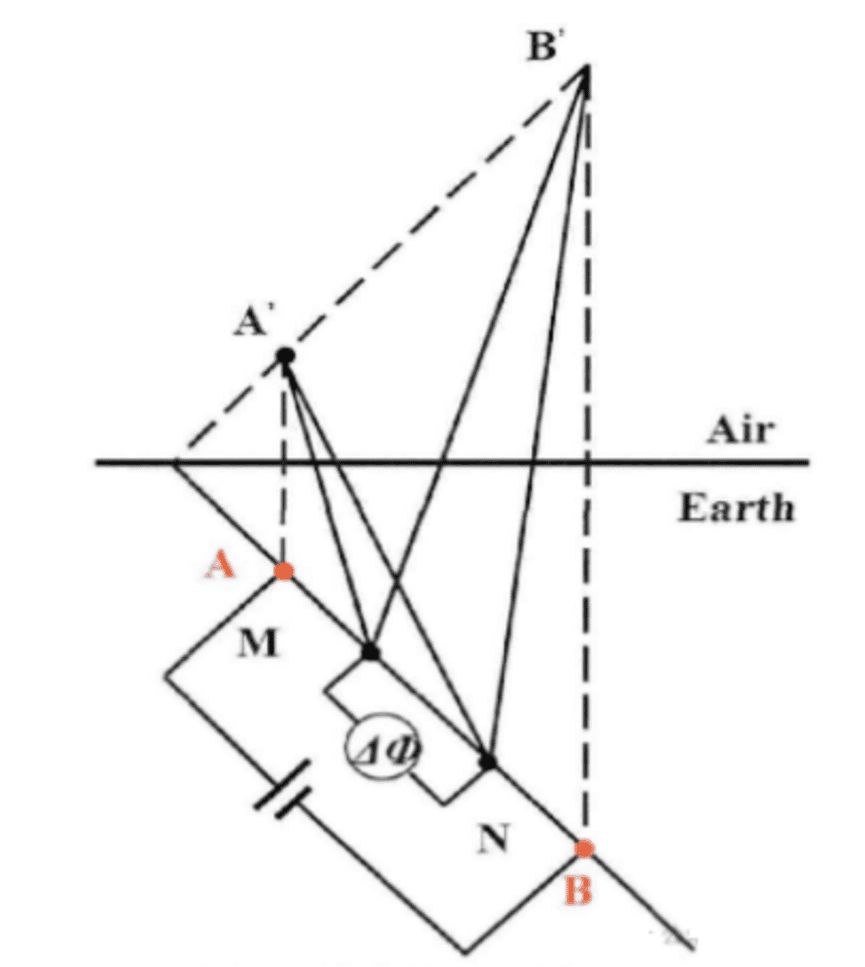
For resistivity measurement, the earth is assumed to be uniform in the area to be measured. In principle, any electrode arrangement can be used. Current is supplied at two points (A, B) on the surface, and the potential difference is measured between two other points (M, N).
According to the fundamental formula, the potentials at points M and N can be calculated (Figure 4.1):

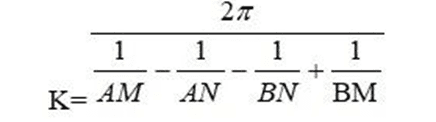
Formula (4-1) is the basic formula for measuring resistivity on the surface of a uniform earth using any electrode device. K is the electrode device coefficient (or electrode arrangement coefficient), which depends only on the spatial position of the electrodes. In electrical prospecting, the power supply electrode and the measuring electrode are usually placed in a straight line.

4.3 Cross-Hole ERT Array Coefficient
In the actual cross-hole high-density electrical method, the space above the electrode is not a uniform infinite space due to surface boundary effects. When calculating the inter-well array device coefficient, the mirror method is required.
As the name implies, the electric potential generated by a point source below the ground can be regarded as the potential generated by the actual point source and an identical mirror source symmetrical with the ground surface as the symmetry plane (Figure 4.6). The potential difference between electrodes M and N equals the combined effect of the electric fields generated by electrodes A and B and their mirror images A’ and B’.

From this, the device coefficient calculation formula for the cross-hole high-density electrical method array is derived:
Ⅴ. TEM Technology Explained
The Transient Electromagnetic Method (TEM) is a time-domain electromagnetic technique that uses an ungrounded loop to emit a pulsed primary electromagnetic field into the ground. A receiver coil observes the spatial and temporal distribution of the secondary electromagnetic field generated by underground eddy currents induced through electromagnetic induction (Figure 5.1).

By observing the changes of the induced electromagnetic field with time and space after power shutdown, the delay time characteristics of the transient field reveal the geometric and electrical parameters of the underground geological body. The larger the scale of a conductive geological body and the better its conductivity, the greater the transient field intensity, the slower the decay, and the longer the delay time. Conversely, for poor conductors, the transient field intensity is small, the decay is fast, and the delay time is short (Figure 5.2).
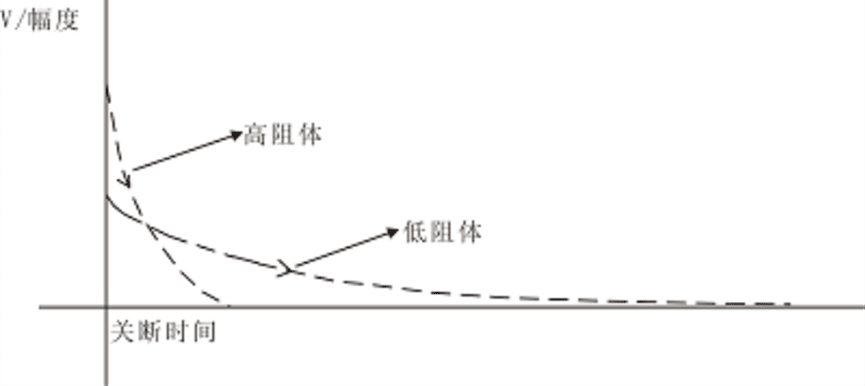
The induced electromagnetic field strength reflects the temporal and spatial distribution of conductive bodies.
Ⅵ. Geophysical Data Interpretation
6.1 ERT Inversion Results
Res2dinv software processing revealed:
- Original vs. logarithmic resistivity contrast
- Enhanced low-resistivity anomaly resolution after log transformation
- Vertical smearing reduction through 2D Surfer visualization

Interpretation:
The original resistivity section (left) shows a prominent low-resistivity anomaly (red-yellow zone) at approximately 30–35 m depth between the two boreholes. After logarithmic transformation (right), the anomaly contrast is enhanced, revealing clearer boundaries. The dashed red line indicates the interpreted water-bearing fracture zone.
6.2 TEM Data Analysis
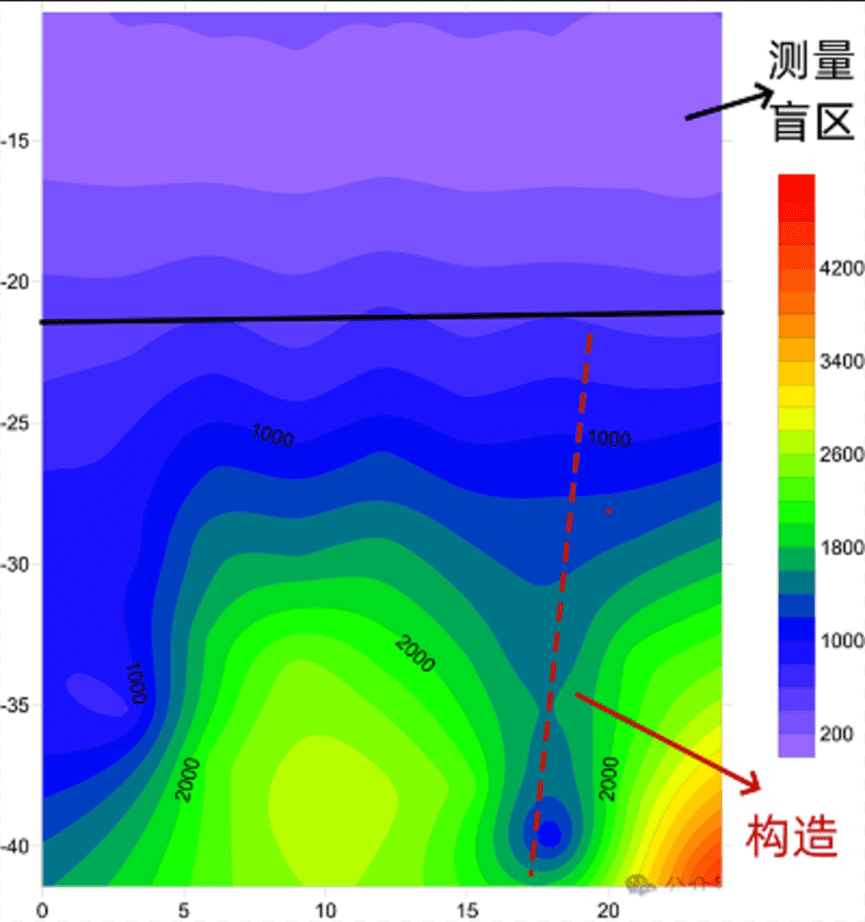
- 20 m early-time blind zone: Due to high-current transmission effects
- 16 m lateral low-resistivity anomaly: Confirmed at ERT-indicated location
- Distinction: Anthropogenic fill (0–2 m) vs. fractured sandstone (target anomaly)
Interpretation:
The TEM section shows a conductive anomaly (green-yellow zone) centered at approximately 16 m lateral position and 30–35 m depth. This correlates with the ERT low-resistivity zone. The shallow high-resistivity layer (0–2 m, blue) represents anthropogenic fill, distinct from the deeper fractured sandstone aquifer.
6.3 Integrated Geophysical Interpretation
| Method | Strengths | Limitations |
|---|---|---|
| Cross-Hole ERT | High data density, precise inter-borehole imaging | Limited depth resolution beyond electrode array |
| TEM | Deep penetration, large-scale anomaly confirmation | Shallow blind zone (early-time effects) |
Combined Interpretation:
The integrated ERT-TEM approach provides multi-scale subsurface characterization. ERT delivers high-resolution inter-borehole resistivity imaging, precisely locating the water-bearing zone. TEM validates this anomaly at greater depth and lateral extent, while also distinguishing shallow anthropogenic interference from the true geological target.
Ⅶ. Conclusion: Advanced Geophysical Solutions for Hydrogeological Characterization
This integrated ERT-TEM approach demonstrates superior anomaly detection through:
- Multi-dimensional resistivity imaging: Cross-hole ERT provides high-density 2D resistivity sections between boreholes
- Time-domain electromagnetic profiling: TEM validates anomalies at depth and distinguishes geological targets from shallow interference
- Joint inversion uncertainty reduction: Combined interpretation leverages ERT’s resolution and TEM’s penetration for robust subsurface characterization
For geotechnical engineers and hydrogeologists seeking to optimize site investigations, combining cross-hole electrical tomography with transient electromagnetic surveys provides complementary datasets. The ERT system delivers precise inter-borehole imaging for detailed structural mapping. The TEM system confirms deep conductive features and eliminates shallow false anomalies.
Geotechcn provides integrated geophysical solutions—from the WGMD high-density ERT system with Bluetooth connectivity and 4G remote monitoring to the high-power TEM system with microsecond-range current shutdown. Our equipment supports multi-method surveys that maximize data confidence and minimize interpretation uncertainty.
Learn more professional geophysical solutions at www.geotechcn.net.
Reference Source
FAQ
How does TEM validate ERT results?
Transient Electromagnetic Method (TEM) uses inductive loops to detect conductive anomalies at greater depths than ERT. In this case study, TEM confirmed the ERT-identified low-resistivity water-bearing zone at 30–35 m depth while distinguishing it from shallow anthropogenic fill (0–2 m).
What is the mirror method in cross-hole ERT?
The mirror method accounts for surface boundary effects in cross-hole ERT calculations. It treats the electric potential from a subsurface point source as equivalent to the actual source plus an identical mirror source reflected across the ground surface. This enables accurate array coefficient calculation for non-infinite half-space conditions.
What are the limitations of ERT and TEM integration?
ERT provides high-resolution inter-borehole imaging but has limited depth penetration beyond the electrode array. TEM penetrates deeper but suffers from an early-time blind zone (approximately 20 m in this case) where transmitter effects mask shallow signals. Combined use compensates for individual limitations.
Why choose Geotechcn for integrated geophysical surveys?
Geotechcn provides the WGMD high-density ERT system with Bluetooth/4G connectivity and expandable 500-channel capacity, plus a high-power TEM system with 30A maximum current and microsecond-range shutdown. Our integrated solutions enable multi-method validation for robust subsurface characterization.