Welcome to Geotech!
-1.png)


Proton Magnetometer: The Unique Proton Precession Measurement
TIPS:In the realm of geophysical exploration, archaeological investigations, and precision scientific measurements, the proton magnetometer stands as a remarkable tool. Leveraging the principle of proton precession, it offers a unique approach to magnetic field measurement. This article delves deep into the workings of proton magnetometers, exploring their high – sensitivity advantages and diverse applications in professional survey scenarios.
Ⅰ. Unveiling the Proton Magnetometer
1.What is a Proton Magnetometer?
A proton magnetometer, also known as a proton precession magnetometer or nuclear magnetic resonance magnetometer, is a precision instrument designed to measure magnetic fields. It capitalizes on the inherent properties of protons in a hydrogen – rich medium (such as water or kerosene). When exposed to an external magnetic field, protons align and then precess at a characteristic frequency when the field is altered. By measuring this precession frequency, the strength of the magnetic field can be accurately determined. The term “proton magnetometer” is a core keyword, with synonyms like “proton precession magnetometer” and “nuclear magnetic resonance magnetometer” frequently searched in relevant fields.
2.The Science Behind It: Proton Precession Principle
The proton precession principle (also referred to as proton spin – precession principle or nuclear precession principle) is the cornerstone of proton magnetometers. Protons, which have a positive charge and spin, act like tiny magnets. In the absence of a strong external magnetic field, their spins are randomly oriented. When a polarizing field is applied, they align. Once the polarizing field is removed, the protons precess around the Earth’s magnetic field. The frequency of this precession, known as the Larmor frequency, is directly proportional to the strength of the magnetic field. This relationship allows for precise measurement of magnetic fields, making proton magnetometers invaluable in various applications.
Ⅱ. High – Sensitivity Advantages of Proton Magnetometers
1.Ultra – Sensitive Detection
Proton magnetometers are renowned for their high sensitivity (also described as ultra – sensitive magnetometers or precision magnetometers). They can detect minute changes in magnetic fields, often as small as a few nanoteslas. This makes them ideal for applications where subtle magnetic variations are significant, such as in archaeology where they can detect the faint magnetic signatures of buried structures or artifacts. In geophysical exploration, they can identify the magnetic anomalies associated with mineral deposits that might be missed by less sensitive instruments.
2.Reliability in Measurement
Compared to some other types of magnetometers, proton magnetometers offer a high degree of reliability. Their measurement principle is based on fundamental physical properties, which are less prone to drift or interference under normal operating conditions. This reliability ensures consistent and accurate results over time, a crucial factor in long – term survey projects or applications where data integrity is paramount.
Ⅲ. Applications in Professional Survey Scenarios
1.Geophysical Exploration
In geophysical exploration, proton magnetometers play a vital role. They are used to map the Earth’s magnetic field and detect anomalies that may indicate the presence of valuable mineral resources. Magnetic gradient surveying (also known as magnetic gradiometry or gradient magnetic measurement) often employs proton magnetometers. By measuring the differences in magnetic field strength over a small distance, geophysicists can identify the location and extent of subsurface geological structures, such as ore bodies or fault lines.
2.Archaeological Surveys
Archaeologists rely on proton magnetometers to uncover hidden archaeological sites. Buried ruins, hearths, and other features can disrupt the local magnetic field, and the high – sensitivity of proton magnetometers allows these disruptions to be detected. This non – invasive survey method helps archaeologists plan excavations more effectively and preserves the integrity of potential archaeological sites.
3.Environmental and Engineering Surveys
In environmental and engineering projects, proton magnetometers are used to detect buried objects such as old pipelines, landmines, or unexploded ordnance. They can also be used to assess the stability of slopes by detecting magnetic anomalies associated with geological hazards. Additionally, in some cases, they help in mapping the distribution of magnetic minerals in soil, which can provide insights into environmental processes.
Ⅳ. Proton Magnetometer Survey Equipment
1.Components and Design
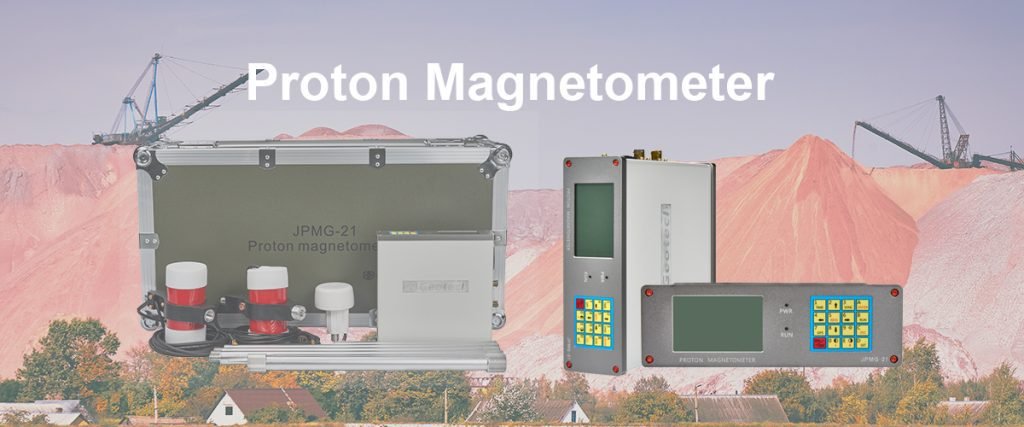
Proton magnetometer survey equipment typically consists of a sensor unit (which contains the hydrogen – rich medium and the electronics to measure precession frequency), a control unit for data acquisition and processing, and a power supply. The design is often optimized for portability, allowing surveyors to carry out measurements in remote or challenging terrains. Some advanced models may also feature wireless connectivity for real – time data transfer and integration with other survey tools.
2.Choosing the Right Equipment
When selecting proton magnetometer survey equipment, several factors need to be considered. These include the required sensitivity (based on the application), the measurement range, the ease of use in the field, and the compatibility with other survey systems. High – quality equipment should offer accurate measurements, robust construction to withstand field conditions, and user – friendly software for data analysis.
Ⅴ. Conclusion
The proton magnetometer, with its unique proton precession measurement principle, offers unparalleled advantages in terms of high sensitivity and reliability. Its applications span across geophysical exploration, archaeology, environmental, and engineering surveys. As technology continues to advance, proton magnetometers are likely to become even more sophisticated, further enhancing their capabilities in professional measurement scenarios. Whether you are a geophysicist searching for mineral deposits, an archaeologist uncovering the past, or an engineer ensuring project safety, the proton magnetometer is an indispensable tool.
Reference
- WIKI:https://en.wikipedia.org/wiki/Electrical_resistivity_tomography
- Society of Exploration Geophysicists (SEG) https://seg.org/
- Society of Environmental and Engineering Geophysicists (EEGS) https://www.eegs.org/
- Geology and Equipment Branch of China Mining Association http://www.chinamining.org.cn/
- International Union of Geological Sciences (IUGS) http://www.iugs.org/
- European Geological Survey Union (Eurogeosurveys) https://www.eurogeosurveys.org/