Welcome to Geotech!
-1.png)

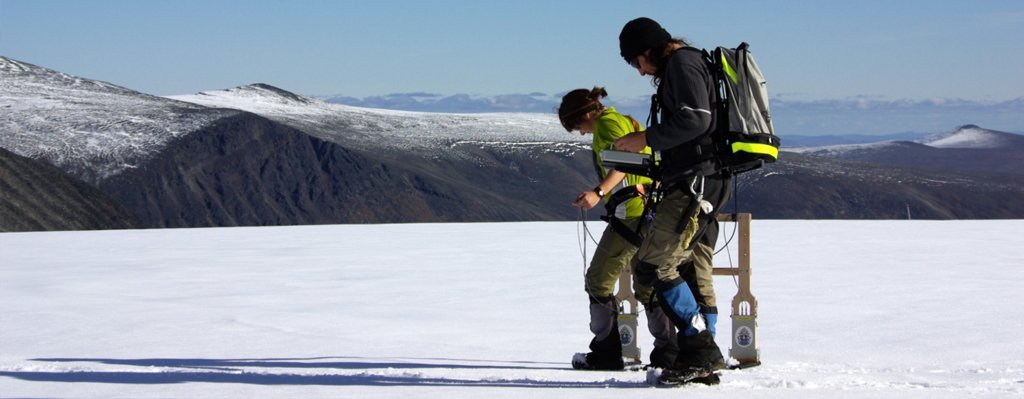
Magnetometer Proton: The Indispensable Assistant for High-Precision Geomagnetic Measurement
TIPS:Dive into electromagnetic surveys! This guide explores how magnetometers work in them. Learn their principles, from proton precession to induction, and see how they detect subsurface anomalies. Discover real – world apps in mineral exploration and archaeology with these key tools.
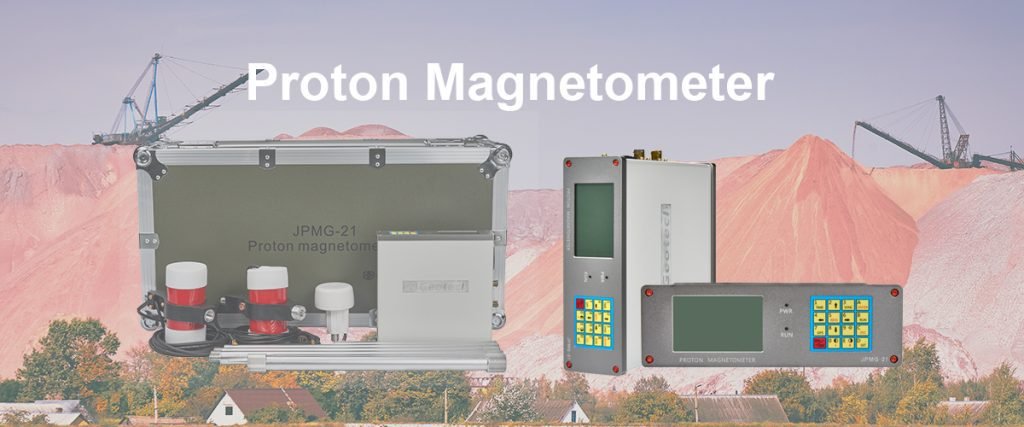
I. Introduction: The Quest for Precision in Geomagnetism
Precision is not just a goal; it is a necessity in modern geophysical exploration. Accurate data forms the foundation for all critical decisions. In the realm of geomagnetic field mapping, one instrument has consistently proven to be an indispensable assistant: the Magnetometer Proton. This article explores the unparalleled capabilities of proton-based magnetometer technology. We will highlight its role in achieving high-precision geomagnetic measurement. Furthermore, we will examine its exceptional performance in magnetic anomaly detection and the practical advantages of its portable design.
II. Defining the Magnetometer Proton
A Magnetometer Proton, more formally known as a Proton Precession Magnetometer, is an absolute scalar magnetometer. It derives its name from its operational principle. It relies on the quantum mechanical properties of protons in a hydrogen-rich fluid. This technology is renowned for its fundamental accuracy. It does not require calibration because it measures the precession frequency of protons. This frequency is directly tied to a physical constant. Therefore, proton-type magnetometer systems provide a reliable baseline for any precise geomagnetic survey.
III. The Science of High-Precision Measurement
The core strength of the Magnetometer Proton lies in its unwavering precision. How does it achieve this?
The process is elegant and robust. First, the fluid’s protons are polarized by an applied magnetic field. When this field is cut off, the protons precess. They realign with the ambient earth magnetic field. During precession, they generate a characteristic signal. The frequency of this signal is measured with extreme accuracy. This frequency is directly proportional to the total strength of the geomagnetic field.
The formula is: F = γp * |B|
Where γp is the gyromagnetic ratio of the proton. This is a known constant. This direct relationship ensures absolute accurate earth magnetic measurement. It eliminates drift errors common in other sensor types.
IV. Key Application: Magnetic Anomaly Detection
The ultimate purpose of high-precision data is insightful interpretation. A primary application for the Magnetometer Proton is magnetic anomaly detection.
Subtle variations, or anomalies, in the earth magnetic field can reveal crucial information. These anomalies are caused by subsurface variations in magnetism. They can indicate mineral deposits, buried utilities, unexploded ordnance (UXO), or archaeological features. The Magnetometer Proton’s precision makes it ideal for this task. It can detect very small changes in the field. This provides a clear, high-fidelity map of subsurface conditions.
V. The Advantage of Portability: The Portable Magnetic Gradiometer
Technological advancement has made powerful tools more accessible. Modern systems often integrate two proton-based magnetometer sensors. This creates a portable magnetic gradiometer.
This configuration measures the magnetic gradient. It records the difference in field strength between two points. This technique offers significant benefits. It effectively cancels out diurnal variations and cultural noise. This greatly enhances the clarity of the data for magnetic anomaly detection. The portable nature of these systems allows for rapid deployment. Surveys can be conducted on foot, from a vehicle, or even a drone. Our handheld magnetic gradient meter solutions embody this flexibility. They bring laboratory-grade precision to the field.
VI. Conclusion: The Trusted Partner for Exploration
In conclusion, the Magnetometer Proton remains a trusted partner for geophysicists. Its foundation in fundamental physics guarantees accuracy. Its application in high-precision geomagnetic measurement is unmatched. Whether configured as a single sensor for base station readings or as a mobile magnetic gradiometer for detailed surveys, it delivers reliable data. For any project demanding accurate earth magnetic measurement, choosing a proton-type magnetometer is the definitive choice for success. It is truly the indispensable assistant in the field.
Reference
- WIKI:https://en.wikipedia.org/wiki/Electrical_resistivity_tomography
- Society of Exploration Geophysicists (SEG) https://seg.org/
- Society of Environmental and Engineering Geophysicists (EEGS) https://www.eegs.org/
- Geology and Equipment Branch of China Mining Association http://www.chinamining.org.cn/
- International Union of Geological Sciences (IUGS) http://www.iugs.org/
- European Geological Survey Union (Eurogeosurveys) https://www.eurogeosurveys.org/
