Welcome to Geotech!
-1.png)


Services

What is Contact Resistance Testing?
I. Introduction Contact Resistance Test (CRT) is a technique used to measure the quality of electrical connections. It assesses the contact resistance by measuring the voltage drop across a contact when current flows through it. CRT is widely used in…
What is electrical resistivity imaging?
I. Introduction Electrical Resistivity Imaging (ERI) is a geophysical imaging technique used to visualize subsurface structures by measuring the ground’s electrical resistivity. This method involves injecting electrical current into the ground through a series of electrodes and measuring the resulting…
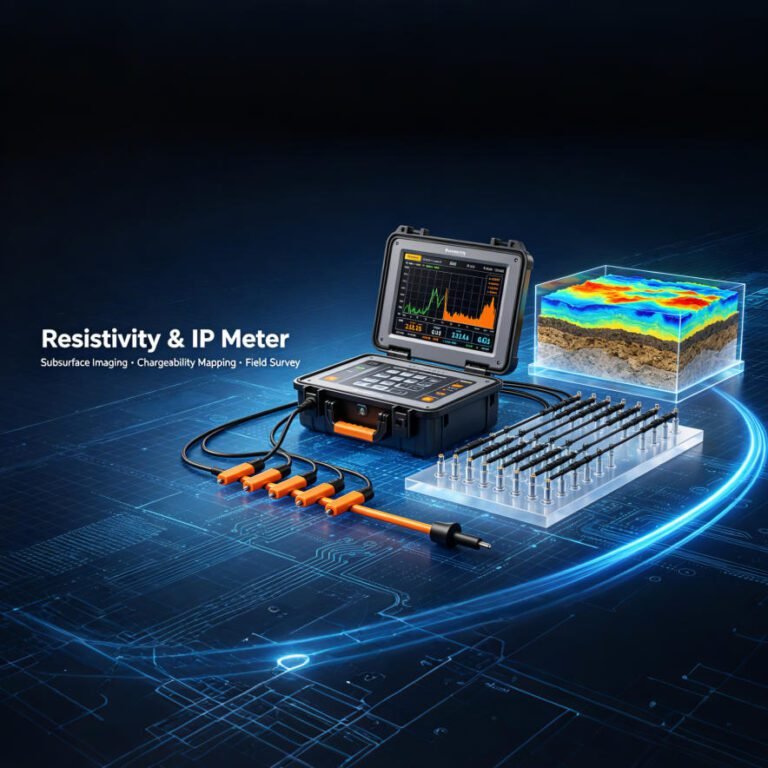
What is ert test/ert testing?
I. Definition and Principle of ERT Electrical Resistivity Tomography (ERT) is a geophysical imaging technique used to visualize subsurface structures by measuring the ground’s electrical resistivity. This method involves injecting electrical current into the ground through a series of electrodes…
What is electric imaging?
I. Introduction Electrical Imaging is an advanced geophysical exploration tool that is increasingly becoming a key technology in groundwater exploration, environmental monitoring, and engineering surveys. Its non-contact and high-precision characteristics make it stand out in various application scenarios. This article…
What is Earth Resistivity?
I. Introduction Earth Resistivity is an essential geophysical parameter that is increasingly becoming a core technology in groundwater exploration, environmental monitoring, and engineering surveys. Its non-contact and high-precision characteristics make it stand out in various application scenarios. This article delves…