Welcome to Geotech!
-1.png)


Knowledge base

What is electrical resistivity imaging?
I. Introduction Electrical Resistivity Imaging (ERI) is a geophysical imaging technique used to visualize subsurface structures by measuring the ground’s electrical resistivity. This method involves injecting electrical current into the ground through a series of electrodes and measuring the resulting…
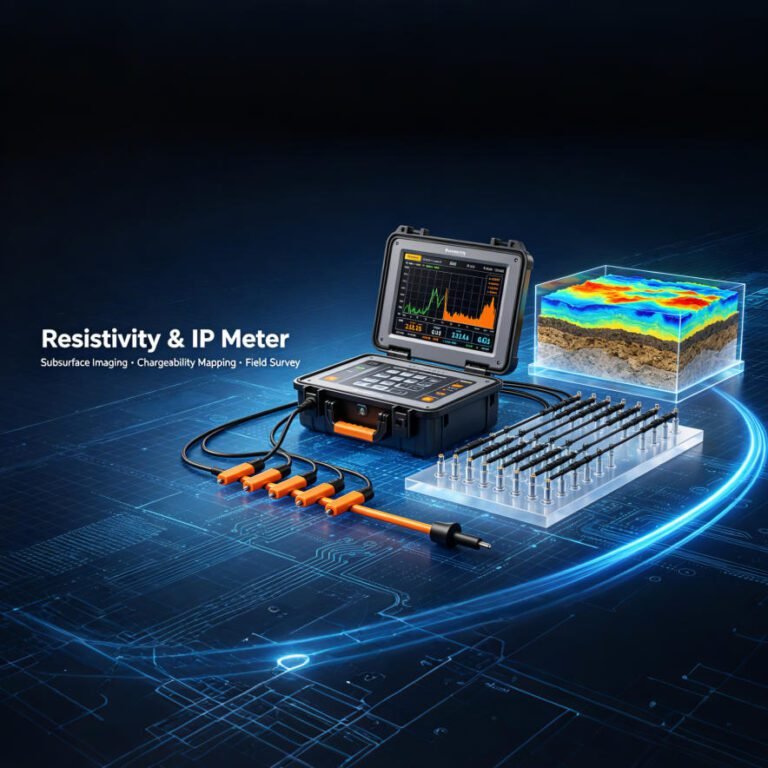
What is ert test/ert testing?
I. Definition and Principle of ERT Electrical Resistivity Tomography (ERT) is a geophysical imaging technique used to visualize subsurface structures by measuring the ground’s electrical resistivity. This method involves injecting electrical current into the ground through a series of electrodes…
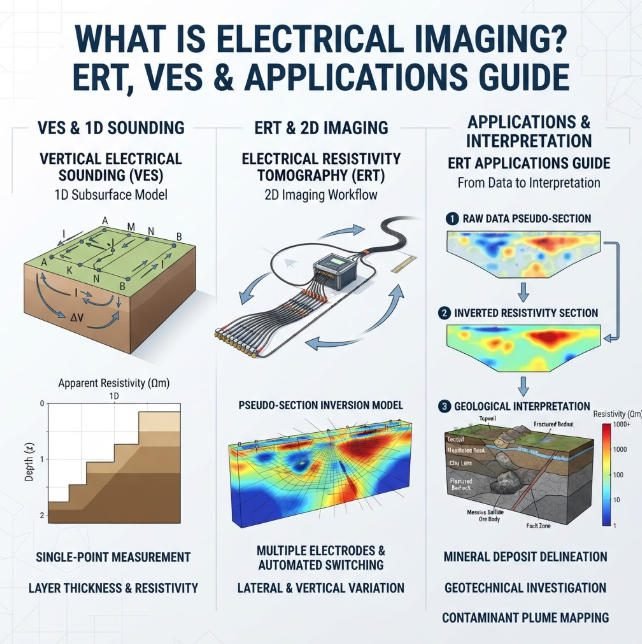
What is Electrical Imaging? ERT, VES & Applications Guide
Overview:Electrical Imaging uses measured electrical responses to build a model of subsurface resistivity. Electrical Resistivity Tomography (ERT) extends this principle into 2D or 3D imaging, while Vertical Electrical Sounding (VES) focuses on resistivity variation with depth at a selected location.…
What is Earth Resistivity?
I. Introduction Earth Resistivity is an essential geophysical parameter that is increasingly becoming a core technology in groundwater exploration, environmental monitoring, and engineering surveys. Its non-contact and high-precision characteristics make it stand out in various application scenarios. This article delves…
Unveiling the Hidden Treasures Beneath the Surface
Electrical Imaging: Unveiling the Hidden Treasures Beneath the Surface I. Introduction Electrical Imaging is an advanced geophysical exploration tool that is increasingly becoming a key technology in groundwater exploration, environmental monitoring, and engineering surveys. Its non-contact and high-precision characteristics make…