Welcome to Geotech!
-1.png)


Knowledge base

What is an Electromagnetic Sounding Instrument?
I. What is an Electromagnetic Sounding Instrument? An electromagnetic sounding instrument is a geophysical device that reconstructs subsurface geological structures by measuring electromagnetic responses (resistivity, polarizability, etc.) of underground media. Its core principles include: Key Advantages: II. Comparison with Other…
What is an Electrical Resistivity Meter?
Introduction An electrical resistivity meter is a sophisticated geophysical instrument used to measure the electrical resistivity of subsurface materials. This measurement is crucial in various fields such as geology, hydrogeology, environmental science, and engineering, where understanding the subsurface structure is…
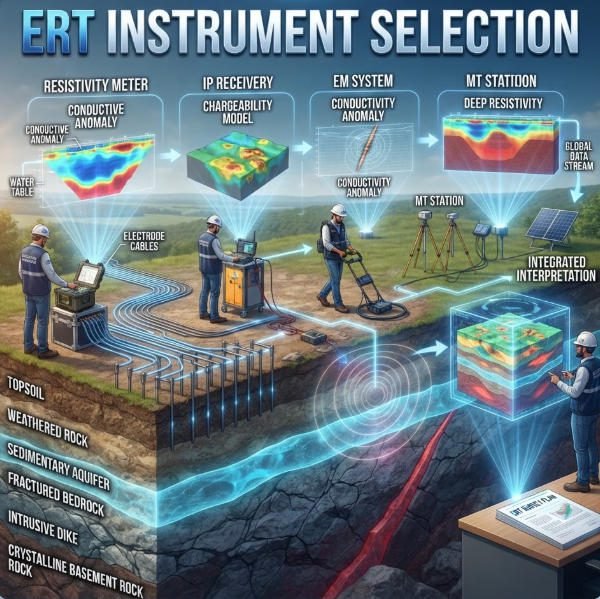
What is Electrical Resistivity Tomography Instrument?丨ERT Instrument Guide
TIPS:ERT instrument selection determines whether your geophysical survey succeeds or fails. This guide explains how ERT instrument hardware specs — A/D resolution, channel count, and dynamic range — directly impact data quality. Learn to match Geotech GIM systems to your…
what is Electrical Resistivity Tomography (ERT) Equipment?
I. What is Electrical Resistivity Tomography (ERT)? Electrical Resistivity Tomography (ERT) is a geophysical method that reconstructs subsurface geological structures by measuring resistivity variations in underground media. By injecting direct or low-frequency current into the ground and measuring voltage differences…
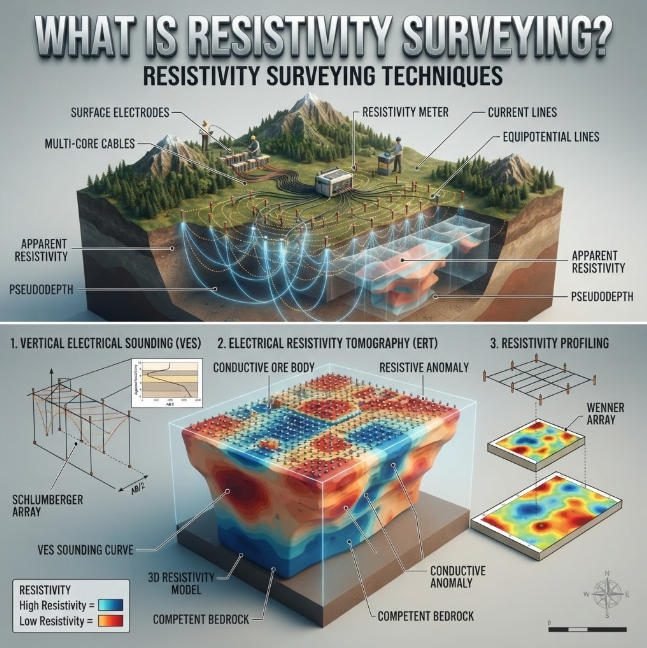
What is Resistivity Surveying?丨Resistivity Surveying Techniques
Overview:Resistivity surveying techniques help engineers investigate subsurface conditions by measuring electrical responses to injected current. This guide explains how an Electrical Resistivity Survey works, compares common electrode arrays, and outlines field procedures, data inversion, and applications. Learn how Resistivity Surveying…