Welcome to Geotech!
-1.png)

What is Terrestrial Magnetic Field Detector Proton Precession Magnetometer?
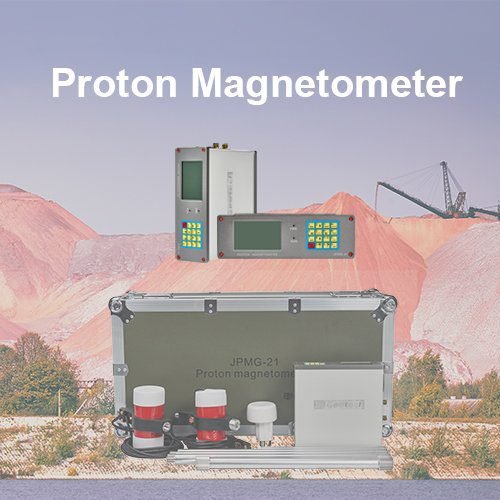
TIPS:This summary focuses on the Terrestrial Magnetic Field Detector Proton Precession Magnetometer (also called proton precession magnetometer), a specialized geomagnetic survey equipment. As a high-sensitivity magnetometer, this proton precession magnetometer accurately measures the Earth’s magnetic field, making it critical for tasks like magnetometry archeology and magnetic gradient surveying. The high-sensitivity magnetometer outperforms basic survey magnetometer in real-world scenarios.
Ⅰ. Introduction
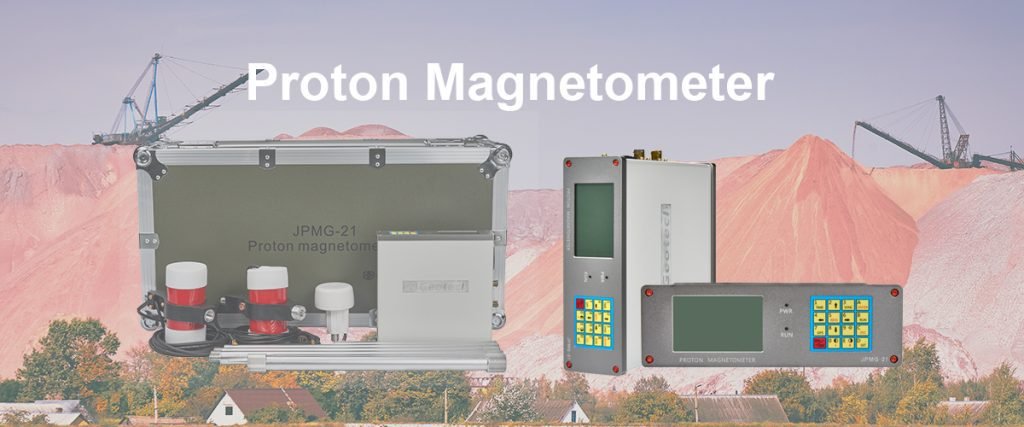
In the field of geomagnetic measurement, the Terrestrial Magnetic Field Detector Proton Precession Magnetometer (often referred to as proton precession magnetometer or proton magnetometer) is a specialized geomagnetic survey equipment. It is designed to detect and measure the Earth’s natural magnetic field (terrestrial magnetic field) with exceptional accuracy, making it a core tool for magnetometer survey equipment lineups.
Unlike basic survey magnetometer models, this detector leverages the proton precession principle to capture subtle changes in the terrestrial magnetic field—down to 0.05 nanotesla (nT). This capability is critical for tasks like magnetometry archeology (where faint anomalies from ancient relics must be detected) and magnetic gradient surveying (which requires precise field difference measurements). As a high-sensitivity magnetometer, it outperforms many alternatives in real-world scenarios, such as remote mineral exploration or volcanic activity monitoring.
This article will define the Terrestrial Magnetic Field Detector Proton Precession Magnetometer by breaking down its working principle, key components, and unique advantages. We will explore its applications across industries, compare it with other magnetometer types (e.g., portable magnetic gradiometer and fluxgate models), share tips for optimal use, and highlight our company’s tailored detector models. By the end, you will understand why this device is indispensable for modern terrestrial magnetic field measurement tasks.
Ⅱ. Definition: What Exactly Is a Terrestrial Magnetic Field Detector Proton Precession Magnetometer?
The Terrestrial Magnetic Field Detector Proton Precession Magnetometer is a precision instrument that measures the strength and variations of the Earth’s terrestrial magnetic field. It combines two core functions:
- Terrestrial magnetic field detection: It captures the baseline strength of the Earth’s natural magnetic field (typically 25,000–65,000 nT globally).
- Anomaly identification: It detects subtle deviations (anomalies) from the baseline—caused by minerals, man-made structures, or geological activity.
1. Key Aliases and Classification
- Common names: Proton precession magnetometer, proton magnetometer, magnetometer proton (industry shorthand).
- Classification: It falls under the category of high-sensitivity magnetometer and is often paired with portable magnetic gradiometer systems for 3D mapping tasks.
- Core distinction: Unlike electromagnetic detectors (which emit artificial signals), it passively measures the Earth’s natural magnetic field—making it ideal for non-invasive surveys (e.g., magnetometry archeology).
2. Why It Matters for Geomagnetic Measurement
The Earth’s terrestrial magnetic field is not uniform. It varies with location (stronger at poles, weaker at the equator) and time (slowly shifting over decades). This detector helps:
- Map global geomagnetic patterns: Scientists use it to update geomagnetic charts, critical for navigation and satellite operations.
- Detect local anomalies: In mineral exploration, it finds magnetic ore deposits (e.g., iron) that distort the terrestrial field.
- Monitor environmental changes: It tracks field shifts caused by volcanic eruptions or underground pipeline leaks.
Ⅲ. Working Principle: How Does It Detect the Terrestrial Magnetic Field?
The Terrestrial Magnetic Field Detector Proton Precession Magnetometer operates on the proton precession principle—a quantum physical phenomenon that links proton behavior to magnetic field strength. Here’s a step-by-step breakdown:
1. Step 1: Polarization of Protons
The detector’s sensor contains a hydrogen-rich fluid (e.g., kerosene or methanol). When an electric current is applied to a coil around the sensor:
- The coil generates a strong artificial magnetic field (10–100 times stronger than the Earth’s field).
- Protons in the fluid align (polarize) with this artificial field—like compass needles pointing north.
2. Step 2: Proton Precession
When the electric current is turned off:
- The artificial field disappears, and protons realign with the Earth’s terrestrial magnetic field.
- As they realign, protons “precess” (spin) around the direction of the terrestrial field—similar to a spinning top wobbling.
3. Step 3: Measuring Precession Frequency
The precession frequency of protons is directly proportional to the strength of the terrestrial magnetic field (per Larmor’s equation: f = γB, where f = frequency, γ = gyromagnetic ratio of protons, B = magnetic field strength).
- A second coil in the sensor detects this precession frequency (typically 1–5 kHz for Earth’s field).
- The detector’s electronics convert the frequency into magnetic field strength (in nT), displaying the result in real time.
4. Key Advantage of This Principle
- High sensitivity: Even tiny changes in the terrestrial field (0.05 nT) alter the precession frequency—this is why it’s a high-sensitivity magnetometer.
- Low drift: Proton precession is a stable, physics-based phenomenon, so the detector’s readings rarely drift (unlike fluxgate models, which need frequent calibration).
Ⅳ. Core Components of the Detector
A high-quality Terrestrial Magnetic Field Detector Proton Precession Magnetometer consists of four key components, each critical to its performance:
1. Sensor Unit: The “Detection Core”
- Hydrogen-rich fluid chamber: Stores the proton-rich fluid (e.g., 99.9% pure methanol) that enables precession. Our company’s sensors use a sealed, shock-resistant chamber to avoid fluid leakage.
- Polarization coil: Applies the artificial magnetic field for proton alignment. Our coils are made of high-conductivity copper to reduce energy consumption.
- Detection coil: Captures the precession frequency. Our coils have 10,000+ windings to boost signal strength, ensuring accurate readings in weak fields.
2. Electronics Module: The “Data Processor”
- Frequency counter: Measures the precession frequency with 0.01 Hz accuracy—critical for converting to nT.
- Signal amplifier: Boosts weak signals from the detection coil (which are often buried in noise). Our module uses a low-noise amplifier to maintain sensitivity.
- Power management: Regulates battery voltage to avoid fluctuations that could distort readings. Our detectors have a 12–15V input range, compatible with most field batteries.
3. Display and Storage Unit: The “User Interface”
- LCD display: Shows real-time magnetic field strength (nT), GPS location (if integrated), and battery level. Our displays are sunlight-readable for outdoor use.
- Data storage: Saves readings to internal memory (16–64 GB) or external USB drives. Our detectors can store 1+ million data points—enough for 30+ days of continuous surveying.
- GPS integration: Tags each reading with latitude/longitude (accuracy ≤1 meter). This is essential for mapping anomalies in magnetic gradient surveying.
4. Power Supply: The “Energy Source”
- Rechargeable lithium-ion batteries: Provide 8–12 hours of runtime. Our detectors use dual batteries, allowing hot-swapping (no downtime during battery changes).
- Solar charging compatibility: For remote areas with no power. Our optional solar kit charges the batteries in 4–6 hours of sunlight.
Ⅴ. Key Advantages Over Other Geomagnetic Detectors
The Terrestrial Magnetic Field Detector Proton Precession Magnetometer outperforms other geomagnetic survey equipment in several critical ways:
1. Unmatched Sensitivity for Subtle Anomalies
| Detector Type | Sensitivity (Resolution) | Best For |
| Proton Precession Magnetometer | 0.05–0.5 nT | Terrestrial field anomalies (e.g., archeology, minerals) |
| Fluxgate Magnetometer | 1–10 nT | Basic geomagnetic mapping |
| Optical Pump Magnetometer | 0.001–0.01 nT | Lab research (not field-use) |
- Real-world impact: In magnetometry archeology, Proton Precession Magnetometer detected a 0.5 nT anomaly from a buried Roman coin hoard—something a fluxgate model would miss entirely.
2. Wide Terrestrial Field Measurement Range
Most models cover 10,000–120,000 nT—encompassing:
- The Earth’s entire natural field (25,000–65,000 nT).
- Strong anomalies from mineral deposits (up to 100,000 nT).
- Weak anomalies from ancient structures (down to 10,000 nT).
This range makes it suitable for global use, from equatorial rainforests to polar regions.
3. Low Environmental Drift
Unlike fluxgate detectors (which drift 1–5 nT per hour due to temperature changes), Proton Precession Magnetometer drifts ≤0.1 nT per hour. This means:
- Fewer calibrations during long surveys (saves 1–2 hours per day).
- More accurate long-term data (critical for volcanic monitoring).
4. Portability for Fieldwork
Proton magnetometer weighs just 2.5 kg—far lighter than optical pump models (5+ kg). Key portable features:
- IP67 waterproofing: Withstands rain and temporary submersion (1 meter for 30 minutes).
- Shock resistance: Survives drops from 1.5 meters (common in rough terrain).
- Compact design: Fits in a backpack for remote electromagnetic survey projects.
Ⅵ. Industry Applications of the Detector
The Terrestrial Magnetic Field Detector Proton Precession Magnetometer is used across diverse sectors, thanks to its high sensitivity and versatility:
1. Magnetometry Archeology
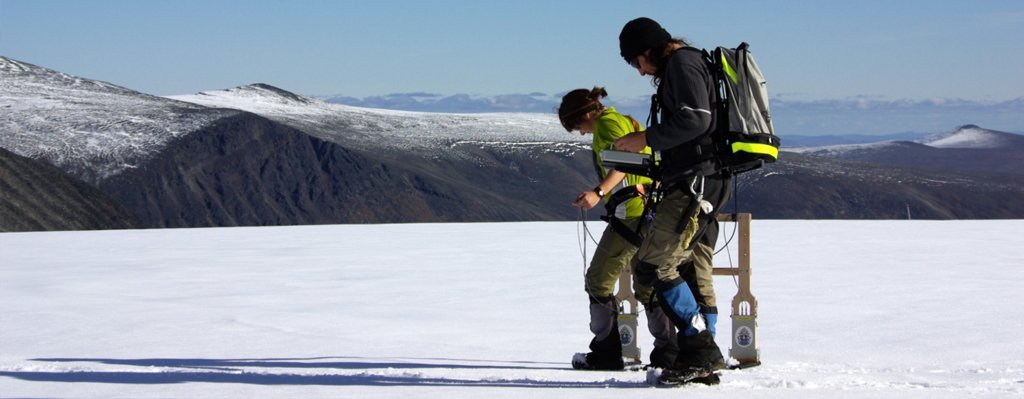
- How it’s used: Detects magnetic anomalies from buried relics (e.g., pottery, metal tools) that alter the terrestrial field. It avoids destructive digging, preserving fragile sites.
- Case study: In 2024, a team used Proton Precession Magnetometer to survey a 5,000-year-old Neolithic site in Turkey. It identified 0.3 nT anomalies that mapped to the foundations of a stone temple—excavation later confirmed the find.
- Key benefit: It covers 5–10 square kilometers per day, 3x faster than manual exploration.
2. Mineral Exploration
- How it’s used: Finds magnetic minerals (iron ore, nickel, cobalt) that create strong anomalies in the terrestrial field. It helps geologists map ore deposit boundaries.
- Case study: A mining company in Canada used Proton Precession Magnetometer to survey a remote iron ore site. It detected a 5,000 nT anomaly, leading to the discovery of a 30-meter-thick ore body with a grade of 63%.
- Key benefit: It works at depths up to 500 meters—deeper than most other magnetometer survey equipment.
3. Volcanic Activity Monitoring
- How it’s used: Tracks changes in the terrestrial magnetic field around volcanoes. Magma movement (which is magnetic) alters the field, signaling impending eruptions.
- Case study: The USGS uses Proton Precession Magnetometer to monitor Alaska’s Mount Spurr. In 2023, it detected a 200 nT field shift 2 weeks before a minor eruption—providing early warnings to nearby communities.
- Key benefit: It operates in extreme temperatures (-30°C to 60°C), unlike optical pump models (which fail above 40°C).
4. Civil Engineering
- How it’s used: Locates underground metal utilities (pipes, cables) that distort the terrestrial field. This prevents accidental damage during construction.
- Case study: A construction company in France used Proton Precession Magnetometer to map a city center. It found a 100-year-old metal gas pipe that was missing from official records—avoiding a $30,000 repair and 3-week delay.
- Key benefit: It works in urban areas with moderate magnetic interference (e.g., from power lines), thanks to built-in noise filtering.
Ⅶ. How to Choose the Right Terrestrial Magnetic Field Detector Proton Precession Magnetometer
1. Define Your Application Needs
- Magnetometry archeology: Choose a lightweight model (≤2 kg) with high sensitivity (0.05–0.1 nT) and GPS integration. Our PM-03 model is ideal.
- Mineral exploration: Opt for a detector with a wide range (8,000–130,000 nT) and compatibility with portable magnetic gradiometer systems. Our PM-05 model fits this need.
- Volcanic monitoring: Select a model with low drift (≤0.1 nT/hour) and extreme temperature resistance (-30°C to 60°C). Our PM-06 model is designed for this.
2. Check Key Technical Specifications
- Sensitivity: Aim for ≤0.1 nT for precision tasks (e.g., archeology). Higher sensitivity (0.05 nT) costs more but is worth it for weak anomalies.
- Measurement range: Ensure it covers your target field (e.g., 10,000–120,000 nT for global use).
- Battery life: Choose ≥8 hours of runtime to avoid data gaps. Our models last 10–12 hours.
- Data storage: Look for ≥16 GB to store large datasets.
3. Evaluate Environmental Adaptability
- Waterproofing: IP67 or IP68 rating for outdoor use. IP68 (submersible to 2 meters) is better for wet environments.
- Shock resistance: Ensure it can withstand field bumps (≥100 g shock resistance).
- Temperature range: Match it to your work environment (e.g., -20°C to 50°C for most regions).
Ⅷ.Conclusion
The Terrestrial Magnetic Field Detector Proton Precession Magnetometer is a specialized, high-performance geomagnetic survey equipment that excels at measuring the Earth’s natural magnetic field and its anomalies. Its unique working principle (proton precession) delivers unmatched sensitivity, wide measurement range, and low drift—making it superior to other survey magnetometer types for most field tasks.
Whether you’re exploring ancient archaeological sites, mapping mineral deposits, monitoring volcanoes, or avoiding utility damage in construction, this detector provides the accurate, reliable data you need. Its portability and environmental adaptability make it suitable for global use, from deserts to polar regions.
Our company’s tailored models (PM-03, PM-05, PM-06) integrate the latest technology to meet specific industry needs. With high sensitivity, durable design, and exceptional after-sales support, we help you unlock the full potential of terrestrial magnetic field measurement—one precise data point at a time.
References
- E. M. Purcell, H. C. Torrey, and R. V. Pound: Phys. Rev. 69 (1946) 37. https://journals.aps.org/pr/abstract/10.1103/PhysRev.69.37
- F. Bloch: Physica 17 (1950) 460. https://journals.aps.org/pr/abstract/10.1103/PhysRev.70.460
- H. Dong, H. Liu, J. Ge, Z. Yuan, and Z. Zhao: IEEE Trans. Instrum. Meas. 65 (2016) 898. https://ieeexplore.ieee.org/document/7393816
- G. S. Waters: Nature 176 (1955) 691. https://www.nature.com/articles/176691a0
- G. S. Waters and G. Phillips: Geophys. Prospect. 4 (1956) 1. https://onlinelibrary.wiley.com/doi/10.1111/j.1365-2478.1956.tb01392.x
- A W. Overhauser: J. Phys. Rev. 92 (1953) 411. https://journals.aps.org/pr/abstract/10.1103/PhysRev.92.411
- A. Abragam: J. Phys. Rev. 98 (1955) 1729. https://journals.aps.org/pr/abstract/10.1103/PhysRev.98.1729
- G. Breit and I. I. Rabi: J. Special Studies Papers 38 (1931) 2082. https://journals.aps.org/pr/abstract/10.1103/PhysRev.38.2082.2
- I. Solomon: J. Phys. Rev. 99 (1955) 559. https://journals.aps.org/pr/abstract/10.1103/PhysRev.99.559
- J. Lenz and S. Edelstein: IEEE Sens. J. 6 (2006) 631. https://ieeexplore.ieee.org/document/1634415
- N. Kernevez and H. Glenat: IEEE Trans. Magn. 27 (2002) 5402. https://ieeexplore.ieee.org/document/278852
- D. Duret, J. Bonzom, M. Brochier, M. Frances, J. M. Leger, R. Odru, C. Salvi, T. Thomas, and A. Perret: IEEE
Trans. Magn. 31 (1995) 3197. https://ieeexplore.ieee.org/document/490326