Welcome to Geotech!
-1.png)

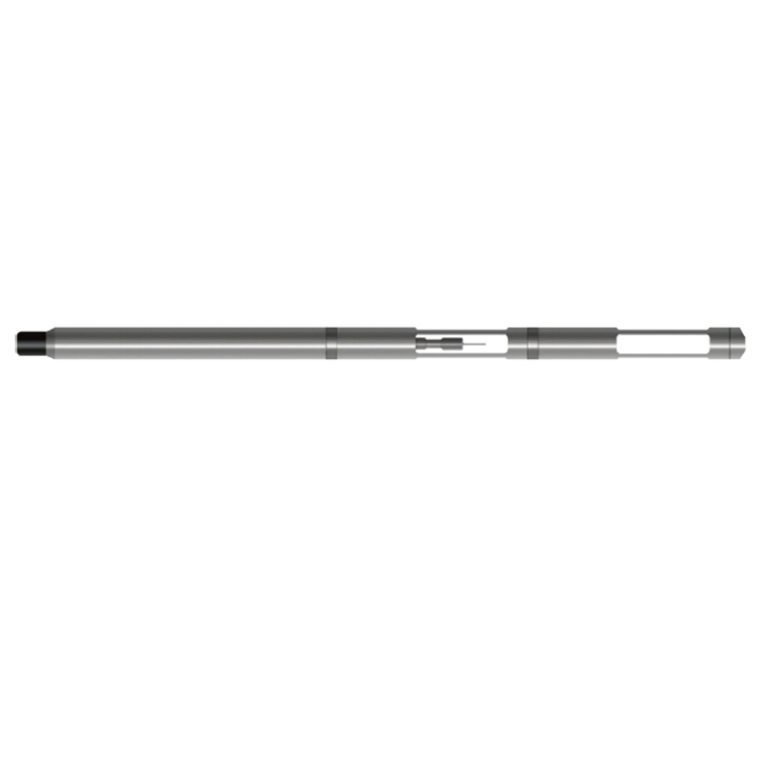
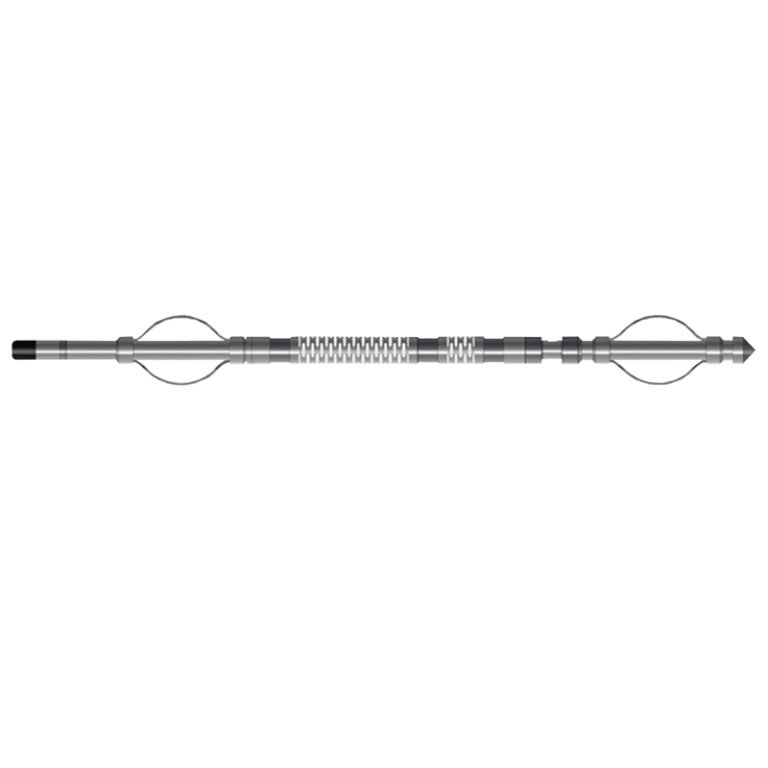
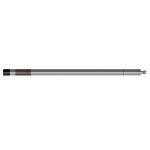
JFS-2 Probe
PRODUCT PARAMETERS
Description
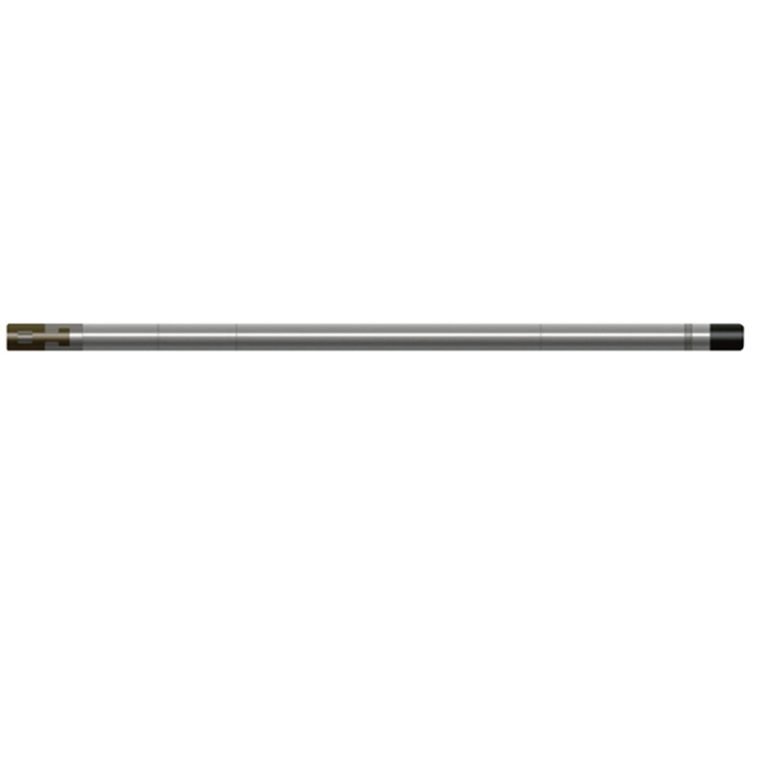
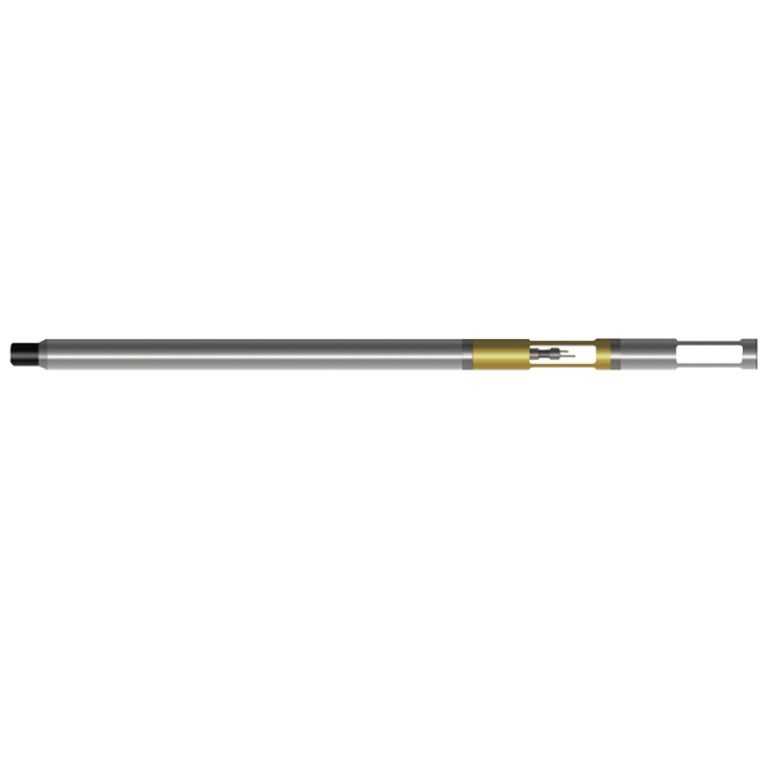
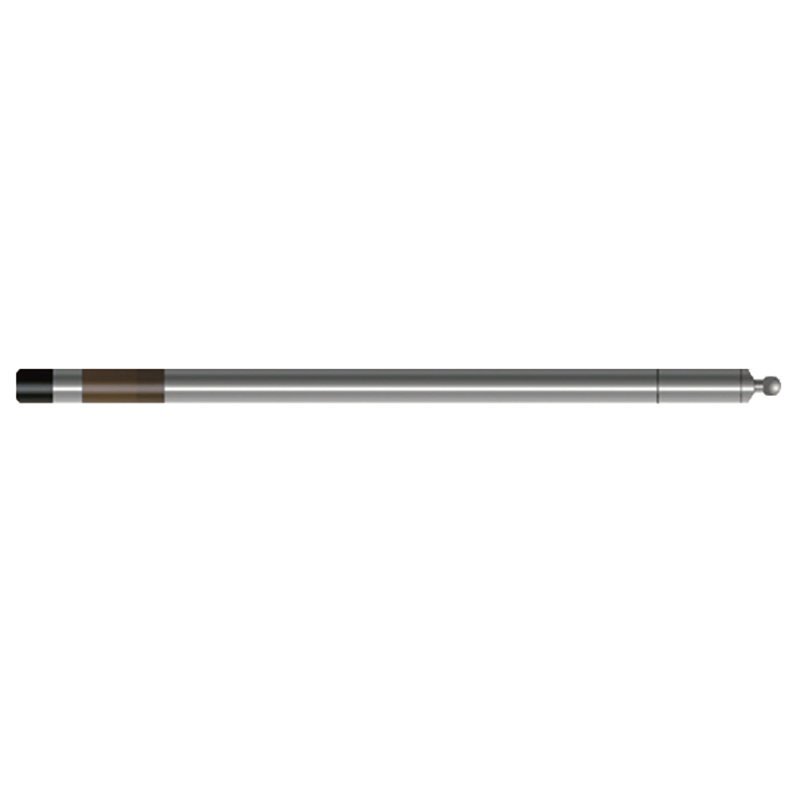
JFS-2 Casing Collar Locator & Natural Gamma Probe
 Abstract
 Abstract
JFS-2 Casing Collar Locator & Natural Gamma Probe is composed of a Nal body and a photomultiplier tube to form a natural gamma ray detector, which measures the total amount of natural gamma rays; at the same time, the instrument is also combined with a magnetic positioning detector to detect and locate the distribution of magnetic pipe strings (casing, downhole tools, flower pipes, screens, collars, packers, etc.) at depth. It can also be used in various production wells, cementing, perforating, well repair, casing corrosion monitoring and other occasions.

Applicable Conditions
● Borehole with case
● Bare hole fill with water or mud
● Bare Dry hole
Applications
● Casing coupling locator
● Divide stratigraphic interfaces and determine changes in stratigraphic facies
● Determine fine-grained/coarse-grained change sequence
● Determine the location and thickness of aquifers
● Estimate uranium concentration
Features
● Downhole measurement, signal amplification, and digitization
● High reliability, high measurement accuracy, and easy to use
Specifications
| Gamma ray detection sensor | Nal crystal + photomultiplier tube |
| Gamma ray detection and counting range | 0~65000cps, accuracy: 5%F.S |
| Gamma ray detection energy threshold | >0.06MeV |
| Magnetic positioning sensor | 65mm electromagnetic sensor |
| Magnetic positioning measurement range | ±2500mV |
| Applicable well diameter | Φ50~Φ150mm |
| Output signal | Bipolar encoding |
FAQ
In gravity exploration (SI), what is the unit of gravity? How to convert gravity units between SI and CGS?
① In SI, it is m·s-2, and one percent of it is the international unit abbreviation g.u.;
② Conversion between SI and CGS: 1g.u.=10-1 mGal
What are gravitational field and gravitational potential?
Gravitational field: The space around the earth with gravity is called the gravitational field.
Gravitational potential: The gravitational potential W in the gravitational field is equal to the work done by a particle of unit mass moving from infinity to that point.
What is the normal gravity field of the earth? What are the rules for the change of the normal gravity field with latitude and altitude?
① The normal gravity field of the earth: Assuming that the earth is a rotating ellipsoid (reference plane), the surface is glossy, the internal density is uniform, or it is distributed in concentric layers, the density of each layer is uniform, and the deviation of the shape of the ellipsoid from the geoid is very small, then the gravity field generated by the earth is the normal gravity field.
② The normal gravity value is only related to the latitude, the smallest at the equator and the largest at the poles, with a difference of about 50,000 g.u.; the rate of change of the normal gravity value with latitude is the largest at 45° latitude, and zero at the equator and the poles; the normal gravity value decreases with increasing altitude, and its rate of change is -3.086 g.u.. The main feature of the long-term change is the "westward drift" of the geomagnetic elements, both the dipole field and the non-dipole field drift westward, and have a global nature.
What is the relationship between gravitational field strength and gravitational acceleration?
The gravitational field strength is equal to the gravitational acceleration in both numerical and dimensional terms, and the two are in the same direction. In gravity exploration, all references to gravity refer to gravitational acceleration. The gravitational field strength at a point in space is equal to the gravitational acceleration at that point.
What is gravity exploration?
Gravity exploration is an exploration method that is based on the density difference of rocks and ores. Since density difference will cause local changes in the normal gravity field of the earth (i.e. gravity anomaly), it is used to solve geological problems by observing and studying gravity anomalies.