Welcome to Geotech!
-1.png)


Proton Magnetometer: From Hydrogen Atom Polarization to Accurate Magnetic Field Measurement
Introduction
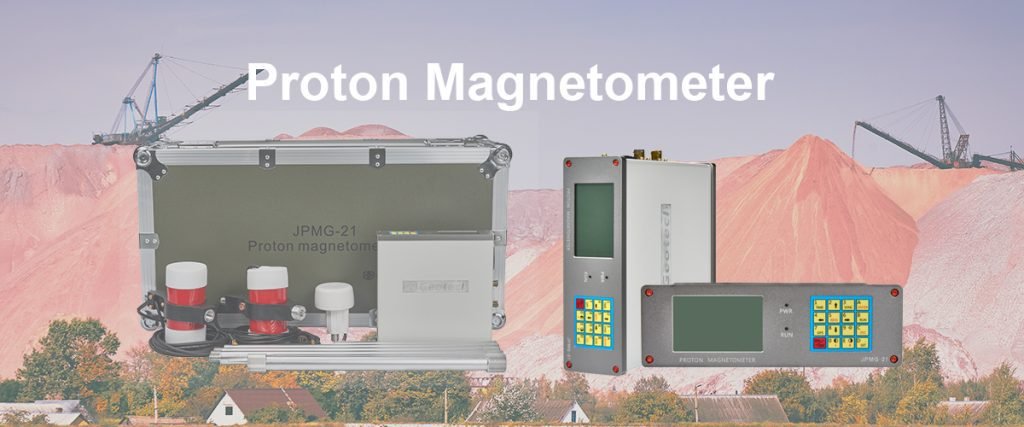
The Proton Magnetometer has revolutionized geomagnetic surveys by offering a precise method to measure magnetic field variations. This article delves into the working principles of the Proton Magnetometer, from hydrogen atom polarization to accurate magnetic field measurement, and explores its applications and advantages in various fields.
Working Principle of the Proton Magnetometer
Hydrogen Atom Polarization
The Proton Magnetometer utilizes nuclear magnetic resonance (NMR) to detect the precession frequency of hydrogen protons in the Earth’s magnetic field. When hydrogen atoms are subjected to an external magnetic field, their protons align with the field. Upon applying a resonant radio frequency (RF) pulse, the protons become polarized and start precessing around the magnetic field lines.
Precession Frequency Measurement
The precession frequency of hydrogen protons is directly proportional to the magnetic field strength. By measuring this frequency, the Proton Magnetometer can determine the magnetic field strength with high precision. The OCXO-stabilized system ensures minimal frequency drift, enhancing measurement accuracy.
Key Components and Their Functions
Sensor Unit
The sensor unit contains hydrogen atoms and detects the magnetic field. It is designed to minimize external interference and ensure stable measurements.
OCXO Oscillator
The OCXO (Oven-Controlled Crystal Oscillator) provides a stable frequency reference, crucial for maintaining the precision of magnetic field measurements. It compensates for temperature variations, ensuring consistent performance across different environmental conditions.
Data Acquisition System
This system processes signals from the sensor unit, converting them into magnetic field measurements. It includes filters to reduce noise and enhance signal clarity.
Applications of Proton Magnetometer
Mineral Exploration
The Proton Magnetometer is widely used in detecting mineral deposits such as iron, copper, and zinc. Its high sensitivity allows for the identification of subtle magnetic anomalies associated with these minerals.
Archaeological Research
In archaeology, the Proton Magnetometer helps locate buried artifacts and structures without invasive excavation. It has been successfully used to map ancient settlements and burial sites.
Environmental Monitoring
The Proton Magnetometer aids in environmental studies by detecting underground pipelines and monitoring pollution levels, offering non-invasive solutions for urban planning and infrastructure projects.
Engineering Surveys
For engineering projects, the Proton Magnetometer detects underground infrastructure and assesses geological conditions, ensuring construction safety and success.
Advantages Over Traditional Methods
High Sensitivity and Precision
The Proton Magnetometer offers superior sensitivity and precision compared to traditional magnetic survey equipment, making it ideal for detailed geological surveys.
Portability and Ease of Use
Designed for field use, the Proton Magnetometer is lightweight and portable, with multiple operational modes to suit various survey conditions.
Real-Time Data Processing
Advanced data processing software enables real-time visualization and analysis of magnetic field data, enhancing survey efficiency.
Case Studies and Implementation Scenarios
Iron Ore Exploration in Mongolia
In Mongolia’s Gobi region, the Proton Magnetometer identified potential iron ore deposits with high survey efficiency and accuracy.
Archaeological Discovery in Brazil
Brazilian archaeologists used the Proton Magnetometer to map a 12th-century settlement, detecting buried artifacts at 2.3 meters depth.
Technical Specifications and Performance Metrics
Sensitivity and Dynamic Range
- Sensitivity: 0.05nT
- Dynamic Range: 20,000-120,000nT
Resolution and Accuracy
- Resolution: 0.01nT
- Absolute Accuracy: ±0.1nT
Sampling Rate and Data Storage
- Sampling Rate: 3-60s (Mobile Mode); 3-3600s (Base Mode)
- Data Storage: 32MB internal memory
Environmental Specifications
- Operating Temperature: -40°C to +55°C
- Protection Rating: IP67
Future Outlook and Technological Advancements
Integration with Other Geophysical Methods
The Proton Magnetometer can be integrated with ERT, IP, and seismic methods for comprehensive geological information, enhancing subsurface interpretation accuracy.
AI and Data Analytics
Advancements in AI and data analytics are expected to improve the Proton Magnetometer’s capabilities in anomaly detection and data interpretation.
Conclusion
The Proton Magnetometer is a powerful tool for geomagnetic surveys, offering high precision and reliability. Its applications highlight its versatility in modern geosciences, and Geotech Instrument Co., Ltd. continues to innovate to set new standards in geophysical exploration.
Reference
- Society of Exploration Geophysicists (SEG) https://seg.org/
- Society of Environmental and Engineering Geophysicists (EEGS) https://www.eegs.org/
- Geology and Equipment Branch of China Mining Association http://www.chinamining.org.cn/
- International Union of Geological Sciences (IUGS) http://www.iugs.org/
- European Geological Survey Union (Eurogeosurveys) https://www.eurogeosurveys.org/
