Welcome to Geotech!



Technical Comparison and Advantage Analysis of Proton Precession Magnetometers
TIPS:Compare Proton Precession Magnetometers to other types—explore technical advantages, cost – performance, and application suitability. Learn why PPMs excel in geophysics, exploration, and research.
Ⅰ. Introduction to Proton Precession Magnetometers
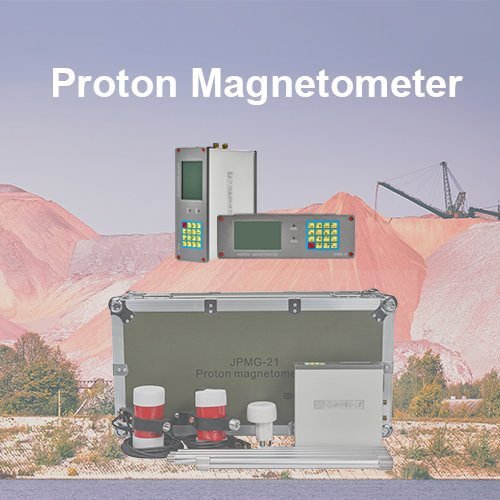
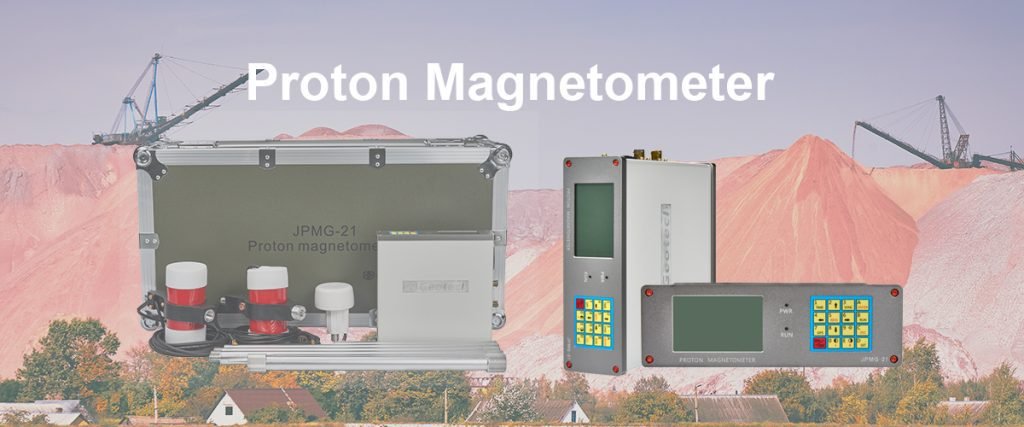
Proton precession magnetometers (PPMs) are a cornerstone in magnetic field measurement, valued for their precision in geophysics, resource exploration, and scientific research. This guide contrasts PPMs with other magnetometer types, highlighting their unique technical advantages, cost – performance ratio, and application suitability.
Ⅱ. Technical Comparison of Proton Precession Magnetometers
2.1 Proton – Spin Sensor Tech Contrast and Nuclear Precession Magnetometer Feature Comparison
Technical comparison of proton precession magnetometers (proton – spin sensor tech contrast, nuclear precession magnetometer feature comparison) reveals distinct differences from other sensors like fluxgate or optically pumped magnetometers (OPMs). PPMs leverage the precession of proton spins in a magnetic field, offering high absolute accuracy (typically ±0.1 nT) without frequent recalibration.
In contrast, fluxgate magnetometers excel in measuring small field changes but require calibration against known standards. OPMs offer faster response times but are more complex and costly. For applications needing long – term, absolute field measurements (e.g., geological surveys), PPMs’ stability and simplicity stand out.
2.2 Comparing Proton Magnetometers to Alternatives
When comparing PPMs to alternatives, their reliance on nuclear magnetic resonance (NMR) principles is a key differentiator. This allows them to measure the Earth’s magnetic field directly, making them ideal for baseline surveys in remote areas.
For example, in Arctic exploration, PPMs operate effectively in extreme cold, unlike some OPMs that require temperature stabilization. While fluxgates suit dynamic field measurements (e.g., aircraft surveys), PPMs dominate static, high – precision applications where absolute accuracy is paramount.
Ⅲ. Unique Technical Advantages of Proton Precession Magnetometers
3.1 Distinctive Tech Benefits and Special Feature Advantages
Unique technical advantages of PPMs (distinctive tech benefits, special feature advantages) include inherent absolute measurement capability. Unlike relative sensors, PPMs don’t drift over time, ensuring consistent data in long – duration projects.
Their simplicity is another strength—fewer moving parts reduce maintenance needs. In mineral exploration, this reliability minimizes downtime, crucial for meeting project timelines. Additionally, PPMs are less affected by external factors like vibration, making them suitable for rugged field conditions.
3.2 Leveraging Advantages in Real – World Applications
These advantages shine in applications like groundwater mapping, where PPMs detect subtle magnetic field variations from mineralized water sources. Their absolute accuracy ensures precise mapping of aquifers, guiding sustainable water management.
In archaeology, PPMs’ ability to detect faint magnetic signatures of buried structures—without drift—provides clear, reliable data for site interpretation, outperforming sensors prone to calibration errors.
Ⅳ. Cost – Performance Ratio Analysis
4.1 Evaluating Price – to – Performance and Weighing Cost and Value
Cost – performance ratio analysis (evaluating price – to – performance, weighing cost and value) shows PPMs offer strong value for applications needing high absolute accuracy. While initial costs are comparable to fluxgates, PPMs’ low maintenance and calibration needs reduce total cost of ownership (TCO).
For example, a geological survey using PPMs avoids recurring calibration expenses, saving 15–20% in annual operating costs compared to OPMs. This makes PPMs a cost – effective choice for budget – conscious projects without compromising data quality.
4.2 Balancing Cost and Performance for Optimal Value
Balancing cost and performance, PPMs are ideal for projects where absolute accuracy and long – term stability are critical. For short – term, dynamic surveys (e.g., aircraft – based mapping), fluxgates or OPMs may offer better TCO. But for static, precision – driven work (e.g., mineral exploration baselines), PPMs deliver unmatched value.
Ⅴ. Application – Suitability Assessment
5.1 Judging Use – Case Fit and Evaluating Application Compatibility
Application – suitability assessment (judging use – case fit, evaluating application compatibility) hinges on a project’s needs. PPMs excel in:
- Geophysical Surveys: Absolute field measurements for baseline data.
- Mineral Exploration: Detecting deep – seated ore bodies with high accuracy.
- Archaeology: Mapping faint magnetic signatures of buried structures.
In contrast, they are less suitable for dynamic environments (e.g., moving vehicles) where faster – responding sensors like fluxgates are better. Assessing project requirements—accuracy, environment, budget—ensures optimal sensor selection.
5.2 Matching PPMs to Specific Application Needs
Matching PPMs to specific needs involves understanding their strengths. In groundwater exploration, PPMs’ ability to measure absolute field variations helps identify aquifer boundaries. In oil and gas exploration, they map subsurface structures with precision, reducing drilling risks.
By aligning PPM capabilities with project goals, users maximize data quality and operational efficiency.
Ⅵ. Case Studies: PPMs in Action
6.1 Mineral Exploration Accuracy Boost
A mining company used PPMs for a baseline survey in a remote region. Their absolute accuracy revealed subtle magnetic anomalies, leading to the discovery of a new ore deposit. PPMs’ low maintenance and reliability kept the project on schedule, outperforming fluxgates in this static application.
6.2 Archaeological Survey Precision
In an archaeological dig, PPMs mapped the magnetic signatures of a buried Roman villa. Their drift – free measurements provided clear, consistent data, enabling precise excavation planning. Fluxgates, prone to calibration errors in the field, couldn’t match this accuracy.
Reference
- WIKI:https://en.wikipedia.org/wiki/Electrical_resistivity_tomography
- Society of Exploration Geophysicists (SEG) https://seg.org/
- Society of Environmental and Engineering Geophysicists (EEGS) https://www.eegs.org/
- Geology and Equipment Branch of China Mining Association http://www.chinamining.org.cn/
- International Union of Geological Sciences (IUGS) http://www.iugs.org/
- European Geological Survey Union (Eurogeosurveys) https://www.eurogeosurveys.org/