Welcome to Geotech!
-1.png)


Deep Geophysical Exploration: Equipment Pain Points Solved
TIPS:This article explains three core pain points of deep geophysical exploration and how new-generation MT survey instruments address them. It covers low operational efficiency, poor deep data quality and high field operation cost. By integrating wideband technology, high sensitivity sensors and lightweight design, modern deep exploration equipment helps teams reduce cycle time and deliver more reliable subsurface results.
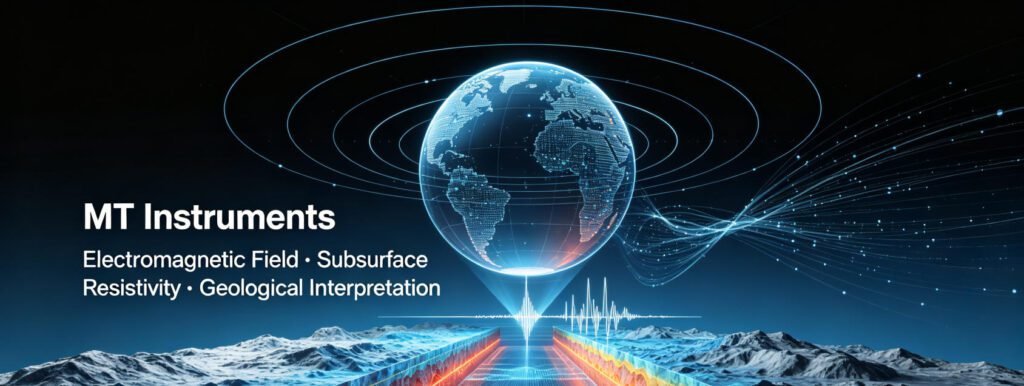
Ⅰ. Introduction: Industry Pain Points of Growing Deep Exploration Demand but Low Efficiency and High Cost of Traditional Equipment
Demand for deep geophysical exploration is increasing. Mineral exploration, geothermal resource assessment, groundwater research and deep engineering investigation all require reliable subsurface information. As shallow targets become more difficult to locate, teams must work deeper and in more complex environments.
Traditional geophysical equipment often struggles with this trend. Many systems are heavy, complex and slow to deploy. They require experienced personnel and long setup times. In remote areas, these limitations directly increase project cost and delay decision-making.
Deep exploration also places higher demands on signal quality. Natural electromagnetic signals weaken with depth. If instruments lack sufficient sensitivity or anti-interference capability, data quality drops quickly. Processors may spend weeks cleaning data that should have been reliable from the field.
For many geophysical teams, the real problem is not a lack of exploration targets. It is the gap between growing project demands and outdated field equipment. New-generation MT survey instruments address this gap by improving efficiency, data quality and overall field operability.
Ⅱ. Pain Point 1: Long Observation Time and Cycle Optimization: Wideband + Algorithm Optimization
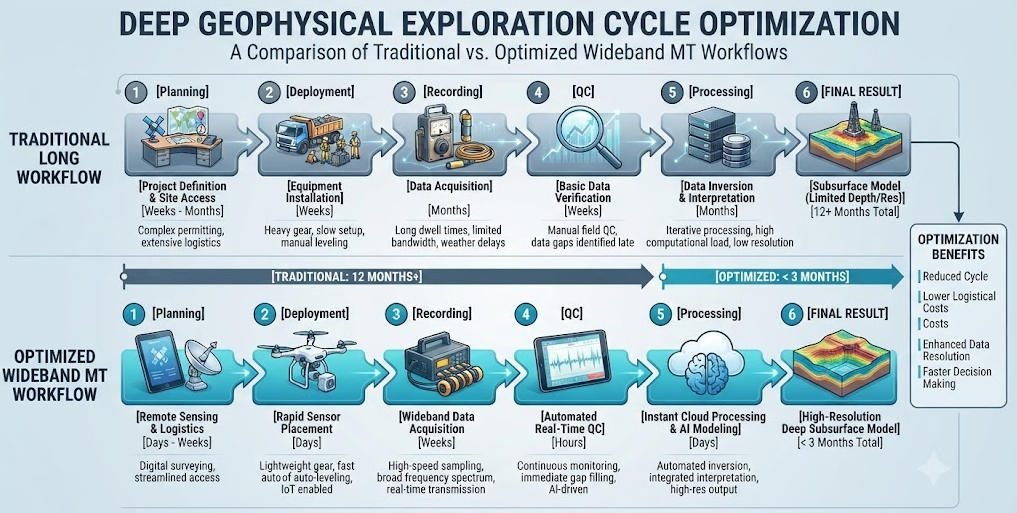
The first major pain point is long observation time and slow project cycles. In deep geophysical exploration, longer recording is often required to capture low-frequency signals. Traditional workflows extend this cycle even further.
1. Why Traditional Deep Exploration Cycles Are Too Long
Traditional MT systems often use limited frequency bands. To cover both shallow and deep targets, teams may need multiple survey modes or repeated station visits. This increases field time, labor cost and equipment scheduling pressure.
In addition, traditional data processing usually starts after field work ends. If quality problems are found later, teams must return to the site. This creates rework loops that can delay projects by days or even weeks.
For large survey areas with dozens or hundreds of stations, this problem becomes serious. Small inefficiencies at each station accumulate into major project delays.
2. How Wideband Technology Reduces Station Time
Wideband MT survey instruments help reduce cycle time by covering more signal bands in a single deployment. A wideband system can capture high-frequency signals for shallow imaging and low-frequency signals for deep exploration at the same station.
This means teams do not need separate equipment configurations for different target depths. One instrument can support multiple project objectives. This improves station turnover and reduces overall survey time.
Wideband technology also simplifies field logistics. Instead of carrying multiple sensors or replacing units between stations, technicians can use one integrated system. This is especially valuable in remote exploration areas.
3. Algorithm Optimization Shortens Quality Feedback
Modern deep exploration equipment does not only collect more data. It also provides faster quality feedback. Built-in algorithms can evaluate signal quality, noise level and recording stability during acquisition.
If data quality is insufficient, the system can alert the field team immediately. Technicians can then check electrode contact, sensor alignment or interference sources without waiting for post-processing results.
This real-time feedback reduces unnecessary recording time. It also helps teams make faster decisions about station relocation, parameter adjustment or data continuation.
4. Practical Impact on Project Cost
Shorter cycles directly reduce project cost. Less field time means lower labor cost, less battery consumption, fewer transport days and lower site accommodation expenses.
For clients, this means faster results. They can see preliminary quality indicators earlier and adjust exploration strategies before significant investment is made.
Ⅲ. Pain Point 2: Poor Deep Data Quality: High-Sensitivity Sensor + Robust Algorithm
The second core pain point is poor deep data quality. In deep geophysical exploration, weak signals, complex noise and low signal-to-noise ratio often reduce result reliability.
1. Why Deep Exploration Data Quality Is Difficult to Control
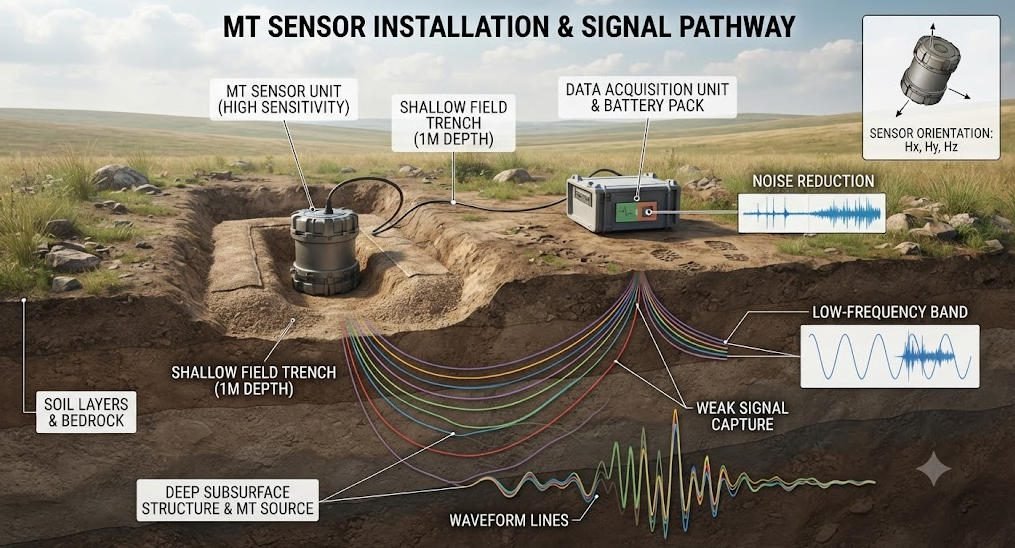
Deep exploration relies on low-frequency natural electromagnetic signals. These signals are very weak and easily contaminated by cultural noise. Power lines, communication towers, metal pipelines and industrial equipment can all affect data quality.
In addition, deep targets produce subtle resistivity contrasts. If the instrument cannot capture small signal variations, the final interpretation may be ambiguous. Poor data quality can lead to missed targets, incorrect resource estimation and risky drilling decisions.
For many projects, the biggest waste is not failed field work. It is low-quality data that appears usable but leads to wrong conclusions.
2. High-Sensitivity Sensors Improve Weak Signal Capture
New-generation MT survey instruments use high sensitivity sensors to capture weaker signals at greater depth. These sensors are designed to detect small magnetic and electric field variations that traditional systems may miss.
High sensitivity is especially important for deep exploration. It helps preserve signal details in low-frequency bands. This improves the reliability of deep resistivity structures and reduces interpretation uncertainty.
However, high sensitivity alone is not enough. The system must also maintain stability under changing temperature, humidity and field conditions. Otherwise, sensitivity becomes a source of drift rather than quality improvement.
3. Robust Algorithms Suppress Environmental Interference
Deep geophysical exploration often takes place near existing infrastructure. This makes electromagnetic interference unavoidable. Robust algorithms help separate target signals from noise.
Modern systems can identify power line harmonics, transient spikes, narrowband interference and baseline drift. They can process these noise types while preserving the underlying MT signal.
When algorithms are integrated into the instrument workflow, they also reduce manual processing effort. Processors spend less time cleaning data and more time interpreting subsurface structures.
4. The Combined Value of Sensors and Algorithms
High sensitivity sensors and robust algorithms work together. Sensors capture more signal, and algorithms protect that signal from noise. This combination improves data quality without extending recording time.
For deep exploration projects, this means better resolution at depth. It also means more reliable comparison between stations. When data quality is consistent across the survey area, interpretation results become more defensible.
Ⅳ. Pain Point 3: High Field Operation Cost: Lightweight Design
The third major pain point is high field operation cost. Deep geophysical exploration often takes place in remote, mountainous or logistically difficult areas. Heavy equipment increases almost every cost item.
1. How Heavy Equipment Increases Field Cost
Heavy geophysical equipment requires more transport capacity. It may need larger vehicles, extra personnel and special loading arrangements. In areas with poor roads or no vehicle access, weight becomes a critical limitation.
Heavy equipment also slows down station setup. Technicians need more time to carry, unload, install and pack instruments. This reduces the number of stations that can be completed per day.
In addition, heavy systems increase safety risk. Transporting and moving heavy equipment in rough terrain can cause injury, equipment damage and project delays.
2. Lightweight Design Reduces Logistics Burden
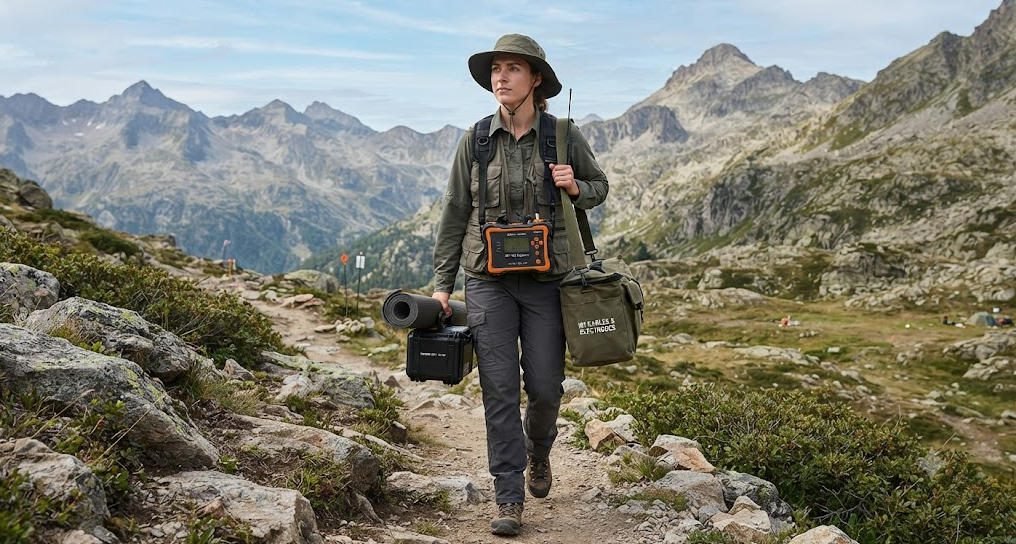
New-generation MT survey instruments use lightweight design to reduce field burden. Lighter main units, compact sensors and integrated cables make transport and deployment easier.
With lighter equipment, smaller teams can cover larger survey areas. This is especially useful for mineral exploration, geothermal investigation and regional geological mapping projects.
Lightweight design also improves accessibility. Teams can reach stations that would be difficult or impossible to access with traditional heavy systems. This expands the usable survey area and improves overall data coverage.
3. Lightweight Equipment Does Not Mean Lower Performance
A common misunderstanding is that lightweight equipment sacrifices performance. This is not true for modern deep exploration equipment. The goal is to reduce unnecessary weight while maintaining or improving measurement accuracy.
Advanced materials, integrated circuits and low-power design make this possible. Systems can be lighter, smaller and more energy efficient without losing sensitivity or stability.
For field teams, this means less physical fatigue, faster setup and easier daily maintenance. For project managers, it means lower logistics cost and higher station turnover.
4. Impact on Large-Scale Surveys
In large-scale deep geophysical exploration, even small weight reductions become significant. If each station requires less transport and fewer personnel, the total project cost can decrease substantially.
Lightweight MT survey instruments also make it easier to deploy multiple stations simultaneously. Teams can cover larger grids in less time. This improves project efficiency and allows clients to receive results faster.
Ⅴ. Conclusion: New-Generation Equipment Comprehensively Solves Deep Geophysical Pain Points
Deep geophysical exploration will continue to grow in importance. As resource demand increases and near-surface targets become more complex, the industry needs more efficient, reliable and cost-effective solutions.
New-generation MT survey instruments address three core pain points. They reduce project cycles through wideband technology and algorithm optimization. They improve deep data quality with high sensitivity sensors and robust anti-interference algorithms. They lower field operation cost through lightweight design and easier deployment.
For geophysical teams, the message is clear: equipment selection should not be based only on technical specifications. It should also be based on how well the system solves real field problems. A modern deep exploration equipment system must improve efficiency, protect data quality and reduce operational burden.
The Web-MT series from Geotech is an example of such a system. It integrates wideband acquisition, high sensitivity sensors and field-friendly design into a single MT survey instrument platform. For teams planning equipment renewal or deep exploration projects, it represents a practical solution to the most common pain points in modern geophysical field work.
Reference Sources
| NO. | Name | URL |
|---|---|---|
| 1 | SEG: Magnetotelluric Methods for Deep Exploration | https://seg.org/training-resources/technical-tutorials/magnetotelluric-methods |
| 2 | Geotech Official: Web-MT Ground EM System | https://www.geotechcn.net/web-mt-ground-em-system |
| 3 | ASEG: Geophysical Exploration Equipment Guidelines | https://aseg.org.au/technical-resources/field-guidelines/electromagnetic-surveys |
| 4 | USGS: Deep Subsurface Geophysical Methods | https://www.usgs.gov/programs/geophysics-program/electromagnetic-methods |
| 5 | ScienceDirect: MT Instrument Performance and Field Quality | https://www.sciencedirect.com/journal/journal-of-applied-geophysics |
FAQ
Q1.What are the main pain points of deep geophysical exploration?
The main pain points include long project cycles, poor deep data quality and high field operation cost. Traditional equipment often requires long recording times, struggles with weak deep signals and depends on heavy systems that increase logistics burden.
Q2.How does a wideband MT survey instrument improve exploration efficiency?
A wideband MT survey instrument captures both high-frequency and low-frequency signals in one deployment. This reduces the need for multiple equipment configurations, shortens station time and improves overall survey turnover.
Q3.Why is high sensitivity important for deep exploration equipment?
Deep exploration relies on weak low-frequency signals. High sensitivity sensors capture smaller signal variations that traditional systems may miss. This improves data reliability for deep resistivity structures and reduces interpretation uncertainty.
Q4.How does lightweight design reduce field operation cost?
Lightweight geophysical equipment reduces transport requirements, setup time and physical fatigue. It allows smaller teams to cover more stations per day, especially in remote or difficult terrain. This lowers labor, logistics and overall project cost.
Q5.Which equipment is suitable for deep geophysical exploration?
Modern MT survey instruments with wideband capability, high sensitivity sensors, robust anti-interference algorithms and lightweight design are most suitable. Systems like the Web-MT series from Geotech are designed to balance deep exploration performance with field usability.