Welcome to Geotech!
-1.png)


Knowledge base
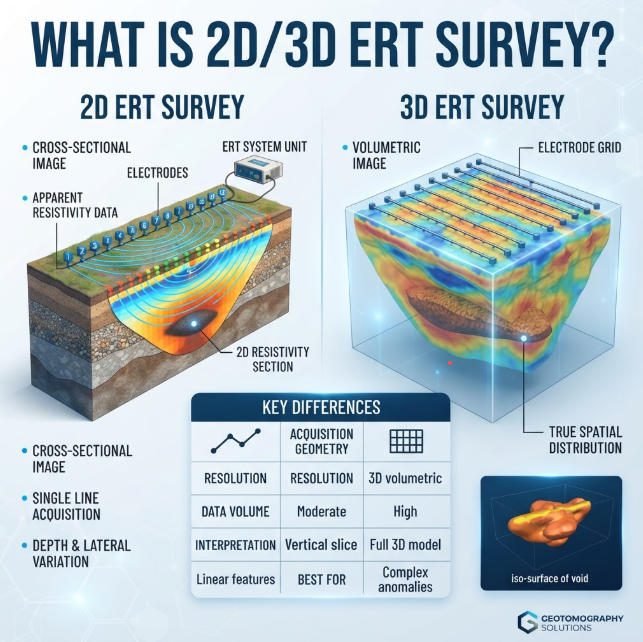
What is 2D/3D ERT Survey?
TIPS:This guide helps exploration managers choose between 2D and 3D ERT survey configurations for their specific projects. We explain how advanced resistivity acquisition reduces exploration risk when paired with modern imaging systems. Field engineers and procurement teams will find decision…

What is Vertical Electrical Sounding (VES)?
TIPS:Vertical electrical sounding (VES) has served geophysicists for decades as a reliable one-dimensional profiling tool. Today, electrical resistivity tomography (ERT) transforms that legacy into three-dimensional subsurface imaging. This guide traces the complete evolution from conventional VES methods to modern 3D…
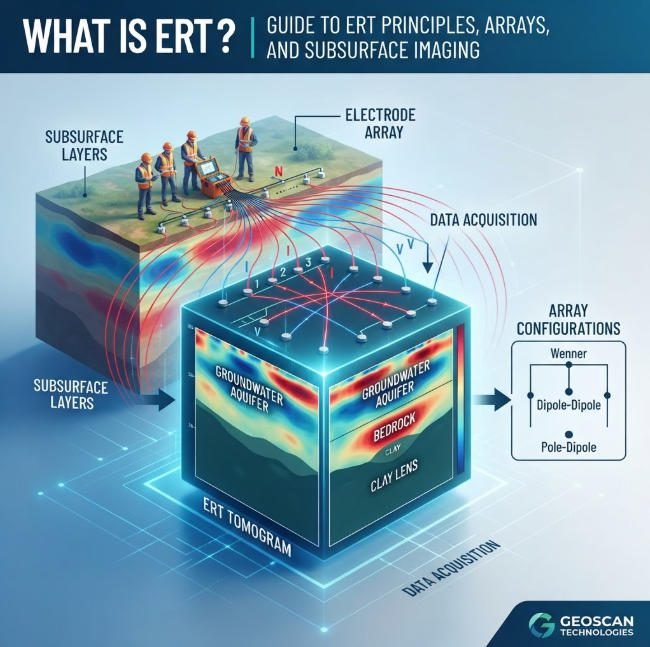
What is ERT?丨Guide to ERT Principles, Arrays, and Subsurface Imaging
TIPS:Electrical resistivity tomography (ERT) images subsurface structures by injecting direct current through electrode arrays and measuring voltage differences. This guide explains ERT principles, geometric factors, and array configurations including Wenner, Schlumberger, and dipole-dipole. Engineers learn survey design, 2D versus 3D…
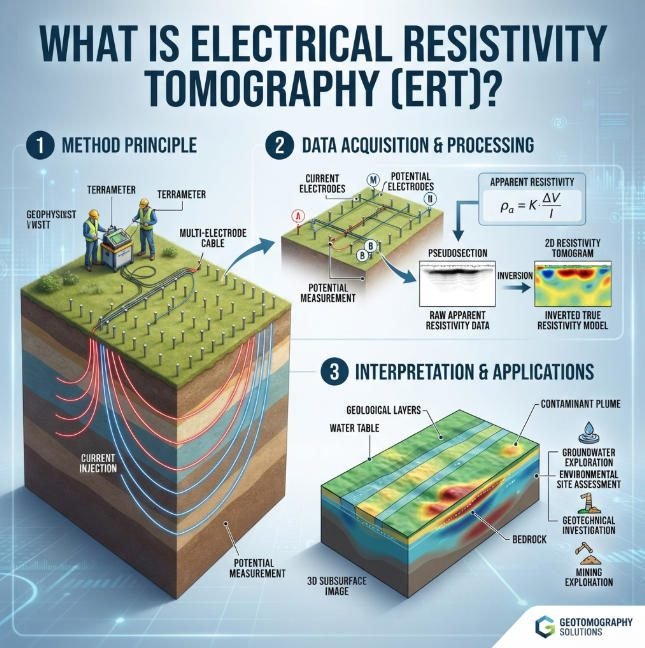
What Is Electrical Resistivity Tomography (ERT)?丨 Subsurface Imaging Guide
TIPS:Electrical Resistivity Tomography (ERT) has emerged as one of the most reliable geophysical methods for subsurface imaging. ERT geophysical survey techniques deliver high-resolution 2D and 3D models of underground structures. This guide explains how electrical resistivity tomography works and why…
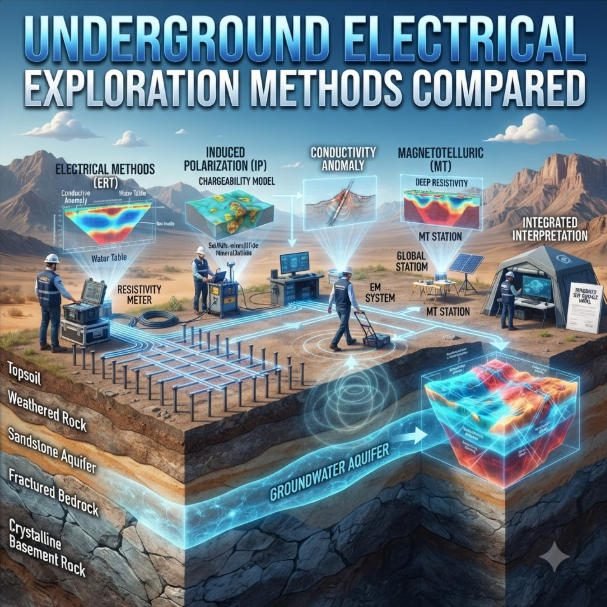
Underground Electrical Exploration Methods Compared
TIPS:Electrical resistivity tomography and DC resistivity sounding are the two most widely adopted electrical exploration methods in modern geophysics. This guide compares electrical resistivity tomography with DC resistivity sounding and high-density systems. You will learn how each method works, when…